On September 1, 1967, Ilse Koch, known as the "Witch of Buchenwald," hanged herself with a bedsheet in her prison cell. She was 60 years old and was buried in an unmarked grave.
Koch was one of the most infamous female figures of the Nazi regime. Born Margarete Ilse Köhler in Dresden on September 22, 1906, she worked as a secretary and bookkeeping clerk before joining the Nazi Party in 1932.
In 1936, she married Karl Otto Koch, the commandant of Sachsenhausen concentration camp. She worked there as a guard and secretary. The following year, her husband was assigned to build a new camp at Buchenwald.
At Buchenwald, Ilse Koch became notorious for her brutality. She was known to ride her horse around the camp looking for tattooed prisoners. When she found one, she would send the prisoner to death and then have the tattooed skin removed before the body was burned.
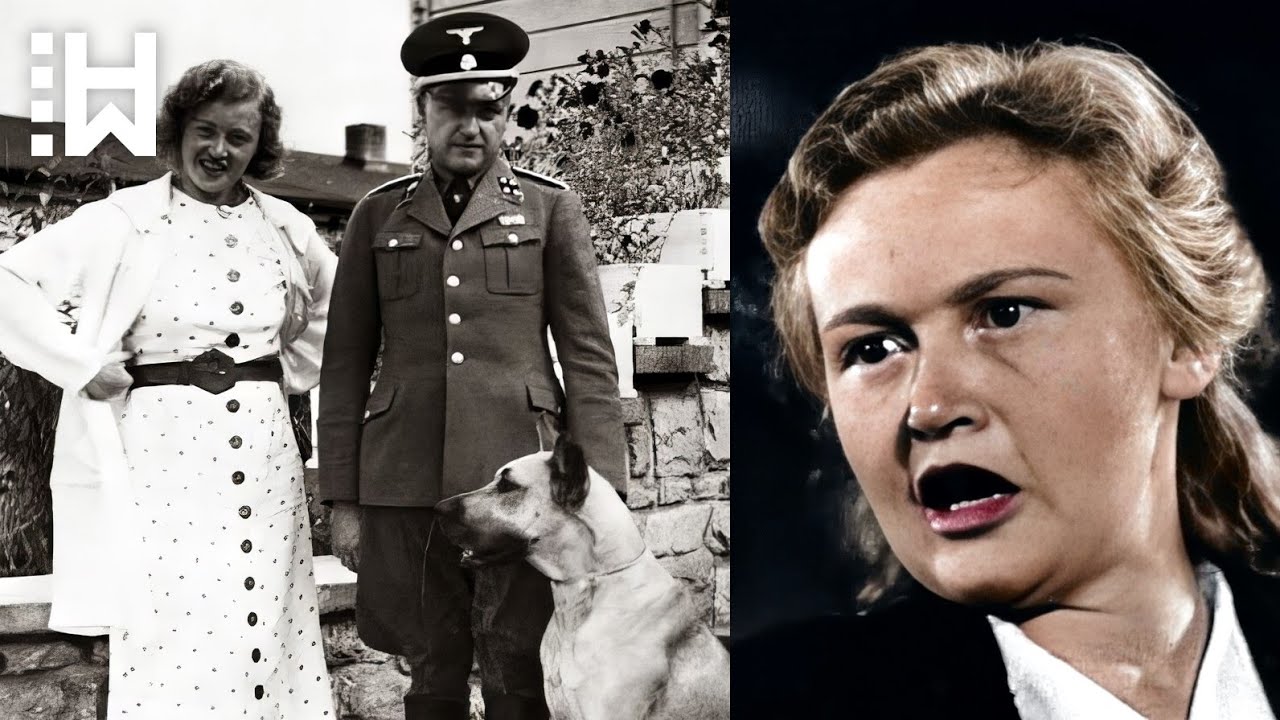
She collected these pieces of skin as "trophies." She reportedly used human skin to make lampshades, book covers, gloves, and handbags.
She was also accused of beating pregnant women with a whip that had pieces of razor inserted along its length. She reportedly found pleasure in beating child inmates and laughed when they were sent to the gas chambers.
Reports described her as a sexual deviant. She allegedly organized orgies with SS men and forced male prisoners to rape female prisoners in front of her. She would walk around the camp in skimpy clothes, and prisoners who made eye contact with her were shot.
Her downfall began in 1941 when Josias Waldeck, the Higher SS and Police Leader for Weimar, investigated the camp. He discovered that Karl Otto Koch had ordered the killing of two hospital workers who had treated him for syphilis.

The investigation also revealed widespread embezzlement. The Kochs had stolen possessions from prisoners and used the money for luxury cars, Swiss bank accounts, and an indoor riding arena for Ilse that cost over 250,000 reichsmarks.
Karl Otto Koch was charged with embezzlement and the unauthorized murder of prisoners. He was executed by firing squad on April 5, 1945. Ilse Koch was acquitted for lack of evidence.
Buchenwald was liberated by the U.S. 6th Armored Division on April 11, 1945. More than 21,000 survivors were found weak and emaciated. American forces later showed 1,000 citizens from nearby Weimar the evidence of Nazi atrocities, including lampshades made of human skin.
Ilse Koch was arrested by U.S. authorities in late June 1945. She was tried at the Buchenwald trial in Dachau, which began on April 11, 1947. She was the only woman among the 31 defendants.

During the trial, she denied any involvement in the abuse and murder of inmates. She was sentenced to life imprisonment, though she was in the advanced stages of pregnancy at the time, which is said to have saved her from the death penalty.
Her sentence was initially commuted to four years, but after public outcry, a German court indicted her for instigation to murder in 135 cases. The second trial opened on November 27, 1950, and lasted seven weeks.
Several witnesses testified that they had seen Koch choose tattooed prisoners who were then killed. On January 15, 1951, the court sentenced her to life imprisonment. She was not present in court for the verdict.
In her later years, Koch suffered from mental illness. She became convinced that concentration camp survivors would abuse her in her cell and that the dead prisoners of Buchenwald came through the walls demanding the return of their skin.
Her son Artwin, unable to live with the shame of his parents' crimes, committed suicide in 1967. Ilse Koch took her own life shortly after. There were no tears shed for her.