By mid-August 1942, Australians with shortwave radios were picking up a familiar voice on Radio Tokyo. It belonged to Charles Cousens, a major with the 2/19th Battalion who had been taken prisoner at Singapore six months earlier. Before the war, he had been one of the best-known announcers on Sydney’s Radio 2GB. Four years later, that voice placed Cousens at the center of the first charge of high treason brought in Australia since federation.
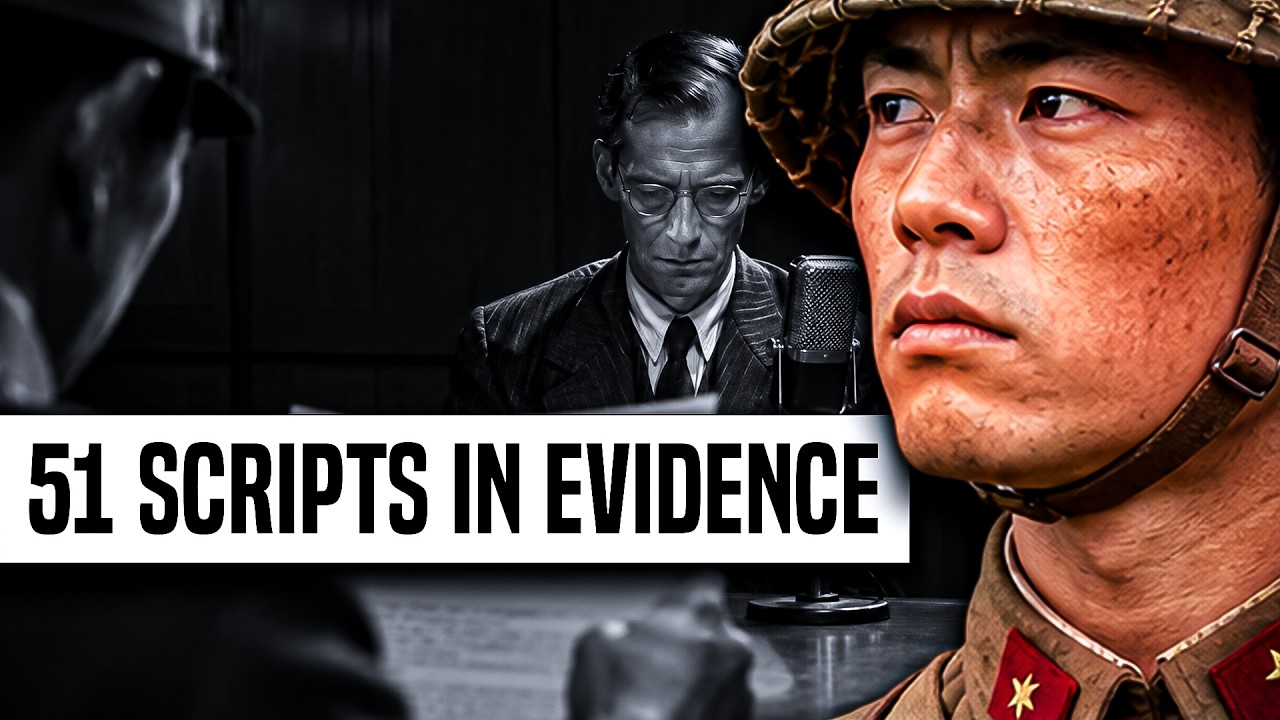
No Commonwealth law covered treason committed overseas, so New South Wales charged him under an English statute dating from 1351. The penalty was death. Born in Poona, India, in 1903, the son of an artillery officer, Cousens trained at Sandhurst and served with the Sherwood Foresters on the Northwest Frontier before resigning in 1927, unable to afford the regimental lifestyle. He worked his way to Sydney at 23, taking whatever work came his way, including labouring and boxing.
He eventually moved into selling newspaper advertising, which led him into a radio studio at 2GB. His best-known program before the war was the Radio Newspaper of the Air, which encouraged children to follow the news. He joined the Australian Imperial Force as a captain in July 1940, served in Malaya, suffered serious burns demolishing a village, and returned for the fighting on Singapore Island. He was made temporary major on 13 February 1942.
Two days later, Singapore surrendered. After the capitulation, Australian headquarters let slip to his captors that he had been a radio announcer. Cousens refused to broadcast from Changi. At the end of July 1942, he was taken alone from a prison camp and shipped to Japan.
On 1 August, he was questioned in Tokyo by Major Shigetsugu Tsuneishi, the army officer who ran radio propaganda. Cousens later told the Sydney court that Tsuneishi shouted through a list of orders. The first was to obey the Imperial Japanese Army or be executed. An official named Fumio Saisho, he claimed, kept thumping him on the knee and said they could make him sweep the streets.
When Cousens replied he had already done that in Singapore, Saisho’s answer, as Cousens gave it, was that they would bring a hundred men to broadcast if they had to. He was put to work that evening. His first scripts were radio essays on the need for high ideals, containing no propaganda at all. Then came commentaries on world affairs, which station staff checked and edited before broadcast.
He was also given a team of English-speaking announcers to coach. For months he pushed to read out the names of Australian prisoners. The lists were initially turned down but later got through. The Crown’s version of what he said was far worse.
Colonel John Appleton, an intelligence staff officer at Eastern Command, told the 1946 hearing that he had heard treason in Cousens’ broadcasts from Tokyo. He described an Australian officer urging his country to cut ties with the British Empire, calling Churchill a warmonger and smearing Roosevelt. Cousens denied saying any of it. The commentaries themselves he never denied writing.
His entire defense rested on what he claimed to have hidden inside them. In March 1943, Radio Tokyo launched a program called Zero Hour aimed at American and Australian servicemen across the Pacific. Cousens was put on it with two other prisoners: Captain Wallace Ince of the United States Army, captured on Corregidor, and Lieutenant Norman Reyes of the Philippine Army, captured on Bataan. At first, all three had to broadcast scripts written by Japanese staff.
They complained about the grammar so often that they were allowed to write their own. Cousens laid out his methods over twelve days in the witness box. His first method was his own voice. Of his early broadcasts, he said: “I took it much too fast in a flat and meaningless monotone.
” A British wartime analyst, Peter de Mendelsohn, came to a similar view. Cousens, he wrote, sounded like a man reading a script someone else had prepared for him. His second method was style. He wrote his commentaries, he said, in a deliberately high-flown manner, the kind he expected his supervisors to admire and any English-speaking listener to laugh at.
He took a patronizing tone, writing as though Americans were too ignorant to follow world affairs. The aim, he told the court, was to leave American listeners hopping mad at Tokyo. His third method went into other people’s mouths. Given announcers to train, he taught them a sing-song delivery with stress on the wrong words, hoping the result would get a good belly laugh in Australia.
To show the magistrate what he meant, he sang a single note in Central Police Court and chanted several lines of Gray’s Elegy on it. His fourth method involved a person. In November 1943, the station wanted a woman’s voice on Zero Hour, and Cousins was allowed to choose one. Radio Tokyo had experienced women announcers with polished English.
He picked a typist with no radio experience at all. Her name was Iva Toguri. She was an American citizen from Los Angeles, stranded in Japan since 1941, who had been spending her own small wages on food and medicine for the three prisoners. Her voice was low and rough.
After the war, Cousins said: “It was the complete comedy voice that I needed. ” He named her Orphan Ann. He coached her to slow down, sound jolly, and laugh whenever she said the word enemy. The music he chose was dance tunes and light classics, many of them British, which he reasoned would make no American soldier homesick.
Toguri later told investigators that Cousens and Ince had taken her into their confidence, that they were trying to soften the news and include more prisoner messages, and that they were writing double meanings into some of the scripts. None of the published accounts sets one of those double meanings beside the military information it was supposed to carry. Military historian Ivan Chapman examined copies of the scripts for his 1990 book. On the other side stands Fumio Saisho, the journalist who checked scripts for the station, who told the Sydney court she knew nothing of any prisoner being accused of writing double meanings.
The strain showed in June 1944 when Cousens collapsed and was taken off the air. His defense later called it starvation and heart trouble. Saisho, asked about it in court, answered that it was not starvation. Toguri kept Orphan Ann going by reusing and rewriting his old scripts so that no more political figure would be brought in to write new ones.
In July 1945, a letter from Cousens reached his wife Winifred. He wrote that the morale of the Australian prisoners was wonderful and that Australia could be proud of them. After the surrender, General MacArthur ordered his arrest. American officers questioned him, and according to his counsel, Cousens handed them a dossier on everyone connected with Radio Tokyo.
What that dossier said about Fumio Saisho would come out in court a year later. He came home under guard. In November 1945, the army moved him from Brisbane to Sydney a day earlier than he had told his family and kept the move quiet. Winifred had been promised a visit, and the army kept her away.
Their son Robert was six. At the Urala Military Hospital, where he was held under arrest, doctors found a heart condition they put down to starvation. The hearing opened at Central Police Court on 20 August 1946 before a stipendiary magistrate, Mr. Farrington.
Leading for the Crown was Dovey, a King’s Counsel, with Garfield Barwick beside him, also a King’s Counsel. Bradley and Shand, both King’s Counsel, appeared for Cousens. Fumio Saisho, 37, had come from Tokyo to give evidence for the Crown. By her third day in the witness box, she had said the Japanese had used no duress on him that she knew of and had agreed that she called him by his nickname, Bill.
Then Shand asked whether the Americans had told her what Cousens reported about her. The report, as Shand put it, said that while she considered herself remarkably clever, she was in fact one of the easiest to deceive. She said she had no knowledge of it. Shand also produced a bundle of photos from the diary of Lieutenant Commander Henshaw of American Naval Intelligence, a fellow prisoner.
The diary, Shand told the court, was “reeking of it,” meaning coercion, and he offered to show fifty passages. The prosecution answered that the diary had only just arrived as microfilm, sent over by the Americans without anyone asking, and that nobody on their side had opened it. In early October 1946, the magistrate committed Cousens for trial. By then, support for him had firmed, helped along by the news that the Crown’s case leaned heavily on the evidence of two Japanese who had worked with him.
The Attorney General of New South Wales, Clary Martin, now had to decide whether a jury would ever hear it. On 6 November, he dropped the charge. The Commonwealth was not finished. Its legal and military officers considered a court martial, then rejected it on the grounds that it would have the appearance of persecution.
They took his commission away instead on 22 January 1947, a step many at the time called vindictive. An army spokesman explained that he was now plain Mr. Cousins, though he could call himself ex-Major if he liked. The Herald reported he might lose his gratuity.
2GB had already taken him back that February. He started back on a Monday. Three months later, on Anzac Day, the men of the 2/19th Battalion chose him to march at their head through Sydney. Without a commission, he was not allowed to wear his service ribbons.
He marched with a sprig of rosemary instead. In August 1949, he went to San Francisco to give evidence for Iva Toguri, who was on trial for treason as “Tokyo Rose. ” He testified that he had designed the broadcasts as a farce and that the troops had heard them as one. On 29 September, the jury found her guilty on one of eight counts of speaking into a microphone about the loss of ships.
The judge gave her ten years and a $10,000 fine. She served a little over six. In the 1970s, two prosecution witnesses said they had been pressured into their testimony, and on 19 January 1977, President Ford pardoned her. Cousens went on working.
In November 1957, the Herald’s television page listed him as a newsreader on Channel 7. In June 1999, Toguri told the same paper she could clear his name. By then, he had been dead for 35 years. He died of heart disease at his home in Greenwich on 9 May 1964, aged 60.
Garfield Barwick, who had helped prosecute him at Central Police Court, later served as Chief Justice of Australia. Years afterwards, he said a jury trial would have been fairer to Cousens and would probably have ended in an acquittal.