Judy Garland was found dead on the morning of June 22, 1969, in the bathroom of a rented house in London’s Chelsea district. Her fifth husband, Mickey Deans, discovered the locked door and eventually climbed to the roof to look through the window. She was 47 years old, had been famous since she was a teenager, and died alone in a country thousands of miles from her three children. The coroner ruled her death an accidental overdose of barbiturates, specifically Seconal, noting the drug had accumulated in her system over time rather than being taken in a single massive dose.
It was not determined to be a suicide. The death was the cumulative result of years of chemical dependency that finally exceeded what her body could process. Garland had been born Francis Ethel Gumm in Grand Rapids, Minnesota, in 1922, into a vaudeville family where performance was an economic necessity. By age 13 she was at MGM.
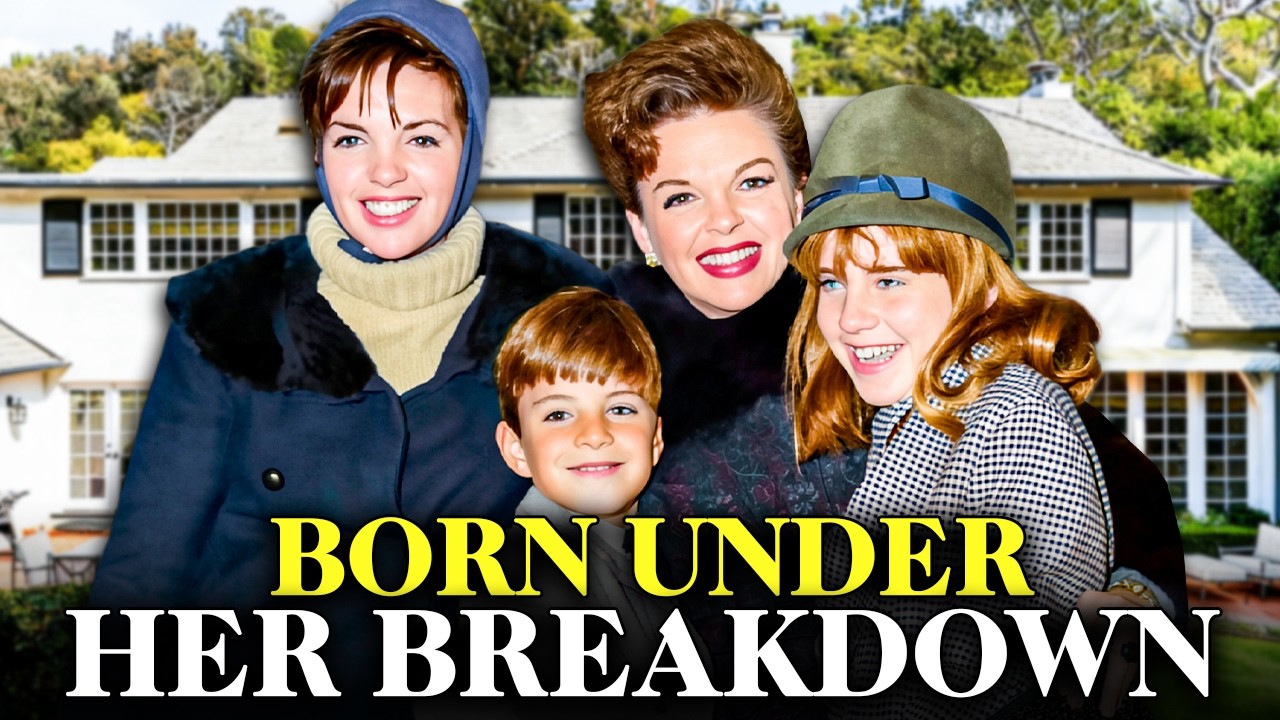
By 16 she was Dorothy in The Wizard of Oz, a role that would follow her for the rest of her life. The studio system that made her famous also managed her weight, her sleep, and her emotions with prescription drugs, giving a teenage girl amphetamines to stay awake and barbiturates to sleep. Her three children grew up inside that machinery. Liza Minnelli, born in 1946 to Garland and director Vincente Minnelli, was the eldest.
Lorna Luft, born in 1952, and Joey Luft, born in 1955, were the children of Garland’s third husband, Sid Luft. By the time they were adolescents, each had been drawn into the household’s daily management of their mother’s instability. Lorna later described learning to dilute her mother’s pills with sugar, a technique passed down from her father. She learned to read which version of her mother might be waiting at home, and the household often reorganized itself around crisis.
Joey, the youngest, was 14 when his mother died. He later worked behind the camera in sound and photography, keeping more distance from the spotlight than his sisters. Garland’s marriage to Sid Luft collapsed by the mid-1960s, ending in a bitter divorce and custody disputes. After that, there was no adult structure left that the children could rely on consistently.
Liza had moved to New York in 1961 and was building her own stage career. In 1965, at age 19, she became the youngest woman to win a Tony for Best Actress in a Musical for Flora the Red Menace. The cracks in the family were visible, but the public image held. A 1963 Christmas episode of The Judy Garland Show featured Garland performing with Liza, Lorna, and Joey in a warm, cozy domestic setting.
The show would be cancelled within months, and the marriage to Luft was already badly strained. The family appeared on screen as proof that talent and togetherness could coexist. Garland married Mickey Deans in London on March 15, 1969. She was 46, he was 34.
Financially, she was effectively broke, owing back taxes, with no significant savings and a rented London house. The name was famous, but the estate that remained was a tangle of debts and unrealized contracts. When Garland died, the public response was massive. Approximately 20,000 mourners lined the streets outside the Frank E.
Campbell Funeral Chapel in Manhattan on June 27, 1969. Inside, Liza, 23, was already a public figure expected to remain composed. Lorna was 16, Joey was 14. James Mason delivered the eulogy.
In the years that followed, the three children took different paths. Liza won the Academy Award for Cabaret in 1972, at age 26, three years after her mother’s death. She later achieved EGOT status. But her substance problems began in the grief period after Judy’s death, with Valium, then alcohol, then other substances over decades.
She suffered health crises, including viral encephalitis in 2003 that nearly killed her. Liza married four times. She wanted children, but fertility struggles and miscarriages made that impossible. She has said in recent interviews that she has been sober for more than 11 years, describing sobriety as a daily practice rather than a dramatic climax.
In her memoir, she describes the moment addiction entered her life with disarming simplicity, someone offered her something and she tried it. Lorna built a performing career of her own, but her most important contribution came through testimony. In 1998, she published Me and My Shadows, a family memoir that told the story from child height, naming the pills, the moods, and the domestic mechanics of dysfunction while also insisting on the warmth and humor that existed alongside the chaos. In 2001, ABC adapted it as the television movie Life with Judy Garland: Me and My Shadows, with Lorna serving as co-executive producer.
The production earned 13 Emmy nominations and won five. Lorna also survived breast cancer and became an advocate for early detection, as well as for HIV/AIDS causes. She has remained the family’s most careful interpreter of Judy’s legacy, appearing at the 2026 TCM Classic Film Festival and giving interviews about both her mother and her sister. Joey remained the quietest of the three.
He worked in sound and photography, created a live tribute show around his mother’s music, and appeared at Judy-related public events, including a Hollywood Heritage celebration as recently as 2024. His relative privacy, in a family built on overexposure, became its own form of statement. The cultural machinery around Garland continued after her death. The recordings kept selling.
Dorothy kept appearing every year on American television. In 2017, her remains were moved from Ferncliff Cemetery in New York to Hollywood Forever Cemetery in Los Angeles, a decision reportedly guided by Liza. The 2019 film Judy, starring Renée Zellweger, brought the story of her final London months to a new generation. More recently, the documentary Liza: A Truly Terrific Absolutely True Story and Liza’s memoir, titled Kids Wait Till You Hear This, released in March 2026, have shifted the cultural ground again.
For the first time, Liza is telling the version of her family that she lived, rather than the version constructed for her by the press or the biopics. As of mid-2026, Liza is 80, sober by her own account, and has described herself as finally living a version of her life that she recognizes as her own. Lorna is 73 and remains publicly active. Joey is 71.
Three children inherited not a fortune, but a set of patterns, and each has answered the question of what to do with that inheritance differently.