The story of the Soul family of Trace Creek Hollow begins in the winter of 1851, when Gideon Soul brought his wife and six children to a narrow, shadowed hollow in the far southeastern corner of Kentucky. They built a log cabin close to a spring on the east wall, a spring that ran cold even in August and had a stone basin cut into the rock that predated the county itself. Gideon was a deliberate, god-fearing man who had followed a cousin’s report of good bottomland and instead found two and a half miles of dark hollow. He was not a man who turned around, so he built.
His wife, Patient Soul, was a mountain-born woman who knew what a hollow meant. She said so more than once, according to notations she left in the family Bible. The first winter, she began putting a plate of food outside the door after dark, covered with a cloth. Her seven-year-old son Reuben asked why, and she told him it was for the poor. He accepted that, but he noticed she did it every night that winter, always after dark, always with the same cloth, and that she went out for the plate herself in the morning before anyone else was up.
Reuben later gave a statement to a circuit minister in 1883. He said his father did not know about the feeding. He said he saw his mother go out twice when she thought everyone was asleep, quiet, with no lamp, out no more than a minute. He also said that as a boy, he used to put his ear against the east wall of the house, the wall closest to the spring, and hear something he could only describe as the sound of something very large being very still. Not sleeping still, he said. Waiting still. The way a dog waits at a rabbit hole.
The garden did well from the first year, better than it should have in a hollow that got only four hours of direct sun in summer and none in winter. Patient was particular about using the spring water on the garden, drawing it herself in a particular clay jar. Reuben drank from it once when he was about ten and said it tasted wrong, like old copper smells, and his tongue went numb. The animals did less well. They ate and did not fill out. They were thin and quiet, quieter than animals ought to be. Gideon noted in his farm log that the stock wanted for nothing he could name and lacked for something he could not. Patience says leave it, he wrote.
In the summer of 1861, Patient wrote a letter to the minister of the Clover Fork Baptist Church, a man named Elbert Frasier. She gave it to him in person and asked him to preserve it if she died without telling him otherwise. She died in 1885, and the letter was found tucked into the back of the church ledger. In it, she explained what her grandmother had told her mother, and her mother had told her on the night before her wedding. There are places in these mountains where the ground is hungry, she wrote. Not the way ground is usually hungry, but a different hunger, a patient one. The hungry places feed on what is offered freely. They will not take, only receive. But what is given freely becomes the grounds, and once the ground has tasted what you have given, it will want more of the same kind.
She wrote that she knew what the hollow meant when she came to it. She knew what the spring meant. Her husband did not know, and she could not tell him, because the knowing was given to the women of her line, daughter to mother. She fed it every winter to keep it outside, to keep it from coming to the table. For ten years, this held. But then she found the cloth from the plate folded inside the door, on the floor of her own kitchen, with the plate clean and the door barred. She wrote that she did not know if this meant it had come inside or only that it was telling her it could.
Gideon Soul died in 1863 of a chest wound taken at the Battle of Stones River. He died at home in his own bed, and Patient outlived him by 22 years. Their son Luther stayed in the hollow. He had been the one who did the building alongside his father, and he was the one who thickened the east wall on his mother’s instruction without asking why. In 1865, the year after his father died, he built a second room onto the house against the east wall, the wall closest to the spring. He put a full room there with a fireplace and windows that faced the spring from eight feet instead of forty. Patient’s notation in the family Bible for that year reads that he will not be told. Lord, he will not be told.
Luther married a woman named Bess Fry in 1866. She came to the hollow from outside, and she was the first person in the account to leave a record of what it felt like to come to that spring for the first time. She said she put her hand in the spring basin to feel the water, and everything about it was right, the color, the clearness, the feel. But when she took her hand out, the water stayed. It stayed around where her hand had been, like a mold, like there was still a hand in it. She watched it for a full minute before it smoothed back over, and she never put her hand in that spring again.
In the winter of 1877, a man came to the door after dark. He was cold and said he was turned around coming from the Clover Fork Road. Bess fed him at the table. Luther gave him the barn for the night. The man stayed. He said his name was Creel. He moved from the barn to the second room without being asked. He was a very large man, and Luther noted in his farm log that his shadow seemed to be on the wrong side of him sometimes. Luther also noted that he could not hold the man’s face in his memory. Every time he looked back at the memory of it, the face had shifted.
Patient’s notation in the family Bible for that winter is the smallest hand yet. She wrote that it had come inside. She wrote that Luther had fed it at his table and it ate. She wrote that she had moved the feeding three times and it did not go to the feeding anymore. She wrote that she would not write what she was afraid of next. She was 75 years old, and she stopped writing after that for two months.
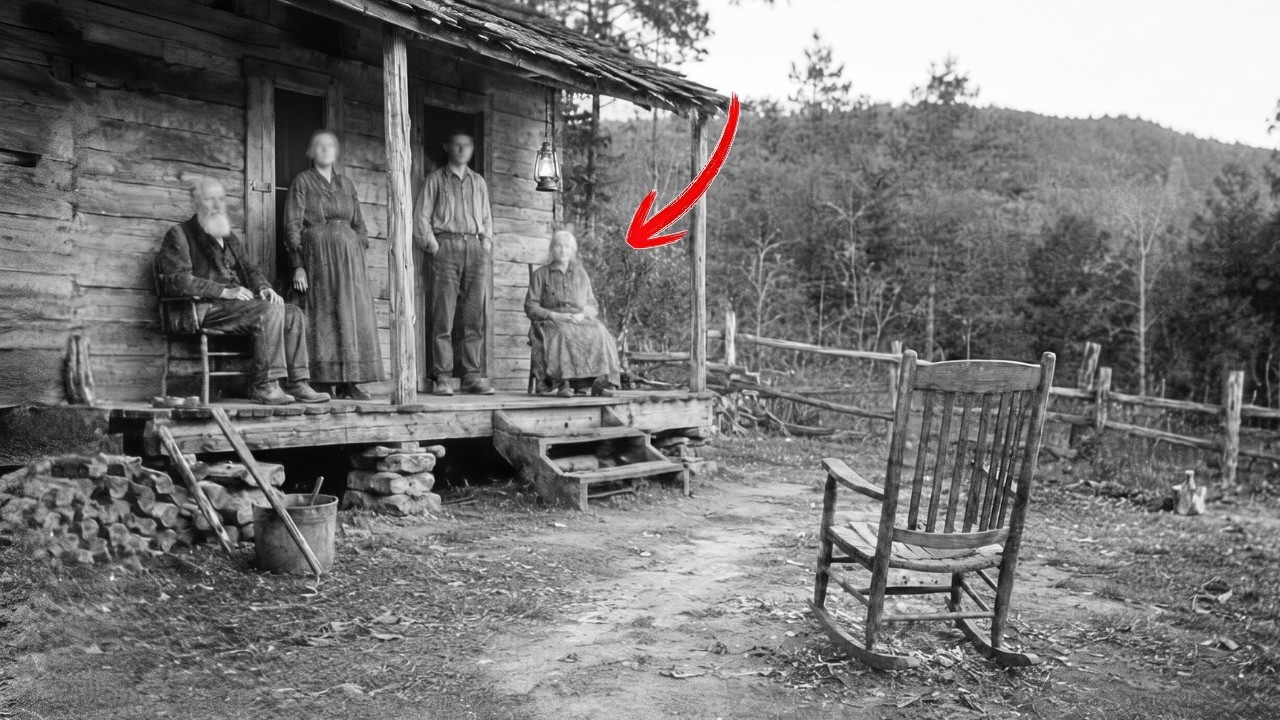
Luther’s farm log for the weeks that followed describes living with the man called Creel. He wrote that Creel ate a great deal and never appeared to be full, and that after he ate, he looked the same as before. Like the eating does not arrive anywhere, Luther wrote. He wrote that Creel did not smell like anything. He wrote that Creel went to the spring in the night and came back, and that his beard did not grow and his clothes did not wear. He was always exactly the same as he was the first night.
Patient told Luther not to let the man near the baby. The baby was Calhoun, born six weeks before Creel arrived. Bess had fed Creel at the table, and Patient knew what that meant. The agreement was old, and the second offering had been made. In February of 1878, Luther’s sister Willa came to the hollow. She had dreamed about the spring running backward up into the wall, and she woke with the smell of copper in her mouth. She wrote to her mother that she was coming, and she wrote do not tell it I am coming, because she knew it could read the letters.
Willa brought salt and her husband Ek. She spoke to Bess and told her the whole of it, the hungry place, the feeding, the agreement, and what follows the second offering. Bess listened and said she had known something was wrong since the night she put her hand in the spring. Then she asked what they should do. Willa did not fully know. She had been given part of the instruction, enough to recognize the danger, but not enough to know how to end it. She rode eight miles to see an old woman named Amma Seismore, who lived in a cabin cut into a south-facing slope above the Martins Fork Road. Amma Seismore was very old, and nobody could remember when she had been born. She told Willa three things.
The first thing was that the feeding must continue. If you stop the feeding now, what is in that house will stay in that house, and what it will eat next will not be food. The new agreement was this: move the feeding back outside to the original threshold and keep it there every night for one full year. Do not invite it to the table. Do not speak to it by the name it has given itself. Do not look at it directly. If you miss even one night, the year starts over. The second thing was that the man who built the room against the wall would not leave of his own choosing. The knowing does not help the men in this family, she said. The third thing was about the baby. A thing that has eaten at the table will try to fix itself in the house through the youngest life, because the youngest life does not yet know the difference between what is the house and what is in the house. You move the baby out of that hollow before it learns to walk, she said. A child that walks in that hollow before it knows the difference will carry the hollow with it.
Willa did the three things. She moved the feeding back to the threshold. She told Luther the truth, and Luther listened and did not leave and did not order Creel out of the house. She arranged for the baby to go to Dorcas in Bell County. At the end of February 1878, Bess Soul put her three-month-old son Calhoun into a wagon and watched it go up the hollow road and out of sight. She was 28 years old. She began the year.
Luther’s farm log from March 1878 through February 1879 is the most detailed part of the log. He wrote almost every day. The entries are on the surface the entries of a farm, wood cut, animals tended, fences mended. But woven through them is the record of living with Creel. Creel helped with the plowing and was stronger than two men. Creel asked if the baby was coming back. Creel stood in the doorway of the second room and looked at a peddler who ate at the table, and the peddler left so quickly he forgot his hat. Bess thinned out the way the animals thinned in that hollow, not sick, just less. Luther wrote that the garden was going to be extraordinary that year, and he did not want to eat a single thing that came out of it.
On July 2, 1878, Luther heard Creel speak to the spring. He heard the spring answer. It was a small voice, thin, the way voices are in the cold. He said it sounded like a conversation, like Creel was reporting to the spring about what had been accomplished and what had not, and the spring was asking about the baby, about where the baby had gone and when it was coming back. Creel was saying not yet, not yet.
Patient Soul died on January 22, 1879, in her corner bed in the front room. Her last notation in the family Bible is dated three days before she died. It is a prayer, and one line in her own words: I have kept the feeding as long as I can. The keeping now belongs to the next one. Lord, let the next one be steady enough.
Bess kept the feeding through that winter and through the spring and through the summer of 1879. The thing called Creel became less solid, less present, less in the house. In February of 1880, Luther wrote plainly that Creel was gone. The room was cold, but it was an ordinary cold. Bess checked the spring that morning, and she said the water was right. The year had held. The baby came home in March of 1880, two years old, walking and talking and entirely himself. Bess kept the feeding for 30 years after that, every night, until she died of pneumonia in 1909.
Calhoun grew up in the hollow. He knew about the feeding because Bess told him when he was old enough to be told, and he helped her with it when he was old enough to help. In 1901, when he was 30, he married a woman named Kora Fry. Kora was a former school teacher, sharp and plain-spoken and methodical. Bess told her what she was marrying into, and Kora asked what they should do. Bess said feed it every night, never at the table, outside the door after dark, and never miss a night, because a gap is an invitation.

Kora wrote 17 letters to her cousin Halley Fry between 1902 and 1919. In her first letter, she wrote about the feeding and about something she had noticed that Bess had not told her to notice. The plate is never empty, she wrote. The food is gone in the morning, not eaten in the way food is eaten, but gone, as though it has been absorbed. The cloth is folded, not crumpled, folded neatly and set beside the plate, every morning the same fold. She wrote that she did not think it was eating the food. She thought the food was the token, the thing you put on the agreement to make the agreement real. And she was frightened that after so long, what they were doing was no longer an agreement but a habit.
Calhoun and Kora had three children. The first was a boy named Press, born in 1903. The second was a girl named Leora, born in 1906. The third was a boy named Denton, born in 1911. Kora managed the feeding through all three of their infancies without missing a night. But Press, at 11 years old, started feeding it himself. He went to the spring in the evenings after school and brought it things, rocks from the creek bed, interesting shapes. He talked to the spring the way an 11-year-old talks to a place that seems to listen. Kora found out in the spring of 1914. Press was thinning out the way the soul children always thinned when the agreement was going wrong. He told her he had been feeding it since he was nine. He told her it had a name, not Creel, a different name, and that it had asked him not to tell her.
Kora sent Press to Clay County, the way Bess had sent Calhoun to Dorcas. He did not get better. He got thinner. He started going to the creek at night behind his great aunt’s house. In the fall of 1914, he walked 40 miles back to Trace Creek Hollow in three days. Kora found him at the spring. She wrote in a letter that he was tethered to it the same way his father was, but closer. His father was two months old when it first fed next to him. Press had been feeding it himself since he was nine. The tether is shorter, she wrote. It put a line in him.
Leora was eight years old in 1914 when Kora heard her humming in her sleep. The tune, if you could call it a tune, was the same rhythm as the water sounds in the spring basin. Leora was the sharpest of the three children, the one who asked the most direct questions. When she was six, she asked Kora what it wanted. Not what is it, not what does it do. What does it want. Kora said she did not know. Leora said someone should find out.
In 1915, Calhoun went to the spring and did not come back for two days. They found him sitting on the edge of the basin with both feet in the water, and the cold had gone up into his legs. It happened again in November and again in February, and each time it was longer, and each time he was sitting closer to the house. By the spring of 1916, he was sleeping in the second room, the room where Creel had lived. That spring, the garden came up the way it had not come up since the first year. Kora said do not eat the garden. Press and Calhoun ate it anyway.
Denton, the youngest, was five in 1916. He did not go to the spring. He was told not to, and he did not. But he started setting out his supper food before bed, a little of whatever he had eaten, put on a piece of cloth, sat on the floor beside his bed. Kora asked him about it, and he said he did not know why. He just wanted to. He said somebody ought to have some.
Leora went to see Amma Seismore in the fall of 1916, when she was ten years old. She rode eight miles by herself on her father’s horse. Amma Seismore was the same as Willa had described her, old in a way no one could account for. She told Leora three things. The first was that the feeding is management, and management is not resolution. You cannot feed a hungry thing to satisfaction, she said. You can only feed it to patience. The second thing was what it wants. It wants continuance, she said. They are the hunger of a ground that has been empty too long, and what they want is to not be empty. The feeding over generations trains it to expect the family, and when the feeding trains it to expect the family, the family becomes the feeding. The third thing was how to leave. You leave and you do not come back, and you do not bring the hollow with you, she said. If it knows you are deciding to leave, it will work through whoever it already has. You make a decision in your heart without making it with your mouth. You walk out on an ordinary morning like you are going to the store, and you do not come back. She said Leora would know if she had brought it with her by one sign. If she smelled copper in a place where there was no copper, she would know it had come through her.
Leora lived in the hollow for five more years. She learned the hollow the way you learn a thing you are preparing to leave, thoroughly and without attachment. She learned the rhythm of the spring. She learned the smell of the hollow, cold water and wet sandstone, and something older and drier and deeper underneath. She checked herself every morning for five years, standing outside before the sun was up, breathing in, looking for copper. She did not think she smelled of it.
On the morning of February 17, 1921, Leora Soul, 15 years old, packed what she could carry in a flower sack and walked out of Trace Creek Hollow without looking back. She did not say goodbye. She counted her steps from the front door to the mouth of the hollow, 1,422 steps. At 1,422, she stopped counting and breathed in cold air. February cold. Creek water. The bare rock smell of the mountain in winter. Not copper. She kept walking.
She settled in Middlesborough, Kentucky. She worked as a seamstress and then a bookkeeper. She married a man named Henry Bogs in 1927, a kind and ordinary man. She did not tell him about Trace Creek Hollow for 11 years. She wrote to Kora, cautious letters, careful about what she put through them. Kora wrote back. Calhoun died in 1923, found at the spring in the morning, sitting on the edge of the basin with his feet in the water. The death record says heart failure. Kora kept the feeding alone after that, with Press and Denton in the house.
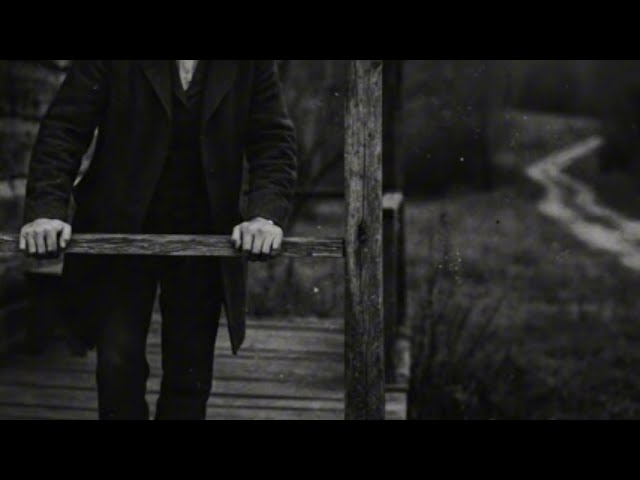
Kora wrote in 1925 that Press was worse. He ate at the spring now, literally, taking his meals there. She wrote in 1928 that she was thinking about leaving. She wrote in 1929 that she had not left. She wrote that she could not leave Press. Press is 26 years old and he has not been past the mouth of the hollow in 3 years, she wrote. He is entirely himself and he is entirely the hollows and I cannot leave him there alone with it. At the bottom of that letter, she wrote four words: Denton is different.
By 1932, Kora explained what different meant. Press is the one being held, she wrote. Denton is the one holding. He is 19 years old and he is in that second room every night. The spring is quieter in these last two years than it has been in all the time I have been here. She wrote that she thought Denton was the feeding now. The cloth at the door is habit, and the habit is empty, and what the hollow is eating is Denton.
Leora received that letter and did not go back. She had her husband and her ordinary life and two children of her own by then, a girl named Ruth and a boy named Cal. But she started checking herself again by smell, every morning before the sun was up. For seven years, she was clean. Then one morning in the fall of 1939, she went outside and breathed in and stopped. It was faint, very faint. Old copper, dry metal. Not the hollow smell. Deeper than the hollow smell. She went inside and sat at the kitchen table and thought about it for a long time. She did what Amma Seismore had told her. You feed it at your threshold, but your threshold is your own body now, not a doorstep. You keep it outside by keeping yourself between it and everything you love. You are the door now. You say your own name out loud every morning so that you know which side of the door your name is on. She did that every morning for 39 years.
In the spring of 1942, Ruth came in one morning and told her mother that the cloth on the back step had been folded differently. Not sloppily different, a precise, deliberate, different fold. Leora asked her to show her, and Ruth folded a cloth from the kitchen drawer the way the step cloth had been folded. Leora looked at it for a long time. That is how my mother folded the tablecloth when she set the table on Sunday, she said. Patient Soul had been dead since 1885. Bess Soul had been dead since 1909. Neither of them had ever been to Middlesborough. The cloth on the step in the spring of 1942 had been folded the way Patient Soul had folded a tablecloth, 50 years after she died and 130 miles from where she had ever lived. It remembered her.
Leora died in 1978 in Middlesborough in her own bed. Ruth was in the room. In the last hour before she died, Leora said her name and Cal’s name and her husband’s name, methodically, making sure of something. At the moment she died, Ruth smelled something. Old metal, the smell of old copper. It was faint, and it was there, and it was gone in about three breaths. Ruth wrote about it later to her own daughter, who had reported waking up to a smell in her apartment in Cincinnati. Ruth wrote that her grandmother had told her once that there was something she had been holding for 40 years, and that when she stopped holding it, it would go somewhere. I think it went to Cincinnati, Ruth wrote. I think it went to you.
The granddaughter is now 64 years old and lives in Columbus, Ohio. She is healthy and has children and grandchildren and a house that smells of an ordinary house. She wrote back when contacted, and she said three things. She said yes, she remembered the smell in Cincinnati. She said she did not smell it now and had not for many years. And she said she still set a plate out on her back step some nights. She did not know why. Her mother started it when she was a child. Just a habit. And the food was always gone in the morning. And the cloth was always folded.
Press Soul died in the summer of 1947 in the hollow at the spring. He was 44 years old. The county record says he drowned, which is technically possible in four feet of water if a man is not well. The deputy who filed the report wrote one additional line and then crossed it out, but you can still read it on the photocopy. He wrote that the basin floor appeared lined with cloth folded in one layer.
Kora Soul died in the hollow in 1949 at 69 years old of pneumonia. She had kept the feeding for 48 years, longer than Patient and longer than Bess. Her last letter to Halley Fry is dated the October before she died. She wrote that Denton had left in August. He did not say goodbye, which is what he was told to do by whoever told him to do it. She wrote that the feeding continued. She wrote that she did not know what she was feeding at that point. Press is gone, she wrote. Calhoun is gone. Leora is far away. Denton is somewhere I do not know. And I am an old woman in a hollow. Every night I put a plate at the door, and every morning the cloth is folded and the food is gone. She wrote that she would keep doing it because stopping it after 48 years seemed worse than continuing. She wrote, do not come into Trace Creek Hollow. There is nothing in it now for anybody to find.
Denton Soul left in August of 1949. He was 38 years old. He appeared in a voter registration for 1950 in Harlan, and in a social security record from 1953 with an address in Whitley County. He lived the last 20 years of his life in a house in Claiborne County, Tennessee. He set out a plate every night for the rest of his life. His daughter said he told her it was the habit. Once you have kept the feeding long enough, it becomes part of the structure of a day. He died in 1986 at 75 years old. The morning after he died, his daughter went out to the back step where he always put the plate. The plate was there, and the cloth was on it. She lifted the cloth. The plate was full. She wrote that she did not know what that meant. She also wrote that her father never folded the cloth in 40 years of putting out the plate. He said he did not know how to fold it the right way, and he would rather not fold it wrong. But the morning after he died, the cloth on the full plate was folded. It was folded the way he had told her his great-grandmother had folded the tablecloth on Sundays.
The surveyor’s notes for Trace Creek Hollow, dated August 1844, describe the hollow as approximately two miles in length with a spring on the east wall. The surveyor wrote no sign of prior occupation. Then beneath it, in a different ink and a different hand, there is one additional line. It reads: Exception, spring basin is cut. Old work pre-count. The basin was cut before the county existed. Somebody cut that basin before Harland County was a county, before the white settlement came up the Cumberland River Road, in a time when the hollow was empty. And then the hollow waited. It waited in the patient way of hollow places until someone came who needed a spring at four feet where they did not have to dig, and built close enough to it that the 30 feet was not quite enough, and fed a stranger in the cold, and let the stranger stay. The basin was already there. Whatever wanted feeding was there before the first feeding. It had been patient before Patient. It is still there, and the spring runs right, and the cloth is always folded.