The public record of the British royal family is meticulous. It documents appearances, engagements, and official duties with precision. Yet, for more than 50 years, one woman appeared in that record while remaining completely silent. Penelope Knatchbull, Countess Mountbatten of Burma, known to friends as Penny, was present at official functions, horse races, and carriage driving events. But her voice was absent. There were no memoirs, no candid interviews, and no detailed autobiography bearing her name.
This silence is the core of the story. A friendship was lived intensely in private and documented carefully in public, but never explained by the one person who knew its details. To understand what Penny Knatchbull could have revealed, one must first understand what the record actually shows.
Her connection to the royal family was not accidental. It was a matter of blood and history. Born Penelope Eastwood in 1953, she married Norton Knatchbull in 1979. He was the grandson of Earl Mountbatten of Burma. That marriage brought more than a title. It placed her at the heart of the royal family's inner circle. Lord Mountbatten was Prince Philip's uncle, mentor, and father figure. He was also a guide to the Prince of Wales.
Through the shock of Mountbatten's assassination in 1979, Penny entered a family in mourning. She witnessed their private grief. According to biographer Gyles Brandreth in his 2022 work "Philip: The Final Portrait," she became an essential part of the small trusted group that surrounded the Prince of Wales in the aftermath. She was a friend to both Charles and Diana. She rode horses with them and hosted them. She occupied a rare position of neutrality in a marriage that lacked it.
However, her friendship with Prince Philip became the most enduring and famous. It was rooted in a powerful shared passion: carriage driving. In the early 1970s, Prince Philip became actively involved in the sport, seeking an alternative athletic activity to polo. He helped modernize its rules and equipment. He competed internationally. It was a world far from palace protocol, a world of mud, reins, and rattling carriages.
Penny Knatchbull, an accomplished horsewoman herself, entered this world. She did not just watch. She became his teammate. By the 1980s, they were a permanent duo in competitions. Philip drove a carriage pulled by four horses while Penny worked as his "backstepper," responsible for the carriage brakes. She stood in a swaying position at the rear, leaning her body into turns to balance the vehicle. It was a role requiring immense trust, physical courage, and silent, seamless communication. Any wrong move could overturn a ton of horses and carriage.
Their partnership was documented in the sporting press. They won medals together in European championships. This was not a symbolic friendship. It was a practical, tested, and very public partnership built on shared and demanding skill. In the archives of the British Carriage Driving Society, her name appears alongside his, not as a countess, but as a team member.
The nature of their friendship naturally sparked speculation. Here was a married woman, 32 years younger than the Duke of Edinburgh, spending countless hours with him in an isolated and physically demanding activity. They traveled to competitions across Europe. They trained on the grounds of Windsor and Sandringham. The tabloid press whispered. But the palace and the family consistently presented it for what it was: a sporting fellowship.
In his authorized biography, "Prince Philip: The Turbulent Early Life of the Man Who Married Queen Elizabeth II," published in 2011, author Philip Eade referred to the friendship factually. He noted Philip's appreciation for Knatchbull's sporting prowess and their shared practical approach. There were no written scandals, no leaked letters, no resigned aides to suggest anything more. Testimony from those who moved in the same circles reinforces this. They describe Philip's circle of friends as clearly informal. They were people who talked about harnesses and bridles, not gossip.
Penny Knatchbull, according to many, was one of those people. She was, in stable language, good with horses. Prince Philip valued that above almost any other quality in a companion. The silence here is not the silence of scandal. It is the silence of a private person in a public institution. Penny Knatchbull never worked as a lady-in-waiting to the Queen. She rarely, if ever, undertook royal duties. She was never an official spokesperson. Her access was unparalleled, but her commentary was nonexistent.
She witnessed the private rhythms of the family, the barbecues at Wood Farm, the informal dinners, and the constant banter that was Prince Philip's preferred mode of communication. She saw him not as the Queen's consort, but as a competitor, a colleague, and a friend who could be bluntly frank and unexpectedly kind. She possessed a store of anecdotes that could have illuminated the man behind his often gruff public persona. Yet she chose, and still chooses, not to exploit that access commercially. She does not explain it.
In an age of constant disclosure, her reticence is itself a kind of statement. It aligns with Prince Philip's worldview, where certain matters are not for public consumption. Their friendship was entirely a lesson in that principle. They lived it publicly, yet she never clarified it. This leaves us with a portrait built not on her revelations, but on her absence. We piece together an image from the observations of others, from official records of their public appearances, from the minutes of sporting bodies, and from the rare comments permitted in authorized biographies.
What she might say about his temperament, his humor, his loyalty, or his frustrations remains hers alone. The title of this story is a question, not an answer. It asks what Prince Philip was really like. The first and fundamental answer is that he was a man who valued a friend who would never tell.
Her life before that title was rooted in the English countryside and horses. Penelope Eastwood was the daughter of a Yorkshire landowner. She was a skilled rider, competing at the highest levels of the sport. This is an essential detail. It speaks to physical courage and familiarity with discipline and risk. It also provided a natural point of connection with Prince Philip, himself a passionate carriage driver. Their relationship, according to many accounts, was not refined in drawing rooms but in stables and on muddy tracks. It was a friendship built on shared effort and practical focus. There was no need for long conversations when the task was checking a saddle or assessing a horse's gait. This was a language he understood completely.
The marriage produced three children. It connected her to Broadlands in Hampshire, the traditional Mountbatten family home. Her life took on the rhythm of a titled aristocratic wife, managing the estate, charity work, and raising a family. She supported her husband when he took his seat in the House of Lords. She performed countless small ceremonial obligations that define that layer of British life. From the outside, it might appear a traditional picture. But the frame around that picture was exceptional.
Family gatherings at Broadlands or Sandringham included the Duke of Edinburgh. She attended events alongside the royal family for decades. Her presence in the Court Circular, the official record of royal engagements, was constant and quiet. She was there. She was, in a very real sense, considered a member of the extended family. In 2004, she accepted the role of lady-in-waiting to the Duchess of Cornwall. This was a professional appointment, not merely a familial one. It required discretion, organizational skill, and a deep understanding of the institution's unwritten rules. She performed these duties for years, earning a reputation for fierce loyalty and high competence.
A specific and rather curious detail illustrates the depth of her integration. For many years, she was one of the very few people outside the immediate royal family who possessed the private phone number for Sandringham House. This was not a glamorous secret. It was a utilitarian tool, a mark of functional trust. It meant she could call to arrange a weekend shoot, discuss a horse's health, or confirm a dinner date. It was a small code for a much larger reality. She had access. She was at the heart of the ordinary logistics that underpin even the lives of royals.
Her personality is often described as practical and direct. Friends and observers use words like solid, businesslike, and unimpressed by fuss. She is not portrayed as a flatterer or a courtier. This temperament likely served as a counterweight in her friendship with Prince Philip, a man known for his impatience with pretense. Their relationship reportedly thrived on mutual frankness. He could be acerbic. She was capable of responding in kind. This dynamic is crucial to understanding any potential revelation from her. It would not be the observations of a distant admirer. It would be the assessment of a peer who earned her place through a shared language of service and sarcasm.
The tragedy of the IRA bombing that killed Lord Mountbatten left an indelible mark on the family she married into. Her husband lost his father. Prince Philip lost his beloved uncle. The nation lost a symbolic figure. Penny entered this atmosphere of grief. She witnessed its long-term effects firsthand, the private sorrow behind the public tributes. This shared experience of loss, of a family violently torn apart, created another layer of connection. It was a bond formed in something darker and deeper than social proximity. It was a shared understanding of catastrophe.
By the time Prince Philip entered his final years, Penny was a fixed point in his life for over four decades. She was close to him by marriage, a partner in equestrianism, and a trusted confidante. Her perspective is therefore triangular. She saw him as a family member, a sporting companion, and a friend. This makes any testimony from her uniquely valuable. It is a view from multiple angles. It avoids the single-lens perspective of a servant or a distant relative. She occupied a rare space between those worlds.
The public record of her life consists of scattered fragments. We find it in Court Circulars noting her attendance at Sandringham church services. We find it in horse racing reports from decades past. We find it in official announcements of her royal appointment. What is missing is her personal voice. She has never published memoirs. She has never given interviews about her experiences. She is a figure defined by action and presence, not public statements. This silence is itself a characteristic. It aligns with a certain tradition of reticence in that generation and class. Stories, if they exist, are presumed to be private. They are for the family archive, not the public domain.
This sets the stage for the essential tension. A woman who spent a lifetime observing rather than speaking, who witnessed history from a privileged position but kept her opinions to herself. The promise of revelation conflicts with a biography that suggests a rooted resistance to it. She is a guardian of both a family and a historical legacy. To speak would mean changing that guardianship. It would mean converting private memory into public property.
The credibility of any revelation depends entirely on the nature of the source. So we must understand the source first, not as a narrator but as a participant. A woman who drove carriages, answered private phone lines, and carried a title that was both a blessing and a burden. Her view of Prince Philip would be from inside the fabric, seeing the knots and loose threads on the reverse side, not just the perfect image presented to the world.
The view from inside the fabric reveals a pattern of deliberate choice. Prince Philip's documented inner circle was not an accident of proximity. It was a designed landscape of his own making, populated by individuals who met a specific and stringent criterion: usefulness. They were useful for sport, for conversation, and for a shared professional language entirely separate from the constraints of court. These were his non-royal friendships, long-lasting and fiercely protected. They provided a vital counterbalance to a life filled with unrelenting ceremonial duty. Polo players, sailors, and carriage drivers were his private escape pod. They were also his means of insulation from the world.
His world behind the palace gates was fundamentally physical. It revolved around movement, competition, and tangible mastery over animals or machines. Polo introduced him in his younger years to a fast-living set. Sailing was his intrinsic passion. His friendship with boat designer Uffa Fox was based on a shared technical understanding of wind and waves. The talk was about fins and hull speed, not precedence or protocol. Fox was said to visit Buckingham Palace with his pockets full of engineering drawings, leaving a trail of tobacco ash on the royal carpets. This was an overlooked detail, perhaps even enjoyed, for the conversation it accompanied.
Then came carriage driving. In the latter part of his public life, this sport became his consuming obsession. Within the muddy, practical world of competitive carriage driving, he was said to have formed some of his deepest relationships. He needed experts. He found them in people like German driving champion Count Willy von Pückler and leading British driver and trainer Derek Ousey. These were men who judged him on the skill of his hands, the steadiness of his nerves, and his understanding of a pair of horses. Titles were irrelevant. Skill was everything.
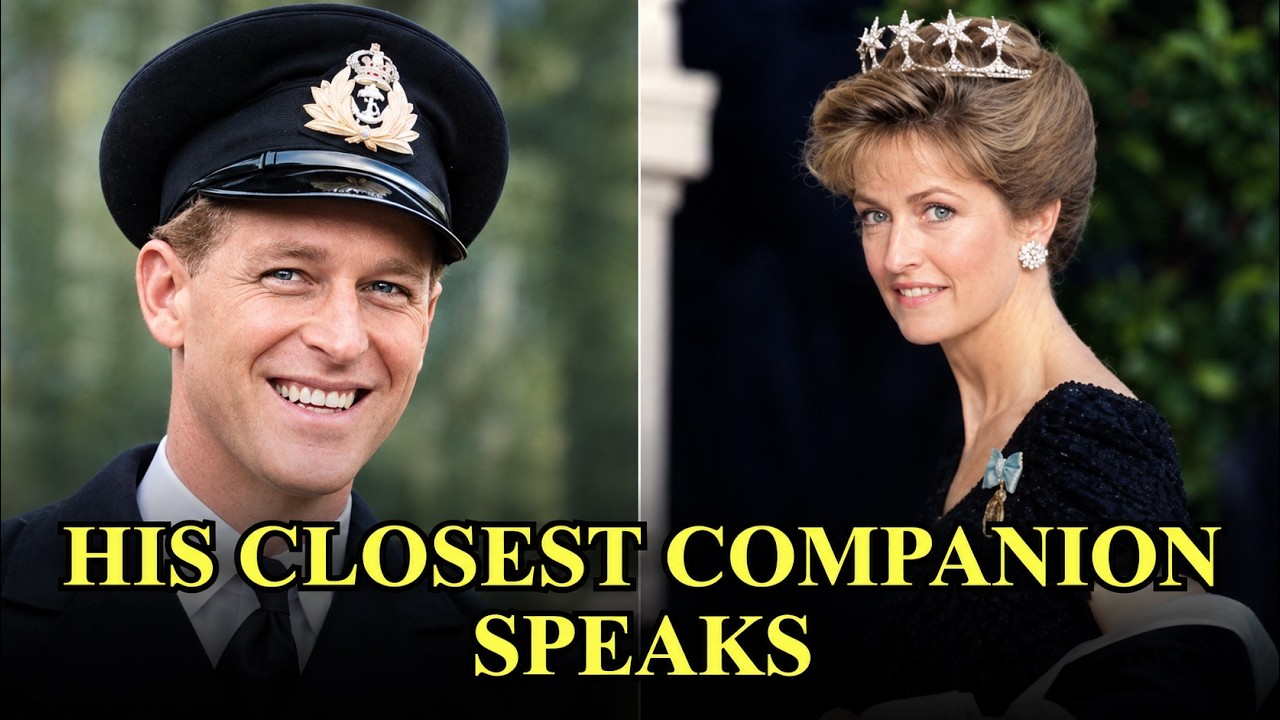
He served as president of the International Equestrian Federation, immersing himself in the administrative details of the sport. He corresponded with judges and course designers on equal terms, with letters full of precise technical observations. This was his parallel world, with its own rules and loyalties. The palace walls did not extend to the training grounds at Windsor or the cross-country tracks at major championships. The value he placed on these companions, according to multiple accounts, was profound. Biographer Gyles Brandreth indicates that Philip spoke of these friendships with a sincerity he rarely used in his constitutional role. They provided an outlet from what he sometimes called "the performance."
There was a remarkable simplicity to these interactions. A shared lunch after a morning of training was not a formal state occasion. The conversation could be terse, focused entirely on the training run that had just ended. It could be argumentative, debating a new rule change from the sporting federation. It was, above all, genuine. These relationships were not utilitarian in the traditional sense. They were reciprocal in the currency of shared interest. He gave them patronage, access to royal properties for training, and a platform for their sport. They gave him expertise, honest criticism, and a vital sense of groundedness, or rather, a specialized groundedness where his status was secondary to his competence.
One curious and documented detail underscores the material nature of these bonds. Prince Philip personally designed and built a prototype for a new type of carriage. He called it the "Balmoral Dog Cart." The goal was to make it safer and more maneuverable than traditional designs. He worked on the technical drawings himself. He then tested it rigorously, driving it himself and assessing its flaws and merits. This was not a monarch opening a building or naming a ship. This was hands-on innovation and practical critique. The circle around him understood this language. They would examine the vehicle's balance, the position of the foot brake, and the wear on the axle. Their observations were direct, and he listened. The fine art of courtly flattery had no place here. A poorly balanced carriage would inevitably tip over. The truth was empirical and tangible.
His private secretary, over the decades, recognized the sanctity of this world. Appointments with his sporting coaches were rarely changed. The weekly schedule, often a masterpiece of constitutional planning, was adjusted specifically for these meetings. They were treated with the same fixed priority as state visits. This was not merely a hobby. It was essential infrastructure for his personal nature. Critics of his sometimes brusque public manner often failed to see this contrast. Within these circles, that frankness was not just accepted; it was expected. It was the language of the stables, the boatyards, and the workshops. He could be generous, fiercely loyal, and surprisingly patient with those who showed skill or a willingness to learn. He was far less patient with what he considered incompetence or pretense.
The composition of this circle also reveals a conscious choice to maintain distance. These were not the great aristocratic families eternally linked by royal blood. They were professionals, soldiers, and sportsmen. Their connection to him was unique, defined by the activity itself. This provided him with a clarity he clearly treasured. The relationship began and ended at the edge of the polo field or the sailing club. There was no overlap with the complex, inherited politics of the palace. There were no great expectations of advancement, only for a good performance or a successful sailing trip. It was, in many ways, a purer form of friendship. It was anchored entirely in the present. The past, with its burdens of history and tradition, and the future, with its uncertainties, could be kept at bay for a while. For a few hours, he was just a driver, a sailor, a competitor. The man behind that role could breathe.
This established pattern makes any individual's admission into this sphere highly significant. Entry was not easily granted. To be part of this world meant gaining a view of Prince Philip that the public did not see, and often differed from his side as a family man. It meant seeing the Prince in his element where he seemed most himself, or perhaps in a self he chose of his own free will. Therefore, any claim to credible revelation about his character must logically come from within this fortified circle. The distant observer, the passing guest, the diplomatic official, all saw the performance. The inner circle saw the machinery. They knew the pressure points, the tolerances, and the breaking limits of the materials. They knew when his jokes were genuine and when they were merely armor. They understood the difference between his ceremonial silence and his comfortable, active quiet. Their testimony, if ever published, would carry special weight. It would also carry the weight of potential betrayal, a breach of the unwritten pact that made the friendship possible: what happens in the stable stays there.
In the open air, away from the palace corridors, a particular friendship found its most solid ground. The activity was carriage driving. Prince Philip took it up seriously in the early 1970s. He was in his fifties. Royal biography by Philip Eade suggests the Prince had retired from polo. He needed a new hobby. He did not choose a passive one. He chose a sport requiring coordination, risk, and a deep understanding of equine temperament. He became a pioneer of modern competitive carriage driving in Britain. He designed his own racing carriages. He developed harness designs. The sport provided an outlet for his relentless engineering mind. It was physical. It was tactical. It was, in essence, about controlling a complex system: horse, vehicle, and terrain.
This world of leather, polished wood, and flying mud became a private domain. It had a small, loyal cadre. They judged a person not by title but by skill. They valued quiet competence over chatter. The Countess of Mountbatten, Penny Knatchbull, was already deeply involved in the equestrian world. Her expertise was vast. She was a respected figure in three-day eventing circles. She understood the language of horses, the immense preparations, and the precise communication required between human and animal. This shared language formed the foundation. Their bond was not primarily based on dialogue. It was practical. They could communicate in shorthand. A look at a horse's stance, a raised eyebrow at a taut rein, a nod towards a specific piece of tack. This was their dialogue. It was built on a foundation of mutual, unspoken respect for the craft.
A curious detail emerges from reports. Prince Philip kept his carriages in the royal stables, but his training ground was the vast private grounds of Windsor Castle. There, he practiced the complex obstacles of the driving course. Cones were set up with balls balanced on top. The goal was to navigate through them without knocking the balls off. Speed and precision were both essential. It was a solitary hobby, often practiced in the early morning. Yet it was also a team sport. He needed grooms, navigators, and coaches. He surrounded himself with those who did not over-praise. He valued those who would tell him bluntly if a horse was off-color or if a piece of equipment was unsound. Knatchbull, according to numerous accounts, belonged to this category of person. Her presence was not as a spectator. She was a participant. She possessed the knowledge to engage with him on his level, on his terms. The relationship was based on action and practice.
The sport itself is a strange and demanding ballet. One driver controls four horses, each pair responding to separate reins. The whip, held by the driver, is not for punishment. It is an extension of the arm, a visual signal. The navigator, or groom, stands at the back of the carriage, leaning out over the wheels during sharp turns to balance the vehicle. The risk of overturning is constant. Trust within the team is absolute. This environment strips away pretense. There is no room for formal ceremony when you are trying to prevent a half-ton carriage from tipping over. Decisions are made in split seconds. Mistakes are immediate and visible. In this arena, Prince Philip found a kind of equality. Gyles Brandreth, in his biography of the Prince, notes that Philip stated the carriage driving community treated him simply as another driver. Titles were left at the gate. Performance was often the primary measure that mattered. For a man in his position, such a space was exceedingly rare.
It was psychologically necessary to have a friend from within that world. Even rarer, perhaps, was having someone who could also navigate the other layers of his life. Knatchbull could bridge that gap. She was aware of the weight of the crown. She was also aware of the correct tightness of a girth strap. Their shared passion extended beyond the competition arenas. He served as president of the International Equestrian Federation. She served as vice-president of the British Equestrian Federation. Their paths crossed in committee rooms and international forums. The focus remained on the welfare of the sport and the horses. This provided a neutral and productive ground for a friendship to flourish. It was not based on gossip or nostalgia. It was forward-looking, concerned with breeding standards, course design, and safety protocols. The relationship was solid because it existed for a purpose beyond themselves. It was anchored in a concrete and ongoing project.
The carriage driving community, tight-knit and unknown to the general public, became a supportive backdrop for them. It was a world where he could be just Philip, and she could be just Penny. The horses, of course, were the great equalizer. A horse does not care if you are a prince or a countess. What matters is confidence, clarity, and consistency. In the eyes of the horses they handled, they were judged by the same standards. Perhaps that was the deepest understanding between them of all.
The carriage stopped, and that moment ended. The public display of partnership was over. What remained were the private coordinates of a friendship, charted not in grand gestures but in a thousand small documented meetings. These meetings form a map. Following it requires a special kind of attention, a willingness to look beyond the official portrait and into the margins of court reports, sporting association minutes, and the quiet logistics of a shared passion. The archive, with its dry precision, tells its own story.
Consider a single page from the British Equestrian Federation, dated 1988. This page lists the names of attendees at a planning committee. Among the names appears that of the Lady Penelope Knatchbull. Her presence is a matter of fact. It indicates a level of commitment, a seat at a table far removed from the formal palace halls. It places her within the administrative machinery of the sport. Another document, a report on the 1984 Badminton Horse Trials, lists competitors and their horses. It does not typically mention spectators. However, the presence of certain individuals near the royal box, as captured in photographs reviewed for commentary in newspapers, can constitute a record of proximity. These are the fragments. The researcher assembles them, not to inject drama that did not exist, but to trace the consistent pattern of a shared world.
The logistics of that world were complex. Carriages, horses, stable staff, and competition schedules demanded a military precision the Duke understood instinctively. His involvement was characteristically hands-on. He designed carriages himself. He sketched modifications to saddles. He argued about the technical merits of four-in-hand versus pairs, driving with the enthusiasm of an engineer. Penny Knatchbull operated within the same scope of practical detail. Their conversations, as remembered by those in the carriage driving community, were astonishingly specific. They would debate the ideal weight of a whip. They would exchange observations on the temperament of certain Hungarian horse breeds. They discussed the type of elm wood used in carriage shafts. This was the language of their friendship, a lexicon of tangible objects.
One of those tangible objects was a particular carriage lamp. According to a former royal stable official, the Duke particularly disliked the standard lamps used on many competition carriages. He found their light too diffuse and their brackets prone to rattling. He was said to have ordered a set from a Sussex company with a uniquely focused beam and a custom rubber fitting to prevent any vibration. The official recalled that Lady Knatchbull, upon seeing them, ordered a matching set for her own carriage. A small thing, a functional thing, yet it expresses a shared philosophy, a convergence of taste that valued performance over show.
The social geography of their friendship also has documented landmarks. The Court Circular, that stern daily record of official movements, is a sparse but expressive source. It records, without comment, arrival and departure times. A reference study shows a pattern of Lady Knatchbull's presence at Sandringham during the annual Christmas and New Year gatherings. These were not official visits; they were private invitations. The Circular might simply state on a given December 27th that the Lady Penelope Knatchbull was among the guests at Sandringham House today. The names of other guests were often omitted. The inclusion of her name in the Circular was a function of her rank as a daughter of an earl, but its repetition was a function of her relationship. Archival evidence suggests she was a recurring figure within the private rhythm of the royal family's holidays.
This access extended to Balmoral as well. Though less frequently mentioned in the Circular, photographs of summer gatherings at the estate, later published in biographies or archived by news agencies, sometimes place her there. She appears in the background of a shooting party picture, dressed in the practical tweeds of the Highlands. Her presence is noted at the Ghillies Ball, a private event for estate workers and house guests. These were not scenes befitting a formal retinue. These were scenes of a close friend, someone integrated into the informal, sometimes rugged, family life.
This friendship also faced tragedy, a grim fact documented in historical records. The inquest into the death of Lord Brabourne in 1979, Penny Knatchbull's father-in-law, resulted in detailed testimony. The facts of those proceedings were reported in The Times. The family's private grief became a public matter. Observers noted the royal family's support during that period, though its precise nature remained private. What is established in the records is that the Duke of Edinburgh attended the funeral. His presence, listed in the official report of the funeral, was a signal. It was a mark of respect, not only for a public figure but for a family connected to his own through his uncle Lord Mountbatten, and now through his friend.
Financial records also offer a kind of objective insight. The London Gazette, the official public record, publishes notices of wills and probate. In 1980, it recorded details of the Knatchbull family trust. The administrative details are dry. They list trustees, beneficiaries, and sums of money. They do not mention motives or personal feelings, but the existence of such structures in itself points to a world of inherited responsibility and wealth management. A world the Duke understood deeply from his position as head of various charitable trusts and institutions. Their shared reality included this unglamorous side of duty. The paperwork that underpinned lives of privilege. It was another layer of common ground, rarely discussed but fundamentally understood.
Any researcher seeking a smoking gun, a revealing letter, or a scandalous confession will find nothing. The archive resists that. Instead, it offers an accumulation: a name on a committee list, a carriage lamp, an entry in the Court Circular, a shared silence at a funeral. Each is a specific point. When connected, they reveal not a sensational story but a continuous, steady line. It was a friendship built in the workshop, on the driving field, and in the quiet corridors of private homes. It was not confirmed by announcements but by continuity.
As the 1980s progressed, a new generation would witness that continuity. Younger members of the royal family, notably the Princess of Wales, would enter this established circle. They would observe this dynamic firsthand. They would see the ease, the lack of pretense. It would become a fixed part of the landscape, so familiar as to be almost invisible. But the documents, in their patient and neutral way, had already begun to chart the map.
The private world of Prince Philip was one of fixed points. There was the study at Windsor, the workshop at Sandringham, and for many decades, a long table at a London restaurant. It was known simply as "The Thursday Club." Its existence is mentioned in several biographies, including those by Philip Ziegler and Gyles Brandreth. It was an informal lunch gathering, a recurring fixture in the Duke of Edinburgh's schedule, where a select group of men—and they were almost exclusively men—from outside the royal orbit could meet. They were figures from the worlds of theatre, academia, the military, and exploration. The conversation was wide-ranging, and the atmosphere was deliberately unpretentious. Protocol was left at the door, much like a coat.
This makes the documented presence of at least one woman at these gatherings particularly significant. According to Gyles Brandreth's biography, "Philip: The Final Portrait," Penny Knatchbull was a regular attendee at the Club. Her presence was not a one-off occurrence. It was sustained. This was a notable breach of the Club's informal gender barrier. The lunch was, by design and tradition, a masculine space. Its original members in the 1950s were naval comrades and media figures. The tone was set by a boisterous, college-like camaraderie. Jokes were told, ideas were debated, and wine was generously poured. To be invited back as a woman indicated a level of intellectual and personal parity that Philip granted to very few.
It was not about romantic intrigue, the dull lens through which such friendships are often viewed. It was about mental compatibility. Penny was by that point a formidable figure in her own right, a skilled horsewoman, a businesswoman managing the Broadlands estate, and possessed of a sharp wit and a notable lack of reverence. She could hold her own. The table demanded it. One did not go to The Thursday Club to be a spectator. One had to participate. Her frequent presence there suggests she brought something to the conversation the Duke valued. He could not abide fools. He actively avoided them. Her seat at that table was proof that she was not one of them.
Details of their conversations there are lost. No minutes of the sessions were kept. Gossip columnists could not eavesdrop, but the venue itself was highly expressive. It was a neutral zone, far from state rooms and private secretaries. It was a space defined by interests, not titles. Here, Philip could discuss carriage driving, conservation, or the intricacies of estate management with someone who not only understood but had direct practical experience. She was his competitor. She was his fellow landowner. The dynamic between them was one of peers. This was the oxygen he needed.

The curious detail often mentioned about these lunches is the tradition of signing the tablecloth. At the end of the meal, members would sign their names in ink on the fabric. The cloth would then be washed. But the signatures, reappearing with years of repeated use, would become faint, ghostly traces on the linen, like an accumulated record of companionship. One wonders if her name also joined that spectral record, woven into the fabric of his private life.
Her presence also indicates a subtle but significant shift in Philip's social circle as he aged. The original members of the Club began to pass away. The world changed. The need for that particular kind of escape remained. The circle inevitably shrank, but it did not empty. It refined to include those whose company provided the most consistent and reliable engagement. Penny's continued presence suggests she was part of that essential core. She provided a link not to his past, but to his current passions. While other friends reminisced about naval days, she could talk about the latest design for a new carriage, the breeding of a particular horse, or the challenges of managing a historic house in the modern age. The conversation was forward-looking, engaged with the ongoing projects of his life. Perhaps this was the greatest service such a friendship could provide. It was not based on nostalgia but on active participation in the world.
The Thursday Club was, in many ways, a perfect metaphor for their relationship. It was organized, yet informal. It was regular, yet private. It existed on its own terms, governed by its own rules of engagement. It required no official recognition. It issued no press releases. It simply was. Within this context, her role was clear. She was not part of the court. She was not a blood relative. She was a fellow member of a club of two. The significance lies not in the fact of their friendship, but in its specific geography. He invited her into one of the most fortified spaces of his private life. This was not a passing acquaintance from a garden party. It was not a seat at a formal banquet. It was a chair pulled up to a long, battered table in a London dining room, where talk ranged over everything and nothing, and where the only protocol was the quality of the conversation. That invitation, repeated on many Thursdays over many years, is perhaps the most tangible evidence of the standing she held in his world.
It was a documented habit, a fixed part of his schedule, and habits in the life of a man like Prince Philip formed the structure of his genuine affections. This integration into his private routine created a unique vantage point for her. She saw the Duke in a context rarely witnessed even by his children. She saw him at ease, unconstrained by the Queen's presence or the weight of immediate family dynamics. She saw him among his self-selected peers. This gave her an understanding of his character distinct from the view from within the palace walls or the family circle. She witnessed his intellectual restlessness, his appetite for debate, and his impatience with pretense, all in his natural environment. She saw the man he chose to be when he had significant freedom of choice. That view, formed over those countless meals, would later inform her unique position within the broader royal framework. She became a link between his private world and the wider family, a familiar figure who understood the language of both worlds.
The transition from private companion to formal attendant is rarely marked by ceremony. It is a subtle shift, noticed in seating plans and in the frequency of one's name within the confidential pages of the royal newsletter. For Penny Knatchbull, a tangible symbol of this shift was said to have taken a specific and permanent form: a piece of jewelry. According to biographer Gyles Brandreth, who interviewed many of the Prince's friends for his 2021 biography, Philip gave Knatchbull a distinctive gold bracelet. It was not a piece from the royal vaults, laden with historical precedent. It was, by description, a modern and personal choice. The alleged gift carried an implied weight of recognized and reciprocated trust. Within the carefully coded language of royal circles, where accepting a gift means accepting a bond, this item becomes more than an accessory. It is a signal, a quiet understanding made manifest in gold.
The protocol surrounding gifts given to or from members of the royal family is complex, governed by tradition and acute sensitivity to public perception. For a married Prince to give a personal piece of jewelry to a married woman who is not a relative falls into a gray area. It is only acceptable if the intent is considered entirely platonic and the behavior is beyond reproach. The bracelet, as described, was said to walk this fine line. It was distinctive enough to be recognized by insiders, yet simple enough to avoid vulgar display. It could be worn at private lunches, at horse trials, and at small family gatherings. Its very simplicity in a world of tiaras was its protective shield. Yet its constant presence on her wrist became, for a small circle, a detail worth noting. A detail that linked her to Philip's orbit long after the carriage arenas fell silent and the restaurant ownerships changed.
One must consider the symbolism of the bracelet. Unlike a necklace or a ring, it is a piece one fastens oneself. It is an act of autonomy. It closes a circle around the wearer, a private reminder. In the context of a friendship so carefully managed away from public eyes, this choice seems apt. It was not a pendant to be prominently displayed at the center of the body. It was something that fell within the range of peripheral vision, for the awareness of the wearer as much as anyone else. The curious detail, as reported in these biographical accounts, lies in its stated specificity. It was not just an ordinary gold bracelet. It was a particular design, commissioned from a specific maker. This precision moves it from the realm of generic royal gifts—a traditional silver photo frame, a routine equestrian print—into the territory of a considered, personal gesture. He was said to have known what suited her. She, in turn, wore it.
For decades, this alleged gift remained a footnote, an inside piece of information circulated among biographers and court watchers. Its significance was discussed in hushed tones. Was it a symbol of deep friendship? A mark of gratitude for years of intellectual companionship? Or was it, as some critics later claimed, a symbol of a relationship that crossed the bounds of propriety? These claims surfaced in the more speculative corners of the press, particularly in the wake of Philip's death. They were never substantiated with concrete evidence. Knatchbull herself never publicly addressed the bracelet or its origins. As is customary, the palace maintained a resolute silence on matters pertaining to the Duke's private life. The full truth of the matter rested solely with the two parties involved, one now deceased, the other known for her fierce discretion.
The persistence of this story across several biographies, however, indicates its power as a narrative device. It provides something tangible onto which many interpretations can be hung. Court life operates on hidden insignia and silent affiliations. A particular way of wearing a scarf, a preference for a certain brand of gloves, a piece of jewelry worn for years without comment. These are the unspoken markers of belonging within the complex system of the court. In this context, the alleged bracelet functioned as a quiet but persistent signal. It placed Knatchbull within a specific tier of the Prince's confidence. Other friends received different gifts, perhaps signed books or sketches. A piece of jewelry, a bracelet specifically, carries a different connotation. It is intimate. It is lasting. It touches the skin. For a man known for his reserve and physical discipline like Philip, such a gift, if given, would have been a radical departure from his usual approach. That very departure is what gives the story its enduring resonance. It suggests that an exception had been made. One of the lines in his personal constitution had been relaxed.
We must also consider the practical reality of such an item in Knatchbull's life. She was a countess in her own right, a woman of means. She had access to her own jewelry. Her acceptance of a gift from the Duke and her continued wearing of it becomes a conscious act. Every day she fastened it, she was making a choice. In the glittering world of high society, where every detail is catalogued and assessed, this choice would not have gone unnoticed. Yet there is no record of her being questioned about it in any public forum. It existed within a bubble of implicit understanding. Her peers likely saw it and said nothing. The media, for a long time, either did not notice or considered it outside the realm of publishable interest. Perhaps this bubble of discretion is the most telling aspect of the entire episode. It suggests a collective, unspoken agreement to protect the boundaries of a private friendship. The bracelet was both present and absent. Seen but not discussed. A perfect metaphor for the relationship it was said to represent.
Then came the reading of the will. Philip's death in 2021 returned the private man to the public sphere with a definitive finality. The subsequent legal proceedings regarding the sealing of his will became a matter of national debate. When it was revealed that Penny Knatchbull was one of three individuals appointed as executors of his private estate, alongside his private secretary and the keeper of the privy purse, the dynamic shifted irrevocably. The discreet companion was now a formal, legal steward of his legacy. This was no longer a matter of whispered speculation over lunch tables. It was a matter of public record, printed in the London Gazette. In this new light, the details of the past were re-examined with a fine-tooth comb. The alleged bracelet was mentioned in the press. It was presented as evidence of a closeness that justified her important new role. It was also cited by critics as proof of undue influence. Thus, this object, once a private symbol, found itself suddenly under the harsh glare of posthumous analysis. Its symbolic weight multiplied overnight.
The tension here is profound. A gift given in secret, its meaning known only to two people, suddenly became subject to a cacophony of public interpretation. The bracelet, if it existed as described, became a kind of Rorschach test. Those who saw a deep and abiding friendship saw in it a symbol of appreciation. Those who suspected something else saw in it damning evidence. The truth, as always, is likely rooted in a more nuanced human reality. Philip, according to those who knew him, was a man of intense loyalty. He valued constancy. He rewarded it. The administration of one's final wishes, the execution of one's personal instructions, is logically entrusted to someone of proven discretion and unwavering fidelity. A piece of jewelry worn for decades could simply be the outward sign of that trust, a promise kept in gold. Perhaps the simplicity of this interpretation is what makes it so elusive. We often search for great love stories or secret tragedies, while the simpler explanation—a steadfast friendship—stares back at us from the wrist.
Yet that curious detail remains. It is the specificity that haunts. A certain design, a certain maker. This moves it beyond symbolism and into the realm of personal index. In a life so thoroughly documented, so relentlessly public, truly personal items are rare. Philip's formal suits are in museums. His medals are indexed and catalogued. His sailing boats have names known to the press. But a small, specific piece of jewelry given to a friend exists outside the official inventory. It belongs to the hidden index, the one that exists in memory and anecdote. Its power lies in its resistance to easy categorization. It is neither a state emblem nor a passing trinket. It occupies a middle ground, much like the woman said to have worn it, neither fully inside the royal machine nor entirely separate from it. A bridge between a private man and his private world.
The public saw a different version of them. They saw the carriage driving. The Royal Windsor Horse Show became a prominent stage. Every spring, the grounds of Windsor Castle transformed into a festival of equestrian sport. Here, Prince Philip was not just the Queen's husband; he was a competitor. He had helped pioneer competitive carriage driving in Britain. He was a fixture there, a man in a flat cap, his hands holding the reins of a team of horses. And often, in the seat beside his carriage or standing near the training cones, was Penny Mountbatten. Their joint appearances were documented in the Court Circular and photographed by the press. The images look strikingly informal. They show two people focused on a shared, demanding interest.
In one shot, Philip is mid-turn, his concentration at its peak. Mountbatten, acting as his groom, balances beside him, her body leaning into the momentum of the carriage. In another, they are both laughing, a moment of relief after a round or in obvious affection. The contrast with a formal banquet could not be more complete. The formal suits and tiaras are gone. In their place are tweed jackets, sturdy boots, and the honest mud of the arena. This was not duty. This was, by many accounts, passion. The dynamic here was radically different. At a palace occasion, the structure of protocols and conventions placed a fixed distance between a royal and a friend. At a driving competition, they were a team. Their roles were clearly defined by the sport itself: the driver and the groom. Success depended on silent, fluid communication, trust built on practice, and a shared understanding of risk. A misjudged turn could result in a broken shaft or worse. This context made their harmony together not just visible, but logical. It provided a perfect public pretext for a close friendship. Observers could note their obvious rapport without immediately questioning its nature. They were simply dedicated participants in a niche sport. It was, in many ways, a perfect cover.
The curious detail lies in the specific risks of the sport Philip chose. Carriage driving carries strange dangers for a member of the royal family. The driver is completely exposed, moving at speed behind powerful animals, separated from serious injury by only a light vehicle. For a man whose life was protected by layers of security, this was a profound and deliberate choice. He was not a spectator. He was in the arena, and he placed Knatchbull beside him there. This deliberate choice carries many implications. Their photographed presence at these events gave the press and the public a controlled narrative. It was a narrative of healthy outdoor activity and sporting friendship. It was so natural that it often went unremarked upon in deep analysis, and perhaps that was the point. Their carriage driving appearances were so public as to become almost invisible. They were masters of disappearing in plain sight. The easy familiarity on display was real, but it was also a performance. A performance of naturalness. A performance of innocence of purpose. And because the activity itself was so marginal to the main business of the monarchy, it was allowed to exist with little scrutiny. The press could file their photos under "royal hobbies" and move on. This was not a secret meeting in a private apartment. This was a sunny day at Windsor with crowds watching. Yet, within that publicity, the privacy of the bond at its core was protected.
The contrast with formal state occasions is not merely one of attire. It is a contrast of essence. At a diplomatic reception, Prince Philip played a role written by centuries of tradition. Every word and gesture was part of a sovereign performance. His relationship with anyone in that room was filtered through that performance. At the Windsor Horse Show, the script was written by the International Equestrian Federation. The performance was about precision, equestrian skill, and emotional steadiness. This shift liberated him. It freed their interaction from the gaze of the court. Here, a critical look from Knatchbull about a turn taken too wide carried more immediate weight than the opinion of any ambassador. Her role as groom was active and essential. She was not a companion; she was a vital part of the operation. This gave her an authority in that arena that she did not possess within the royal household. Their partnership was practical, and for that reason, it was respected.
It is worth pausing on the physicality of this. Carriage driving is a sport of motor coordination and shared balance between two people on a swaying vehicle. It requires quick instincts to read the other's reactions. This physical dialogue, played out in front of cameras, conveyed an intimacy that hidden quiet moments could not. It was a permitted and acknowledged intimacy. The wind, the dust, the sound of hooves and wheels, these elements created an isolated world even within the crowded showground. During those few minutes on the course, they existed in a bubble of shared focus that excluded everything else. The public saw the result, not the countless hours of training that created that harmony. Those hours away from the showground were the true private domain. They were unannounced training sessions in the parks of Sandringham or Windsor. The public appearances were merely the polished performance. Yet they are the tangible evidence we have. The photographs are the documented proof of a partnership that spanned decades. They show the passage of time itself. Early images from the 1980s show Philip and Knatchbull at a younger age. Later images show the same two people, older, perhaps moving with more caution, but still in their positions, driver and groom. The continuity is the essence of the story. It is a story told not in words but in a long series of documented moments, each one echoing the one before.
The carriage driving chapter is often viewed as marginal, a quirky hobby of a practical prince. In truth, it was the primary public pillar of their friendship. It provided a solid, photogenic, and largely impenetrable framework for that relationship to exist. It normalized it. And in the risky world of carriage driving, they found a rare and sustained freedom. The continuity was public. The sanctuary was private. For that purpose, there was Broadlands.
The Knatchbull family estate in Hampshire is a Palladian mansion set amidst sweeping parkland. It overlooks the River Test and is fringed with willow trees. Its history is deeply intertwined with that of the Mountbatten family. Lord Louis Mountbatten, Prince Philip's uncle and mentor, had made it his home. He is buried in the estate grounds. The house passed to his daughter Patricia, who married John Knatchbull, the 7th Baron Brabourne. Their son Norton would later marry Penelope Eastwood. Thus, Penny Knatchbull, through marriage, became the lady of the house that was already a focal point in Prince Philip's familial and emotional landscape. It was not just a country house. It was a shrine to the Mountbatten family, and it was, for decades, a safe haven.
The estate provided a particular kind of seclusion. It was not a royal palace. It was not Sandringham or Balmoral, where the eyes of the court and staff never rest. Broadlands was a private, family-owned space. Its rhythms were domestic, not royal. According to insiders familiar with the arrangements, it provided a rare venue for informal meetings, entirely removed from the structured scrutiny of the royal court. Here, the Prince could take off his official hat, metaphorically and literally. The dynamic was changeable. He was not hosting anyone on sovereign ground. He was a guest in a house steeped in his own family's history. That subtle inversion of power dynamics was significant. It allowed for a different kind of conversation, unconstrained by protocol.
The curious detail lies in the wallpaper itself. The Chinese wallpaper in the hall, depicting birds and flowering trees, was a favorite of Lord Mountbatten. Philip must have passed it countless times, a silent visual thread connecting his past to his present visits. The house's potential as a neutral ground for sensitive discussions has been noted by royal biographers. It was a place where matters could be discussed without the atmosphere of formal, recorded meetings at palaces. While the details of these discussions remain private, the nature of the venue is telling. Broadlands represented a third space. It was neither the competitive male world of the carriage track nor the rigid formality of Buckingham Palace. It was a drawing room, a library, a terrace overlooking the Test. The atmosphere was said to be one of deliberate comfort. This was the backdrop for a friendship, forged in shared activity, to deepen into a level of mutual trust. The continuity found on the racecourse could be complemented by a quieter, more enduring continuity here.
Friendships in those upper echelons are often maintained by geography, by the simple ability to be in the same room regularly. Broadlands facilitated that. Philip was a frequent visitor over many years. These were not official visits. They were private weekends, shooting parties, and informal dinners. The significance lies in the consistency. The estate provided the stage for the unremarkable, everyday rituals of a long-standing acquaintance. Shared meals, walks, and quiet conversations that leave no trace. It was the vessel for the ordinary content of the relationship, the part that press photographers at carriage events never captured. This essence is often elusive to historians. It evaporates, but we know the vessel that contained it. We know its address. We know the view from its windows.
The privacy was fiercely protected. The Knatchbulls, while being part of the aristocratic elite, were not courtiers. They were family. This distinction is fundamental. It allowed for a candor that might be polished away in other settings. Penny Knatchbull, by all accounts, has a direct manner. In her own home environment, that directness faced fewer obstacles. Philip, known for his own blunt style, reportedly valued this immensely. The relationship was not between a subject and a monarch, but between two strong-willed personalities bound by deep threads of history, loss, and a shared passion for horses. Broadlands dissolved the hierarchy. The Prince could, for a weekend, simply be Philip. The value of such a respite for a man whose life was a constant performance of duty cannot be overstated. It was a place where he did not have to perform.
The estate's history also served as a constant, silent reminder of legacy. Mountbatten's presence was felt in every corridor, in every portrait. For Philip, who had navigated his role without his uncle's guidance, Broadlands was a tangible link to the man who had been the most important anchor in his life. Being there with the Mountbatten family meant immersing oneself in that legacy, helping to maintain its continuity. This shared guardianship of memory created a powerful bond. It was not merely a social connection; it was a historical, almost tribal one. The friendship was reinforced by a mutual duty to a shared past. Every visit was, in a sense, a pilgrimage, but a comfortable one. A pilgrimage with good wine and better conversation.
The river itself played a role. The River Test, flowing through the Hampshire countryside, is among the most famous trout streams in the world. It is a quiet river that demands focus, with its still pools and whispering reeds. Fly fishing is a meditative, solitary sport. It provides hours of silent companionship. It is logical to conclude that the riverbanks witnessed many such hours. Two figures, not necessarily talking, separated by yards of water, engaged in the same patient ritual. This is a different form of intimacy than the boisterous enthusiasm of carriage racing. It is its exact opposite. The fact that both worlds were available within the same friendship speaks to its complexity. It could contain noise and silence, movement and stillness, public display and absolute privacy. Broadlands provided the latter. In the end, the role of Broadlands underscores a simple truth about life inside the royal bubble. True privacy is a precious commodity. It is harder to obtain than any jewel. The estate provided a rare and enduring form of it. Its walls, its grounds, and its history formed an impenetrable fortress against the outside world. Within that fortress, a human relationship could simply grow. It did not need to be a scandal or a strategic alliance. It could just be a friendship.
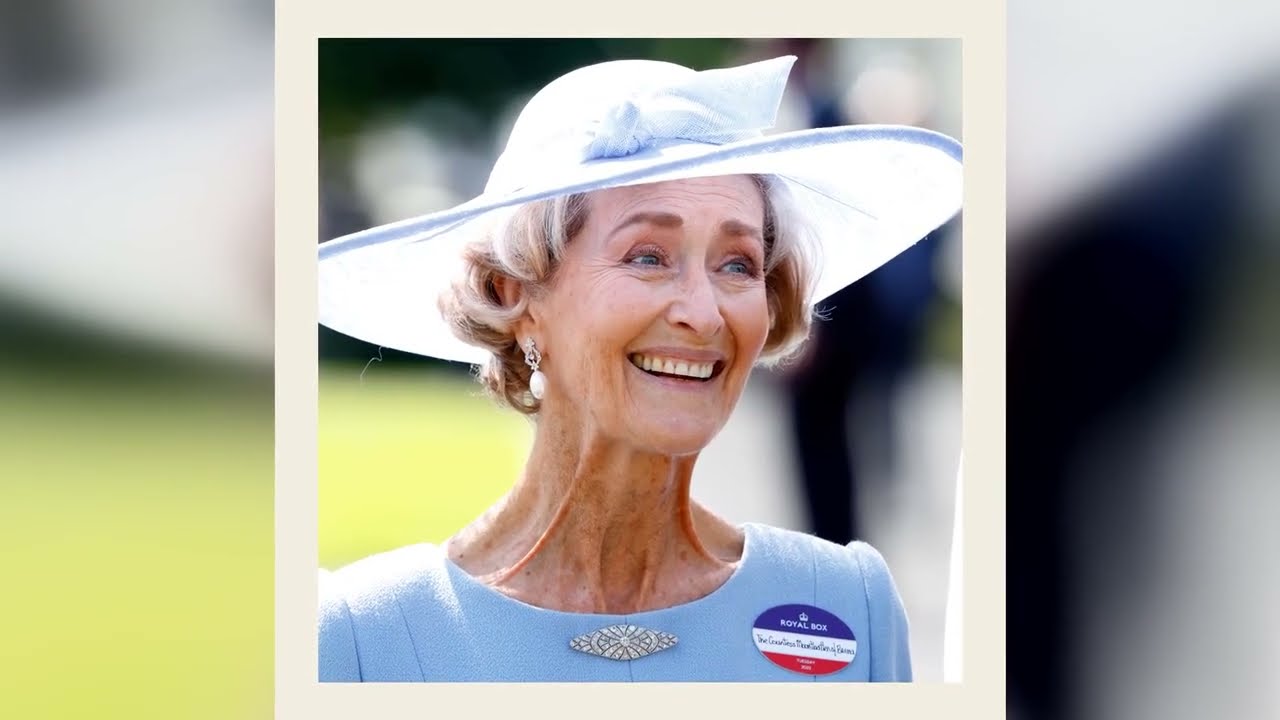
The carriage rides ended, the final turn was taken. Prince Philip died in April 2021. The machinery of the monarchy, polished over centuries, worked with a quiet, efficient click. His will had to be processed. This triggered a protocol as established as the Trooping the Colour, but far more private. It is standard practice for the wills of senior royals to remain sealed for 90 years. An application is made to the Family Division of the High Court by the executors. The hearing is held in complete secrecy. The ruling is often a formality. In October 2021, this sequence occurred with precision. The President of the Family Division, Sir Andrew McFarlane, approved the sealing of Prince Philip's will. He stated that this custom was to preserve the dignity and privacy of the monarch. He described it as a long-standing practice. It was a procedural step. But it was also a spark.
The press could not report on the contents of the will. However, they could report on the names attached to its administration. The names of the executors became a matter of public record through the court list. One was a senior palace private secretary. Another was a long-time lawyer. The third name was that of the Countess Mountbatten of Burma, Penny Knatchbull. This was noticed. It was scrutinized. It was interpreted, according to numerous press reports at the time. The inclusion of a non-family member, a friend, was described by some outlets as unusual. It was portrayed as a departure from tradition. It was presented as a signal of special trust. Critics of the monarchy claimed it was evidence of a fractured inner circle. Defenders saw the reality as likely more procedural than poetic. Regardless, speculation thrived in the absence of the document itself. The legal seal created a vacuum. That vacuum was immediately filled with conjecture.
The legal rationale was clear and concise. Sir Andrew McFarlane later explained the principle in a separate, anonymized ruling. He wrote that sealing royal wills is a necessary protection. It prevents their contents from becoming the subject of public debate. He stated that publicity would defeat the aim of preserving the dignity of the Sovereign. The principle was protective. It was a barrier against the very speculation the seal itself inadvertently fueled. There is a quiet paradox in this. The mechanism designed to suppress curiosity only enhanced it by its very invocation. The judge's words were an impenetrable fortress. Yet the public's gaze had already settled on the names standing behind that fortress.
One of those names carried a specific and powerful history. Penny Knatchbull was not a palace employee. She was not a blood relative. She was, by all available accounts, a friend. Her name on that legal document was a cold, formal confirmation of a warm, informal bond. It was an administrative stamp on a personal relationship. Media narratives diverged sharply at this point. Some reports claimed her appointment indicated a special fidelity to the Duke's wishes, perhaps more so than other family members. Other commentary suggested it was a simple, practical choice, for a discreet figure who understood family dynamics. The palace never commented. Knatchbull herself remained silent. The legal record lists her name only. It says nothing about the laughter on the terrace, the carriage rides, or the shared seclusion at Broadlands. It is a rigid line of text, but it resonates with countless unspoken evenings.
A curious, documented detail stands out from the court reports of the time. The hearing to seal the will was held on a specific date, but it was not listed under the Duke's name. It was listed under a coded reference. The case was referred to by a number. The court list for that day included a note: "In the matter of the estate of a deceased person." The name of that person was not revealed in the public list. This is standard procedure for such private hearings. However, it creates a strange disconnect. One of the most famous men in the world passed through the legal system as a relatively anonymous entry. His final worldly affairs were handled under a bureaucratic cloak. The system worked exactly as designed. It turned a global figure into a case number. It protected the family's privacy by reducing the head of the family to a file. This efficiency is chilling. And this secrecy is absolute.
The speculation surrounding the executors, particularly Knatchbull, was perhaps inevitable. It was a result of the long-standing fascination with Prince Philip's inner circle. He was often perceived as a man with few friends outside his family. His friendships were known to be strong and enduring. The inclusion of a friend in such a weighty formal role was a tangible data point. It was a concrete fact in a landscape of rumor. Analysts and biographers pored over its implications. Gyles Brandreth, in his later biography of the Duke, referred to the appointment simply as evidence of a trusted close friend. Other sources, often anonymous, whispered of tensions. The truth is known only to the few who were present. What remains is interpretation layered upon a formal legal act.
Consider the weight of an executor's duty. It is a task requiring meticulous precision. It involves inventory, valuation, debt settlement, and asset distribution. It is administrative grief. It is paperwork as eulogy. For a royal will, shielded from view, the role is also one of ultimate discretion. The executor becomes a guardian of secrets, a filter between the deceased's private wishes and the insatiable public gaze. To name someone to this role is to grant them a final, profound vote of confidence. It means, in a legally binding way, that you trust their judgment absolutely. You trust their discretion without question. You trust their ability to navigate the complex emotional geography of a family in mourning while adhering to the constraints of the law. It is both personal and impersonal.
The furor, such as it was, eventually subsided. The news cycle moved on. The sealed envelope was placed in a secure location alongside other royal wills to be opened in the 2080s. The executors performed their duties. The world did not learn the details of the Duke's estate. All that remains is the framework of his final arrangements, the frame, not the contents. And within that frame, a friend held an official position. That is the enduring image from this chapter, not the alleged contents of the will, but the undeniable fact of who he chose as its guardians. It was a final, legal affirmation of a bond that had always existed in informal spaces. The law required a signature on a document. That signature was a final testament to a friendship that needed no legal proof. It was already proven.
The silence after probate can be as revealing as the document itself. With the legal process concluded, the focus shifted from the executors' task to the permanent form of the life they helped administer. For Penny Knatchbull, the formal duties faded into memory, leaving the legacy of the informal friendship to be examined in the clearer, colder light that follows death. This is the stage where myths often solidify, where a single anecdote can transform into a definitive character analysis. It is also the moment when those who knew the person well choose either to speak or to retreat further into privacy. Knatchbull wisely chose to do a little of both. She did not grant a tell-all interview. She did not publish a personal memoir. Instead, she provided context to a trusted biographer, Gyles Brandreth, in his 2022 book about the Duke. Her contributions, woven into that authorized account, do not offer thunderous revelations but precise clarifications. They are fine brushstrokes on a known portrait, aimed at correcting the record more than shattering it.
She addressed, for instance, the common stereotype of Philip as a man of constant acerbic criticism. According to Brandreth's account, she did not frame this as mere cruelty, but as a form of intense engagement. The Duke's challenge was not a rejection, but an invitation to debate, to defend one's position. It was a test of mettle he applied to everyone he respected. It was the intellectual sparring he enjoyed, and receiving it in kind was a sign of acceptance. She presented it as his own language of camaraderie and friendship. A language not everyone could, or wanted to, learn to speak.
The curious detail she shared was specific and domestic. Brandreth's biography notes that Prince Philip kept a particular type of shopping bag, a green one from Waitrose, in the back of his carriage. These were not for shopping. They were repurposed, carefully folded, for a far more practical use: as emergency waterproof seat covers in case of a sudden downpour while driving. This is a small, vivid snapshot. It speaks of economy, of a practical aversion to waste, and of a man solving problems with what was immediately at hand. It contrasts with the image of a man served by endless staff, a life where such mundane considerations were beneath notice. The green Waitrose bag in the carriage is a tangible trace of a deeply practical mind. It is also, in its own way, quietly rebellious. A shopping bag in a royal carriage, a touch of the ordinary amidst the gold.
Knatchbull also shed light on the Duke's relationship with the modern media, a source of friction throughout his life. She described to Brandreth his genuine bewilderment at the concept of the celebrity interview, at the public's desire for a carefully staged emotional reveal. From his point of view, as she relayed, duty was performed, work was done, and one's private life remained private. The idea of performing that private self for public consumption was alien and distasteful to him. This was not merely aristocratic reserve; it was a generational and temperamental disconnect from a culture increasingly built on self-exposure. His halting attempts to offer public explanations only cemented his conviction that the public sphere was a minefield best avoided. Knatchbull's insight reframes this not as hauteur, but as a kind of bafflement. He was navigating a world whose rules had radically changed, and he found many of those rules illogical.
Perhaps her most significant contribution to understanding his later life concerns his faith. Publicly, he was a practical naval officer, a patron of scientific and technical societies, a man who seemed to favor the material and functional. The spiritual side was rarely discussed. According to Brandreth's biography, Knatchbull offered a substantial correction to this image. She described a man of deep and abiding Christian faith, a private and constant pillar for him. It was not a topic for publication, but it was an essential element of his character, shaping his sense of service and his view of life and death. This revelation adds a profound dimension to the Duke's portrait. It places his famous practicality within a framework of conviction and principle. The man who fixed things with Waitrose bags also believed in an absolute order beyond his capacity to repair. Both sides coexisted.
Her restrained disclosures through an intermediary biographer are a modern form of court testimony. They are formal yet personal. They correct misconceptions rather than confess. They serve the historical record while protecting the sanctity of the friendship. This measured approach is itself a reflection of the man she describes. A man who valued discretion and believed some things were not for public dissection. To have revealed more would have been to betray the very essence of that bond. So the story does not end with a great revelation from Penny Knatchbull. It ends with her deliberate choice to offer fragments, to allow a trusted third party to assemble them into a mosaic that highlights a more accurate portrait than the caricature shadows. The final image is not of a secret revealed, but of a complex man seen through the clear lens of a long and loyal friendship. The green Waitrose bag remains. So does the private faith. So does the memory of a friendship built on shared endurance and a mutual understanding of a life lived within a unique golden cage.
This narrative, like all historical research, depends on continued access to such insights. It is built piece by piece, source by source. The work of understanding is never truly complete, but it can reach a point of resonant clarity. The portrait is now nearly complete. Yet one final source of brushstrokes remains: the testimony of those who knew the figure intimately but spoke of him sparingly. Among the most reticent was the Lady Penelope Mountbatten, known to family and friends as Penny. Her friendship with Prince Philip was long-standing and notably private. It spanned decades, anchored in a shared passion for carriage driving and a mutual understanding of life within the orbit of the royal institution. Yet her public comments have been measured with extreme precision.
Assessing what Penny Knatchbull's limited statements reveal requires a particular kind of scrutiny. We must separate personal anecdotes from deep revelation and weigh the significance of what was said against the vast silence she has maintained. Her most substantive contributions appear within the pages of authorized biographies, where her cooperation was said to be selective. In Gyles Brandreth's 2021 biography, "Philip: The Final Portrait," she provided several personal recollections. These are not comprehensive character assessments. They are small, precise scenes. She described, for instance, the Prince's meticulous approach to driving his carriage, his intense focus on the mechanics and fitness of his horses. She noted his competitive spirit, but also a capacity for deep concentration that could seem like detachment. This aligns with a broader pattern observed by others. Philip's mind was oriented towards engineering, solving practical problems, often bypassing subtle emotional nuances. Knatchbull's anecdotes reinforce this established trait. They do not fundamentally redefine it.
According to Brandreth, she also offered a glimpse into his conversational style. She suggested it was often Socratic, a series of probing questions. He preferred debate to declaration, challenge to comfort. This detail is highly revealing. It paints a picture of a man who engaged with the world intellectually, testing ideas and people through argument. For his companion, this could be stimulating or exhausting. It was a pattern of interaction that prized mental agility over easy agreement. Again, this is not a secret revealed so much as a confirmation of a known dynamic, presented with the clarity of direct experience.
The curious detail she provided to Brandreth was practical in nature. She recalled that Philip, when building a new carriage at Windsor, insisted on designing the braking system himself. He fitted it with a mechanism used in aircraft, a detail he would have understood from his days in naval aviation. The image is powerful and telling. The Duke of Edinburgh in overalls, adapting aviation engineering for a horse-drawn vehicle. It speaks to his practical ingenuity, his blending of the old and new worlds, and a specific kind of pride. It is a perfect, self-contained snapshot of the man as many knew him: practical, technical, and defiantly independent despite the constraints.
What is absent from Knatchbull's accounts is perhaps as telling as what is included. There is no deep psychological analysis, no revelation of hidden vulnerabilities or private sorrows, no discussion of his marriage beyond its resilience, no dissection of his sometimes brusque public manner. Her testimony is notably free of complaint or excessive emotion. It is the testimony of a friend and partner in interests, not a confessor. This restraint in itself is a significant data point. It reflects the discretion expected within that circle, certainly, but it also reflects the nature of their friendship, built on shared activity and mutual respect for privacy. Critics of the institution might argue that such authorized commentary is inherently sanitized, offering selected glimpses designed to reinforce a preferred narrative. There is some truth in this. Sources speaking to an authorized biographer are aware they are contributing to a historical record. Anecdotes are carefully chosen. Edges are often smoothed. However, the value of Knatchbull's observations lies in their precision and consistency. They are not embellished or overly sentimental. They are technical, behavioral, and observational. They are the details of a companion who spent time with him not in grand salons, but in muddy fields and workshops. This gives them a credibility that more dramatic memoirs might lack.
Her role as one of the three executors of his will, alongside his private secretary and a family solicitor, underscores the depth of his trust in her. This was a position of profound legal and personal responsibility. Yet she has rarely, if ever, publicly discussed the duties or deliberations that role entailed. This silence is a powerful statement in itself. It affirms a bond of absolute trust, one that extended beyond her lifelong friendship with his wife. It also demonstrates her unwavering commitment to the rules of privacy he valued. Her actions in this matter speak far louder than any words she could have offered.
The difference between a personal anecdote and a deep revelation is a matter of scale and insight. Knatchbull's stories are of the former kind. They add color, texture, and confirmation to the existing portrait. They provide documented examples of how his known traits manifested in private, collaborative settings. A deep revelation, by contrast, would reshape the portrait itself. It would force a re-evaluation of his core motivations or inner emotional life. Knatchbull's comments do not do this. They help us see the existing picture more clearly and with greater resolution. What she ultimately reveals is not a hidden Prince Philip. She reveals the Prince Philip that a trusted friend was willing and able to describe: a man of practical mind and focused passion, a loyal if demanding companion, a figure who expressed his essence in action more than introspection.
Penny Knatchbull's testimony is valuable precisely because it is so limited. It comes without hyperbole or therapeutic jargon. It is a portrait from the horse field, not the palace. It shows us a man at relative ease, engaged in a beloved hobby, surrounded by a small trusted circle. In the end, her limited public comments affirm a simple truth. For Philip, friendship was often about shared endeavor more than intimate disclosure. And in that shared endeavor, in the focus on a task, the essence of the man was fully and quietly present. The final image is one of a shared language spoken far from the formal reception halls. It was the language of hoofbeats and jingling harnesses.
For decades, their documented relationship was anchored in the specific, the logistical, the sporting. It was visible in the dry notations of royal records about their presence at carriage driving events, often on the royal estate at Sandringham. These were not social visits in the drawing-room sense. They were working visits. The setting was the stable yard, the cross-country course, and the track around a private estate. Here, the hierarchy of the court dissolved into the practical hierarchy of a working team. Philip was the driver. Knatchbull, a skilled horsewoman and organizer, was said to often act as his groom or navigator, the "backstepper." This is a role of silent, profound trust. The backstepper balances the carriage through tight turns, watches for obstacles, and must anticipate the driver's every move. It is a partnership of absolute focus. There was no room for ceremony, no time for pretense. The relationship, in its verifiable form, existed in this space of shared work. It was a friendship built not on exchanged secrets, but on accomplished tasks.
This pursuit was of Philip's own creation. He is widely credited with transforming carriage driving from a utilitarian skill into an international competitive sport. He designed complex obstacle courses, innovated new carriage designs, and wrote the rulebook. It was a world he controlled. A world where his identity was not as the Queen's husband, but as a participant, innovator, and competitor. To be invited into that world was to be allowed close to Philip on his own terms. The conversations that took place there, according to those who witnessed them, were not about affairs of state or family drama. They were about weight distribution, the condition of a particular horse's fetlock, and the optimal angle for a marathon turn. The talk was technical, factual, and free from the abstract burdens of his constitutional role. In this, the friendship mirrored a broader, well-documented pattern in Philip's life. He sought arenas where his merit was based on competence, not birth. Sailing provided that. Flying provided that. Carriage driving provided that. These were zones of natural existence, or as close as he could get to it.
The geography of their friendship is revealing. Its heart was not Buckingham Palace, but the "Wolverton Triangle." This is the name given to a cluster of buildings near the Sandringham estate, including a thatched-roof lodge in Richmond Park, a residence used by the Duke and Duchess of Kent, and Wood Farm, a secluded farmhouse on the Sandringham estate itself, and the wider Norfolk countryside. It is a deeply private, secluded natural space. Away from the eyes of London, this area functioned as a secret enclave for a chosen circle. Life here followed a different rhythm. It involved small informal dinners, long walks with dogs, and the management of land and livestock. Penny and her husband Norton, the 3rd Earl Mountbatten of Burma, were pillars of this Norfolk set. Their presence was part of the local fabric, not of the royal tour. This shared base in a rural environment, described by some as a gilded cage of seclusion, allowed for a continuity rarely permitted by the hectic schedule of engagements. The friendship was not maintained through grand gestures, but through the accumulation of ordinary moments. Moments that were, for a man in his position, the rarest currency of all.
One must consider the composition of Philip's inner circle. It was remarkably small and remarkably stable over decades. It included relatives like the Kents. It included naval comrades from the war. And it included a number of couples, like the Knatchbulls, who shared his passions and understood the implicit rules of his world. They were people who asked for nothing. They caused no drama. They were, in the language of the institution, safe. They were deeply discreet. Their value lay in their reliability and shared interests, not their social or political influence. In this context, Penny Knatchbull's role becomes clearer. She was part of the infrastructure of Philip's private life, a competent and trusted figure in a circle he controlled. The absence of scandal around their decades-long relationship is itself a kind of evidence. It speaks to the strict boundaries and understood rules that governed many of Philip's relationships. The absence of sensational revelation is itself the revelation.
What can we definitively say about what this friendship represented? The documented evidence, the engagement schedules, the trusted roles, the Norfolk geography, points not to a romantic affair, but to a far deeper need in Philip's life: the need for a safe haven within the system. He was a man who lived a life of continuous public performance. Every public engagement, every speech, every photograph was seen as an act of duty. His marriage, while a profound partnership, was also the primary pillar of that duty. He needed spaces where that performance was not required. The carriage, the sailboat, the Land Rover traversing the fields, these were his private stages. And the support team on these stages were people like Knatchbull. Their friendship was a pact of mutual understanding. She understood the constraints of his life without needing them to be discussed. He could, as she later indicated, simply be Philip during those hours. Impatient, focused, funny in his own blunt way, and utterly absorbed in the details of the moment.
The curious detail that lingers is not a whispered confession or a stolen glance. It is a matter of physics. The role of the backstepper is to shift their body weight at the precise moment to prevent the two-wheeled carriage from tipping over on sharp turns. The timing is critical. It is a counterbalance. It requires the backstepper to lean away from the turn, often at a seemingly dangerous angle. They must trust the driver's path completely. And the driver must trust the instinct and balance of the backstepper. This is the documented mechanical essence of their interaction. It serves as an apt metaphor for the relationship as the records show it. It was a dynamic of counterbalance, of implicit coordination, and of a shared goal that required mutual trust but not necessarily the exchange of intimate secrets. He provided the direction and the drive. She, and others in that circle, provided the stability that enabled him to move at speed along the course he had charted.
In the end, the picture that emerges from the available facts is of a man who found his freedom in focus. The gilded cage he lived in had many rooms. Some were vast and ornate, filled with the heavy furniture of state. Others were simple and functional, smelling of leather and straw. He spent as much time as possible in the latter. Penny Knatchbull's testimony, such as it is, only confirms the existence of those rooms and describes the activities that took place within them. She does not claim to have been the repository of his secrets. She describes herself as a companion in his passion. This frankness is what gives her account its weight. She refuses to inflate her own importance. By acknowledging the limits of what was shared, she inadvertently reveals the profound loneliness of a life where even friendship had to be so carefully contained. He built a world where he could be judged by his control of a team of horses, not by the accident of his marriage. That was the normalcy he craved. The friendship, as evidenced, was an element of that project. It was real. It was supportive. But it was, like the man himself, largely contained within a framework of discipline, duty, and a constant desire to look forward, never back.