On May 23, 1934, Bonnie Parker and Clyde Barrow woke up around 7:00 in the morning in the woods near Bienville Parish, Louisiana. They had been camping outside deliberately, as Clyde was paranoid about being trapped inside a house while sleeping. That fear came from the capture of his brother Buck and Buck’s wife, Blanche, in an earlier shootout.
The couple had just spent a couple of days with Henry Methvin’s family, where they took the chance to bathe and enjoy home-cooked meals. That morning, they were dressed in unusually sharp clothes. Clyde wore a light blue patterned Western shirt and dark woolen trousers, along with a gold-filled Bulova watch and plain black leather dress shoes. When driving, he typically went in his socks because he had chopped off his left big toe and part of his second toe with an axe while serving time at Eastham Prison Farm in Texas.
Bonnie wore a three-piece matching outfit with a dark blue-gray skirt, a jacket, and a contrasting long-sleeve striped blouse. She also wore a chic hat and green shoes, according to one community member who claimed a family member saw the green shoes on her feet after death. She was still wearing the wedding ring from her husband, Roy Thornton, whom she had married as a teenager but never legally divorced.
The couple had been on the run for nearly two years and were among the most wanted criminals in America. Their fresh clothes were being saved for a planned reunion with their mothers, allegedly set to take place at Black Lake on May 25. Before that, they needed to pick up Henry Methvin at his family’s farm.
That morning, they stopped in downtown Gibsland, Louisiana, at Ma Canfield’s Cafe, run by Bertha Canfield. The building now operates as the Bonnie and Clyde Ambush Museum. Clyde ordered a fried baloney sandwich for himself and a BLT for Bonnie, along with two bottles of RC Cola. Bonnie stayed in the car while Clyde went inside, paid, and returned with the food.
They were driving a stolen 1934 Ford four-door deluxe V8 sedan, painted Cordoba gray with a tan stripe down the side. The car had been stolen from a driveway in Topeka, Kansas less than four weeks earlier. It was packed with an arsenal large enough to arm a small military platoon, including three Browning automatic rifles, shotguns, and multiple handguns. Bonnie’s purse even held a .25 caliber pistol.
Around 9:00 in the morning, Clyde pulled out of Gibsland and headed south on Highway 154 toward the Methvin farm. In 1934, that road was a two-lane stretch of gravel and dirt cut through pine forest and red clay, with trees and brush crowding right up to the edge. It was the perfect place to hide six men with rifles.
Those six men were already waiting. Frank Hamer, a former Texas Ranger, was in charge. He had been hired by Lee Simmons, the director of the Texas Prison System, to hunt down Bonnie and Clyde after a prison raid led by Clyde resulted in the killing of a guard. Simmons had told Hamer to “put them on the spot.”

With Hamer were his old partner Manny Gault, Dallas County deputies Bob Alcorn and Ted Hinton, and Bienville Parish Sheriff Henderson Jordan with his chief deputy, Prentiss Oakley. The six lawmen had been hiding in the brush since 2:00 in the morning, dealing with mosquitoes and the rising heat.
The bait was a broken-down logging truck sitting at an angle on the right shoulder of the road. The right front wheel was off, and a jack sat underneath it. Standing near the truck was Ivy Methvin, Henry’s father. Ivy had cut a deal with the law, reportedly brokered partly through Texas Governor Ma Ferguson, to let his son walk free if he helped turn in Bonnie and Clyde.
Frank Hamer had studied Clyde’s habits. Clyde slowed down for friends, especially the Methvins. Hamer counted on that. He knew Clyde would stop when he saw Ivy standing next to a broken truck.
At about 9:15 in the morning, the Ford crested a rise. Clyde was doing maybe 50 miles per hour when he saw Ivy’s truck on the shoulder. He let off the gas and pulled over to the right side of the road, lining himself up alongside the truck so he could talk to Ivy through the open driver’s window.

Bonnie was eating her sandwich. The Cokes were on the seat. Clyde brought the Ford to an almost full stop and opened his mouth to say something. He never got the chance.
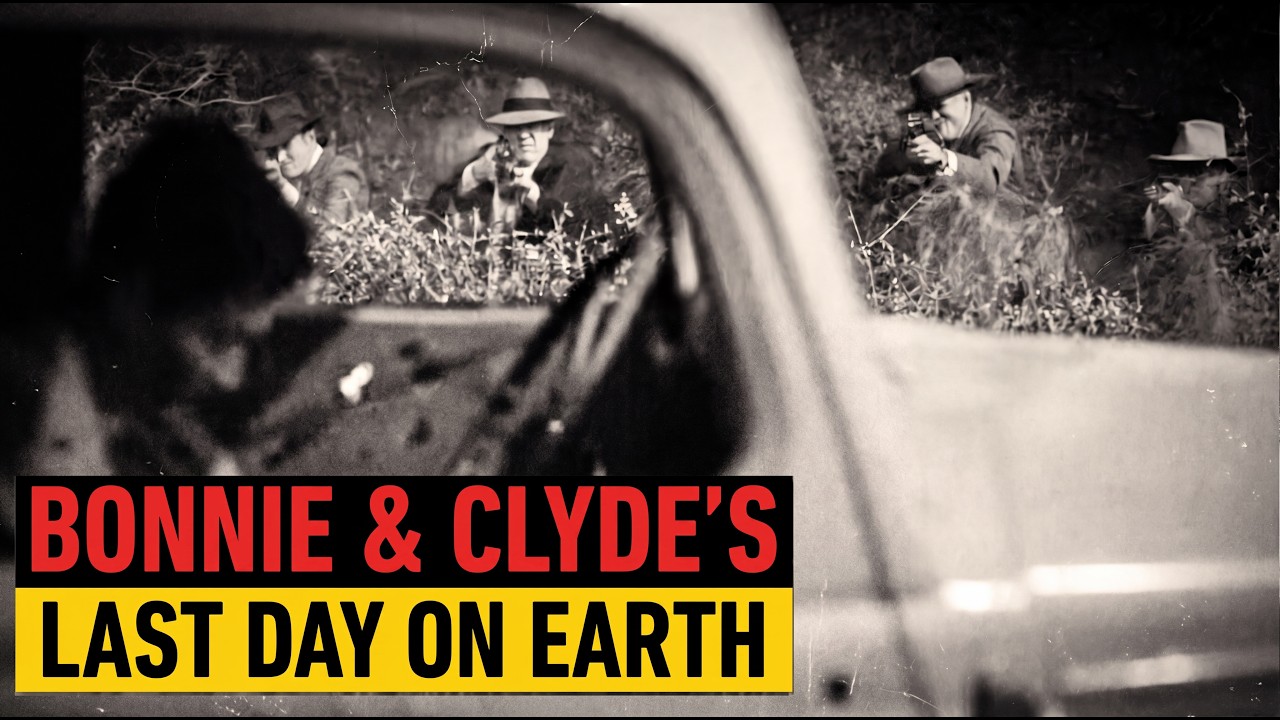
The first shot came from the brush on the driver’s side. Most accounts credit that shot to Prentiss Oakley, firing a Remington Model 8 rifle in .35 caliber. The round hit Clyde in the left side of the head. His foot came off the brake, and the Ford, still in gear, started to roll forward.
Then the other five lawmen opened fire. Browning automatic rifles, shotguns, and pistols poured fire into the Ford. The car rolled slowly down the road before running into a ditch on the left side, against the bank. The shooting did not stop when the car stopped. The lawmen cycled through rifle magazines, then shotguns, then sidearms. Hamer emptied his automatic into the passenger side.
The total round count fired into the Ford that morning is reported to be between 130 and 167. Some rounds went clean through one door and out the other. Some went through Clyde and into Bonnie. Others went through Bonnie and out the windshield. The barrage lasted about 20 seconds, depending on the account.
Then it was quiet. The smell of gunsmoke and gasoline hung in the morning air. Clyde was slumped against the driver’s door, his head against the window frame. Bonnie was slumped against him on the bench seat, her dress almost black with blood on the right side. Her sandwich was still in her lap. She had been hit around 26 times. Clyde had been hit a similar number.
A Colt .45 was still in Clyde’s waistband. He never reached for it. He never had a chance.
When the lawmen opened the doors, about $500 in cash fell from Clyde’s pocket onto the dirt. Bonnie had about six dollars in her purse, along with a bullet-shattered makeup mirror. That was Bonnie Parker and Clyde Barrow’s last day on Earth.