The Red Crown Tourist Court in Platte County, Missouri, seemed like a safe bet to Clyde Barrow in July 1933. The cabins were built of brick and tile, which made him feel secure. He told his companions they would stay there for the night, even if they were all taken before morning.
The gang’s undoing began with a simple accounting error. Blanche Barrow rented cabins for a party of three, then walked over to the Red Crown Tavern and ordered five fried chicken dinners. She paid with a fistful of coins from the gang’s recent robbery of vending machines. The next night, she did the same thing: five more dinners, paid for again in coins.
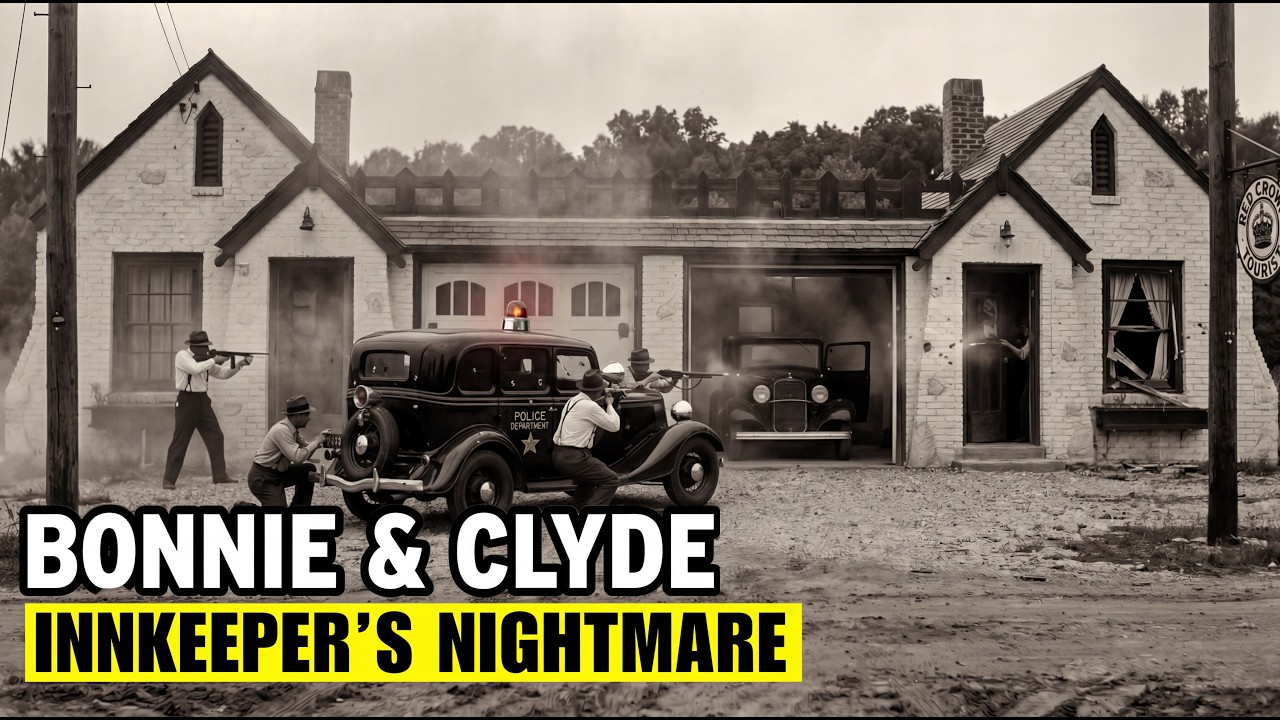
The tavern manager, Neil Houser, had a direct line to local law enforcement that most rural business owners lacked. His regulars included Captain William Baxter of the Missouri Highway Patrol and Platte County Sheriff Holt Coffee. When Houser grew suspicious, he did not have to figure out who to call. The lawmen were already sitting at his establishment.
The resulting firefight on July 20, 1933, tore the cabins and tavern to pieces. Buck Barrow took a bullet to the head and died a few days later. The rest of the gang barely escaped. The Red Crown became a cautionary tale for every motel owner in the country.

The first reason motel owners stayed quiet was physical danger. Clyde Barrow had been sent to the East Ham Prison Farm in Texas, and the brutality he suffered there broke something in him. He swore he would never be taken alive again. By that point, he had already been linked to the deaths of nine lawmen. A motel owner who reported the gang was not making an anonymous tip. He was starting a tactical gunfight on his own property, with his own building in the crossfire.
The second reason was simpler: many people had no idea who they were looking at. Newspaper photos from the 1930s were grainy and low-contrast. Plenty of people running tourist courts out in the sticks were not following crime coverage closely. They were just trying to survive a week of the Great Depression. Even after police discovered a roll of film at the Joplin hideout in April 1933 and splashed the photos across newspapers, recognition remained shaky. A member of the Barrow gang once recalled a waiter excitedly telling him that Bonnie and Clyde had just been in the area, completely unaware that he was talking to a member of the gang standing right in front of him.

The third reason cuts to the psychology of the era. During the Great Depression, people had watched banks foreclose on their farms and homes and throw them out into the dirt. Banks were the villains to a lot of folks. When a couple came through robbing the system, there was a twisted bit of sympathy running beneath the surface. Nobody was cheering for violence, but the idea of regular people striking back at the system that crushed everyone else played well with some folks. That meant some people who put Bonnie and Clyde up for the night were quietly rooting for them, or at least were not in a hurry to help law enforcement.
The fourth reason was practical. Rural America in the 1930s had no system for reporting a fugitive. There was no national hotline and no FBI database with pictures hanging in motel lobbies. Many small-town sheriffs shared a single phone line with the rest of the town. Bonnie and Clyde were well known in Texas and Oklahoma, but cross the state line into Missouri and a lot of people did not know who they were looking at. Law enforcement resources were already stretched thin chasing gangsters across the Midwest after the Kansas City Massacre in June 1933. A motel owner who suspected something might not even know who to call.
The fifth reason ties it all together. After Platte City and the Joplin shootout before it, the lesson was clear: call the cops and your property gets turned into a firing range. Even owners who wanted to cooperate had a real good reason to look the other way.
This is a big part of why Bonnie and Clyde eventually stopped trusting tourist courts altogether. They started sleeping in the car and camping out in the middle of nowhere. Checking in anywhere was a roll of the dice on whether the person at the desk would turn them in.
The ones who finally brought them down did not do it because of a phone call from a motel desk. It took Frank Hamer and an arrangement with the Methvin family to put Bonnie and Clyde on a rural road outside Gibsland, Louisiana, on the morning of May 23, 1934. It was a setup on an empty dirt road where nobody behind a counter had to risk a single thing.