On October 12, 1964, a tow truck driver on Canal Road in Georgetown heard a scream. Looking over a retaining wall, he saw a man leaning over a woman on the towpath below. Two shots had already been fired. The woman was Mary Pinchot Meyer, a 43-year-old Georgetown artist.
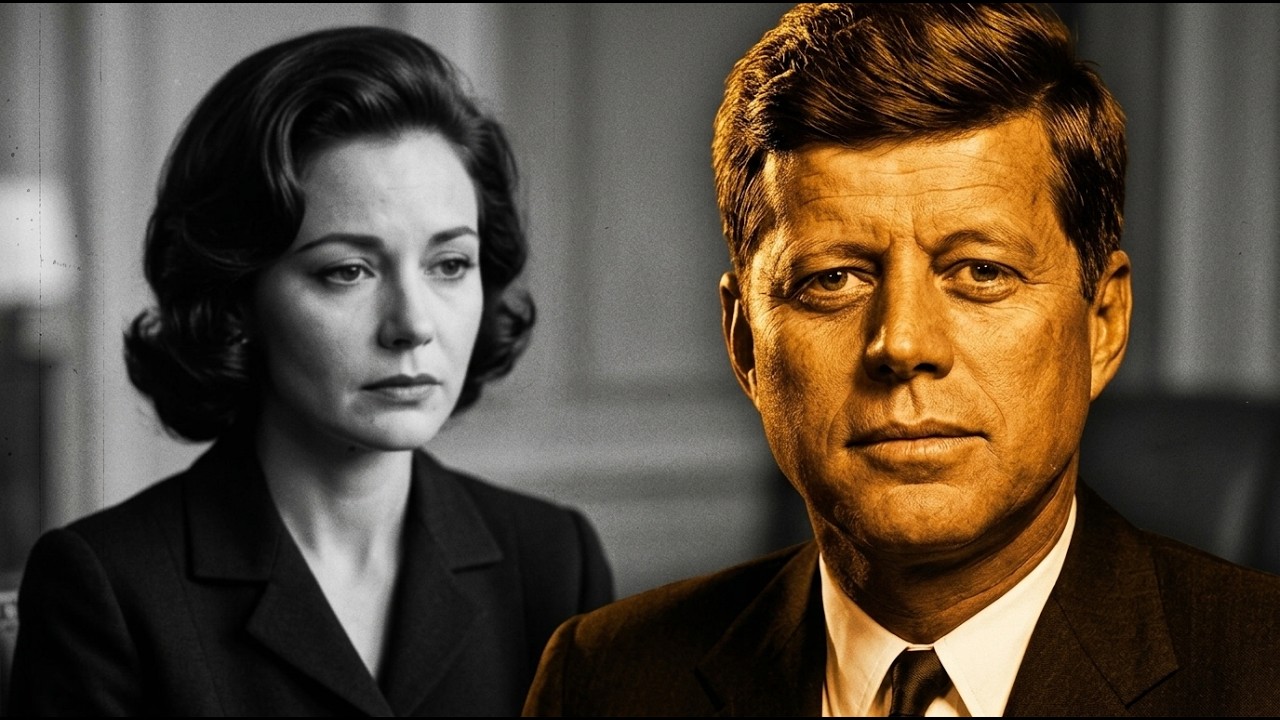
She died two days before her 44th birthday. The Washington Post reported the killing the following morning, describing her as a Georgetown artist with “100,000 friends. ” The article did not mention President John F. Kennedy.
The man who identified her body at the DC morgue was listed by his professional title, Washington Bureau Chief of Newsweek magazine. He was also her brother-in-law, Benjamin Bradlee. Within an hour of the shooting, police arrested Ray Crump Jr. , a 25-year-old day laborer found near the water, wet and disoriented.
He said he had been fishing. He was charged with murder. No murder weapon was ever recovered. No blood was found on his clothing.
An eyewitness described a man considerably larger than Crump, who stood 5 feet 3 inches and weighed 130 pounds. The jury acquitted Crump in the summer of 1965. The case has never been solved. What the official record does not explain is why the CIA’s Chief of Counterintelligence arrived at Mary Meyer’s locked studio with lock-picking tools on the same evening she was killed, before the family had been formally notified.
What he did with what he found inside has never been fully established. Mary Eno Pinchot was born October 14, 1920, in New York City. Her father, Amos Pinchot, was a wealthy lawyer and Progressive Party figure who co-founded The Masses, a socialist magazine suppressed by the federal government during World War I. Her uncle, Gifford Pinchot, was a two-term governor of Pennsylvania and founder of the United States Forest Service.
Her mother, Ruth, wrote for The Nation and The New Republic. Her younger sister Antoinette, called Tony, would later marry Benjamin Bradlee. Mary attended the Brearley School and Vassar College. In 1935, she began dating William Atwood, who took her to a dance at the Choate School, where she first met John Kennedy.
She was 15. After Vassar, she worked as a journalist. She was a pacifist and a member of the American Labor Party. The FBI opened a file on her.
In 1944, she met Cord Meyer, a Marine Corps lieutenant who had lost his left eye to shrapnel in the Pacific. They married on April 19, 1945. That spring, both attended the founding United Nations conference in San Francisco. Cord Meyer transitioned from pacifist internationalism into the CIA.
By the mid-1950s, the Meyers were embedded in the Georgetown social world that formed the operating fabric of Cold War Washington. In 1956, their 9-year-old son Michael was struck and killed by a car outside their Virginia home. The marriage did not survive the loss. Mary Meyer filed for divorce in 1958.
She moved to Georgetown and established a painting studio in a converted brick garage on N Street, studying under abstract expressionist Kenneth Noland. Those who saw her work considered her a genuinely skilled painter. The affair with Kennedy began in earnest in 1962. According to at least one Kennedy aide, the conversations she had with him were not the kind he had with anyone else.
Kennedy aide Myer Feldman told biographer Nina Burleigh, “I think he might have thought more of her than some of the other women and discussed things that were on his mind, not just social gossip. ”
What those discussions contained is not preserved in any publicly released document. What is documented is that she appeared in White House visitor logs, was present at Kennedy’s birthday party on the presidential yacht Sequoia, and walked the C&O Canal towpath regularly with Jacqueline Kennedy during those years. The relationship continued through November 22, 1963.
Timothy Leary claimed in his 1983 memoir that Mary Meyer called him the day after Dallas and said, “They couldn’t control him anymore. He was changing too fast. They’ll cover everything up. I’m scared.
” Leary’s account has never been independently verified. Historians treat it as his claim, not as established record. What is established is that in the summer of 1964, Mary Meyer told her friend Elizabeth Eisenstein that she believed someone had been inside her house while she was away. On another occasion, she told Eisenstein she thought she had seen someone leaving as she walked in.
She reported these incidents to police. No further action was taken. On October 12, 1964, Mary Meyer was walking alone on the Chesapeake and Ohio Canal towpath in Georgetown. It was a bright, sunny day.
Henry Wiggins, a tow truck driver on Canal Road, heard a scream and reached the retaining wall above the towpath. He saw a man leaning over a woman on the path below. The man looked up at Wiggins, stuffed something into his pocket, and ran toward the Potomac River. Mary Meyer was taken to the DC morgue.
She was identified eight hours after her death by Benjamin Bradlee. The Washington Post ran the story the following morning. Georgetown artist. Apparent motive, robbery.
No mention of Kennedy, Cord Meyer, or the CIA. Ben Bradlee arrived at the studio that night expecting to find a diary. He found James Angleton already there with lock-picking tools. Angleton was not just any CIA officer.
He was the man who had built the entire apparatus of American counterintelligence, described by colleagues as pathologically suspicious, brilliant, and one of the most feared figures in Cold War intelligence. On the evening of October 12th, Bradlee received a phone call. A diary existed. It needed to be retrieved urgently.
He and Tony, Mary’s sister, walked to the N Street studio. James Jesus Angleton was already inside. He had been a mentor to Cord Meyer during his CIA years and was godfather to Mary and Cord’s children. He was a family intimate of long-standing.
He had arrived before the family, and he had brought lock-picking tools. The diary was found in the studio that night. By Bradlee’s own later account, the group read its contents. It was handed to Angleton.
Bradlee said he objected and clashed with Angleton over custody of the document. Others have disputed whether his objections were as forceful as he later described. Angleton subsequently stated he burned the diary at CIA headquarters along with Mary’s personal correspondence. Nina Burleigh, in her 1998 biography “A Very Private Woman,” documented evidence that the diary surfaced again after Angleton’s claimed destruction.
A later account indicates Tony Bradlee and Ann Truitt, a close friend who flew back from Japan after the murder, subsequently burned what they identified as the diary. The Washington Post’s own archived reporting describes the diary as eventually destroyed in accordance with her wishes. Whose wish that represented is not established in the public record. According to the documented account published by Bunk History, drawing on Burleigh’s research, even then, some parts of the diary may have been preserved and passed around for a short period.
What the diary contained in full has never been publicly confirmed. The trial of Ray Crump Jr. opened in the summer of 1965. His defense attorney was Dovey Johnson Roundtree, one of Washington’s most prominent civil rights lawyers.
She argued the physical evidence: no weapon, no blood, and eyewitness descriptions that did not match her client. The jury acquitted. The murder of Mary Pinchot Meyer was not publicly connected to Kennedy for 12 years. The disclosure came in 1976 through journalist Ron Rosenbaum and then James Truitt, husband of Ann Truitt, who spoke to the National Enquirer.
The story moved into mainstream coverage from there. Nina Burleigh published “A Very Private Woman” in 1998. The case is still officially open. The murder weapon has never been found.
No one has been charged since Crump’s acquittal. What the archive confirms is a specific sequence. A woman who had known Kennedy since they were teenagers, who had been a continuing presence in his private life from 1962 through his death, who had told friends she believed someone had been in her home in the months before October, was shot twice on a public canal towpath in broad daylight 11 months after Dallas. Within hours, the CIA’s chief of counterintelligence was at her studio with lock-picking tools.
Within a year, the man charged with her murder was acquitted for lack of physical evidence. Within 12 years, the public learned who she was. What the archive does not confirm is who fired the two shots on the towpath. It does not confirm what the diary said in full.
It does not confirm what Angleton did with it or whether any portion survived. It does not confirm whether the incidents Mary reported to police in the summer of 1964 were connected to what happened in October. The archive ends where it always ends in these cases, at the point where the document was either burned or handed to a man who said he burned it, or passed to a sister who said she burned it. In a city where the most powerful press family in America maintained silence about what they knew for 12 years.
Mary Pinchot Meyer was buried at the Milford Cemetery in Pike County, Pennsylvania, on the family land she had grown up on. The case remains open. The towpath is still there.