In the summer of 1942, roughly 9,000 Chinese soldiers staggered out of Burma into India after the Japanese swept every opposing army out of the country and cut the last road into China. General Joseph Stilwell intended to rebuild those men into a modern fighting force and send them back in. The British found him a training site at Ramgarh in the province of Bihar, a camp built to hold prisoners. It had housed 20,000 Italian prisoners of war behind its wire but still offered quarters for 12,000 men, central lighting, a working water system, a low malaria rate, and open broken ground suitable for firing ranges.
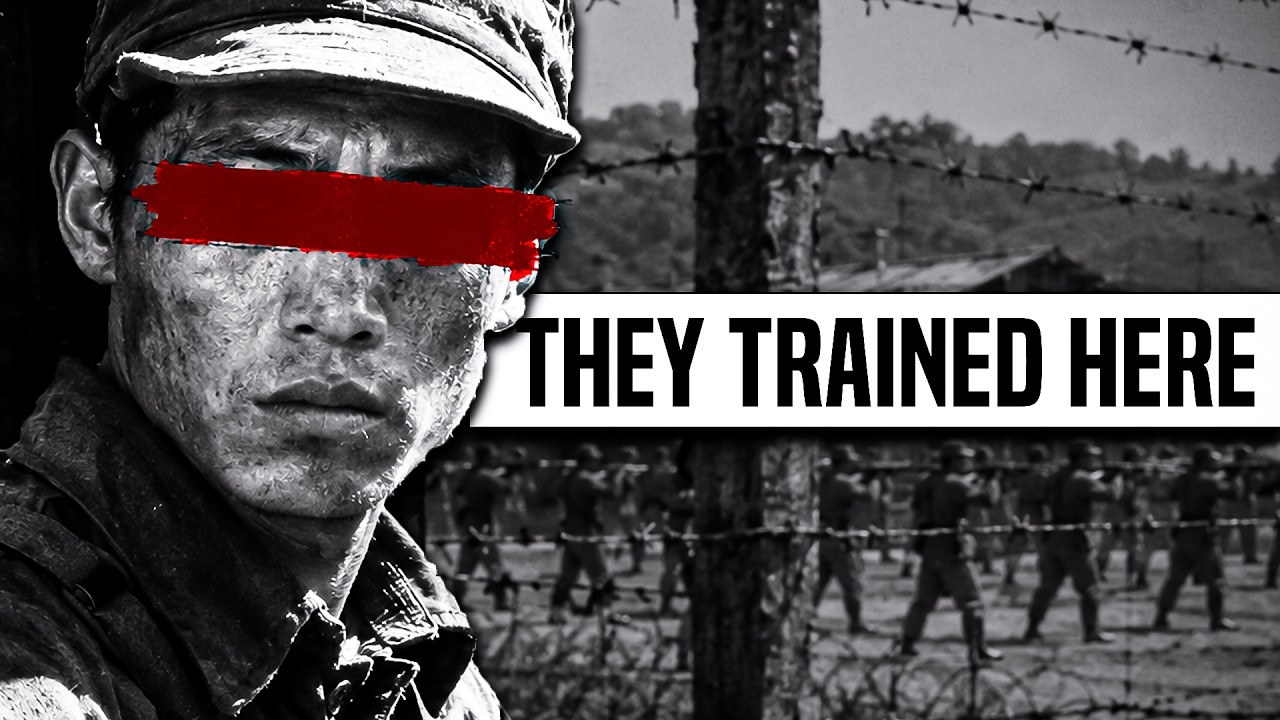
The training center opened on August 26 with United States Army instructors running the lessons while Indian authorities supplied rations, rupees, and quarters. Simply getting that far had required a battle on paper. When Stilwell proposed bringing in 23,000 more troops from China, Field Marshal Wavell initially approved, then asked two days later for a formal written request with reasons attached. An American staff officer answered that the force was meant to help retake Burma and had no plan to operate on its own.
Administrative objections multiplied until the scheme looked impossible. The official theater history spells out what worried the colonial government in Delhi. It believed Chiang Kai-shek had grown far too close to Indian nationalist opinion, disliked the sight of a foreign army equipped with lend-lease arms training beside the Indian forces it could afford to raise, and feared that in the event of unrest at home, the newcomers might side with the Congress party. General Marshall took the problem to Field Marshal Dill in Washington, and Dill admitted that the chiefs of staff in London favored the plan while the authorities in India did not.
Not long afterward, every administrative difficulty vanished, and new troops began flying out of China over the Hump on October 20, with 4,000 arriving in the first month. Stilwell radioed the news in two short sentences: “Remarkable change. They must have gotten the word from London. ”
By then, his own papers already said a great deal about how he saw the English.
As a young lieutenant visiting Hong Kong in 1911, he admired the English drill sergeants but wrote that their officers were a mess, untidy and sloppy, forever fooling around with canes. During the First World War, attached to a British division, he complained that some of its officers were “so damn snotty,” while the French, he told his wife, treated him like a long-lost brother. In May 1935, before returning to China as military attaché, he put his views into a paper of a little over two typed pages under the plain title “The British. ” It attacked the empire and imperial arrogance and closed with advice that if Britain would send over a few modest people with a sense of humor who could see some good in others, she would make a real hit in America.
Three years later, serving in occupied Peking, he drew up a list of Japanese qualities, counting six good ones, courage among them, against 26 bad. Both documents came from the same hand before Pearl Harbor, and together they raised the question of which of those two dislikes went deeper. In August 1943, the combined chiefs of staff split the old command, and Admiral Lord Louis Mountbatten became Supreme Commander of the new Southeast Asia Command with Stilwell as his deputy. At first, the American called the admiral “very cordial and friendly, full of enthusiasm and disgust with inertia.
” He refused to serve under Giffard, the British army group commander, but offered to serve under Slim, for whom he had the greatest faith and respect. The good feeling did not survive the winter. Some Americans joked that SEAC stood for “Save England’s Asian Colonies. ” On January 8, 1944, Stilwell wrote in his diary that the admiral was backing away from the entire program and set down what he called the “Limey program” in four points: stop the road at Ledo, leave Burma alone, go to Sumatra, and include Hong Kong in SEAC.
Hong Kong was the colony the Japanese had seized from Britain in December 1941. By spring, the diary was calling Mountbatten “the glamour boy. ”
That same season, the admiral told newspaper owner Lord Beaverbrook that his deputy hated the British and still distrusted them. In February, Mountbatten sent a mission to London and Washington to argue for an amphibious strategy through Sumatra and the islands.
Stilwell sent a team of his own to Washington to argue for the land campaign in North Burma, without telling his superior. On March 2, Marshall told him to go see Mountbatten at once and repair the damage. Before that meeting, Stilwell wrote himself a page of notes with questions about whether he had meddled in politics, whether he had talked for publication, and whether the admiral wanted him to resign. Among them, he wrote that Burma could be taken and the Japanese could be beaten, adding in parenthesis, “Slim’s job, our job.
” The meeting went well, and he reported to Marshall that he had “eaten crow. ” Mountbatten told Dill afterward that Stilwell was a grand old warrior, but that only the Trinity could do everything his jobs required, and that his command ought to be confined to China. While the commanders argued over strategy, the retrained divisions were already fighting in the Hukawng Valley against the Japanese 18th Division under Lieutenant General Shinichi Tanaka. Much of what is known about that fight from the other side comes from what Tanaka and his officers told American historians after the war, in interrogations arranged through the occupation authorities in Tokyo and in written comments supplied years later.
The historians noted that the enemy officers questioned in Burma talked openly and showed no particular urge to flatter the victors. Questioned in January 1948, Tanaka said that when the first attacks hit his outposts in late 1943, most of his troops were still a month’s march away. He put his strength in the valley at 6,300 men. At the end of January, a Chinese regiment took the Taro plain behind his flank, and looking back, he called that loss the failure of the whole division along the Tanai.
After the fighting at Walawbum in March, he said, his intelligence staff found it harder and harder to learn what was coming. On May 17, 1944, a force of American and Chinese troops came down out of the hills and took the main airstrip at Myitkyina, the chief enemy base in North Burma. As soon as Colonel Charles Hunter judged his hold on the strip secure, he sent the pre-arranged code signal for supplies and reinforcements to start flying in. The signal was “Merchant of Venice.
” Gliders loaded with aviation engineers had been standing by in case the runway had been wrecked, but they stayed on the ground. At Southeast Asia Command, the news came as a stunning surprise, and Winston Churchill sent a radio to Mountbatten asking whether he had expected the blow. Prime ministers seldom have to put that sort of question to their own Supreme Commander by wireless. The admiral replied that he had heard of the plan only incidentally.
The airstrip fell in a day; the town took eleven weeks. At this point, the interrogations stopped agreeing with each other. After the war, Colonel Maruyama, whose regiment made up most of the garrison, said that on May 30 he tried to break out with three battalions. Tanaka remembered planning such an attempt and then calling it off.
On the night of the 31st, there was heavy fighting at an American engineer perimeter north of the town, and neither officer’s account settles what those troops were trying to do. Through the siege, Stilwell was spending Wingate’s worn-out brigades as ordinary infantry, a job the long-range raiders had never trained for. When one of his officers suggested using them farther north, the general told him that if he used the word “Chindit” again, he would get a new job on the Calcutta docks. Mogaung fell on June 26 to the 77th Brigade and a Chinese regiment together, and both claimed the victory.
At 4:04 on the afternoon of August 3, the American command declared Myitkyina secure. That summer, Stilwell also met Michael Calvert, the brigade commander he had wanted court-martialed for trying to pull his exhausted men out of the line. As the conversation was later told, the American remarked that Calvert sent very strong signals, and Calvert answered that he should see the ones his brigade major would not let him send. Stilwell laughed and said he had the same trouble with his own staff when he drafted signals to Washington, and the talk of a court-martial ended there.
The United States Army’s official history summed up the campaign in a single sentence: in six months, it says, Stilwell’s forces had driven 500 miles into Burma and won engagements against seven Japanese regiments, among them the victors of Singapore. The 18th Division had been among the formations that took Singapore in February 1942, when the British Empire lost its great fortress in the east. Two years later, it was being beaten again and again by Chinese soldiers retrained in a former Italian prison camp in India under American command. Two months after Myitkyina fell, Stilwell’s time in Asia was finished.
Chiang Kai-shek had demanded his removal. Roosevelt gave way, and on October 19 the order came through. Before he left, he wrote to the men he was leaving behind. To Sir Claude Auchinleck, the commander-in-chief in India, he wrote that the sheriff had caught up with him and asked to be remembered as a friend, “whatever my glaring deficiencies as a diplomat.
” To Slim, he wrote that his hat was off to him as a soldier, that the political side of his own job had been distasteful, and that he would rather have stuck to his trade in any capacity, however humble. He wrote to Wavell, and to Festing of the British 36th Division, too. The historian Jonathan Ritter later searched both Stilwell’s papers and Mountbatten’s, and found nothing but a short eyes-only message wishing the admiral a smashing success. Neither archive holds a farewell letter from Stilwell to Mountbatten.
The admiral wrote to him instead on October 26. In a message the newspapers printed, he had said the American was leaving with the reputation of a great fighting general. In that private note, he claimed to have saved Stilwell’s job the year before. At the bottom of the page, the general wrote that Mountbatten had had nothing whatever to do with it.
Further on, the admiral said most Englishmen found Stilwell a difficult man to deal with, and beside that line he wrote that he thanked God he was difficult for Limeys to deal with. A later message congratulated him on his new command in the United States and regretted that he could not accept a decoration from London. The first seems to have reached him in California, where his diary for November 24 notes a special messenger from Washington with a personal letter from Louis. It continues: “My God.
What stupidity. ” The original handwriting now sits in the Stilwell papers at Stanford, which is more permanence than most private opinions of a superior officer ever get. Whether he hated the British Empire more than he hated Japan is where the papers run out. His files hold a great deal of contempt for the English and plenty of hostility toward the Japanese, but in the material historians have published, he never once sets the two side by side and chooses.
The Peking list weighs Japanese qualities against each other, not against anyone else’s, and the 1935 paper goes after English manners and the empire before closing with advice on how Britain could be liked. No document in his files ranks one of those dislikes above the other, and he died in October 1946 without leaving one.