In the autumn of 1929, a pound of cotton in the Mississippi Delta sold for roughly 18 cents. Four years later, the same pound sold for 6 cents. For the families working those fields, the number was not a statistic. It was the difference between paying off their debts at the end of the season and owing the landowner for seed.
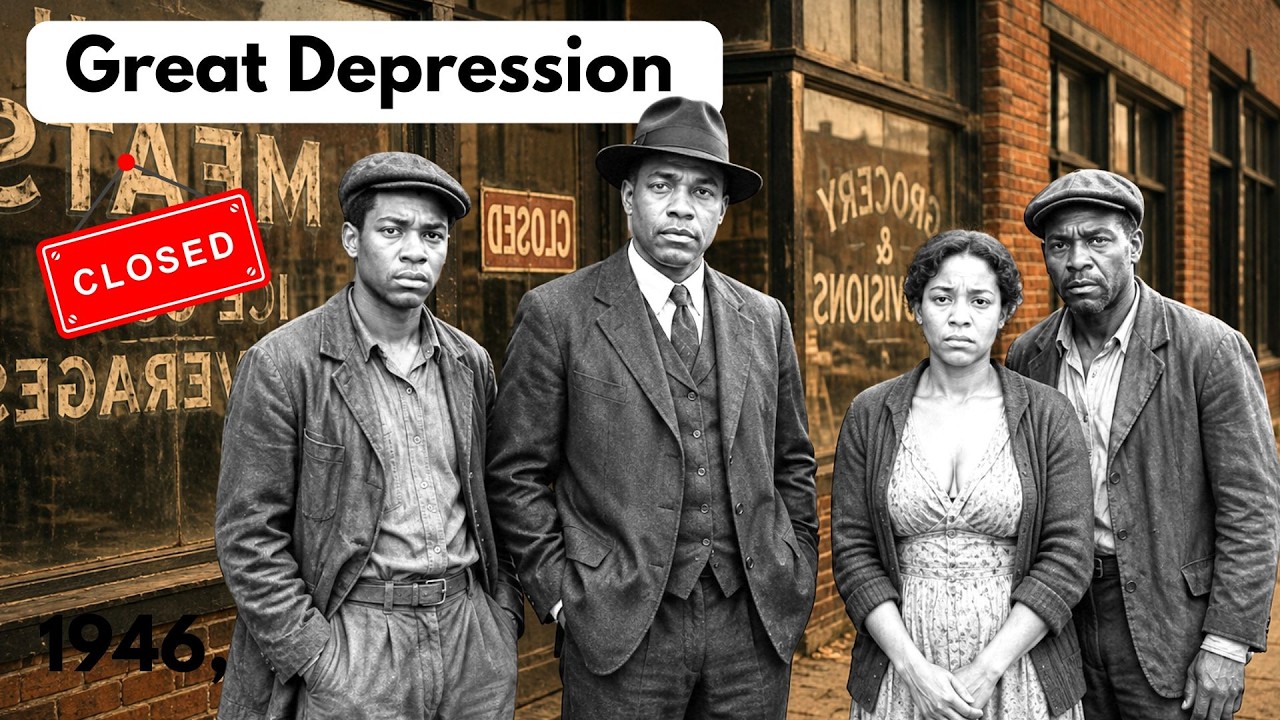
Most of Mississippi lived inside that calculation. According to the 1920 census, 86 percent of the state’s residents were rural. Two out of every three inhabitants farmed, and nearly 70 percent of them were sharecroppers whose entire year’s income depended on the price of a single crop. During World War I, cotton had sold for about a dollar a pound.
Prices collapsed in the 1919 recession, stabilized near 20 cents in the mid-1920s, and fell below 5 cents by 1932. The crash was national. In 1929, the American cotton crop was worth $1. 5 billion.
By 1932, its value had dropped to $465 million. In Mississippi alone, farm income fell from $191 million to $41 million over those three years. No other state fell so far so fast. On a single day in April 1932, a quarter of the state’s farmland was sold at auction to settle debts.
Bad weather compounded the collapse. The boll weevil had already devastated the Black Belt. The great flood of 1927 had driven thousands of Delta families off their land. The droughts of 1930 and 1931 burned what the flood had spared.
The Wall Street crash of October 1929 did not begin the hard times for Black families in the American South. It struck a place where hard times had already begun a decade earlier. Cotton prices had been falling since 1920. What Wall Street did was close the last remaining path to survival.
Three questions emerge from this history. Why did the federal recovery plan created in Washington four years later empty out the very cabins it had promised to protect? Why did the word “recovery” reach Black neighborhoods years after it reached everyone else? And how did the worst decade in the American economy eventually build the organizations that would win the struggle for freedom thirty years later?
The answers begin 900 miles north, behind closed doors in Chicago on the last day of July 1930. On that day, government auditors entered a bank at 35th Street and State Street on Chicago’s South Side and locked the doors. It was the first Chicago bank to fail during the Great Depression. It was owned by Jesse Binga.
Binga had arrived in Chicago in the 1890s with about $10 in his pocket. He worked as a barber and a Pullman porter before moving into real estate, buying homes from white owners who were leaving the area, repairing them, and selling them to Black families arriving from the South. When he saw that his buyers could not get mortgages from white banks, he opened a private bank of his own in 1908. In 1921, he converted it into Binga State Bank, with more than $200,000 in deposits.
Within three years, deposits passed $1. 3 million. The bank was more than a business. It gave Black men and women white-collar jobs that were closed to them almost everywhere else in the city.
It financed churches, funeral homes, and shops across State Street. In 1929, Binga opened the Binga Arcade Building, a five-story office and retail structure just north of the Black business district. He had been paying a heavy price for his success since moving his family into a white neighborhood. In 1919 alone, his home was bombed five times.
In 1930, when depositors began withdrawing their money, Binga went to the Chicago Clearing House, the association of the city’s banks to which he had paid dues for more than a decade. The members met and refused to help. Every other member bank in that association survived the Depression. W.
E. B. Du Bois later wrote that the association could have saved the bank easily and without loss, but chose not to. On July 31, auditors closed it.
Depositors lost most of their savings. Indictments against Binga followed in March 1931. His first trial in 1932 ended without a verdict. The next year he was convicted and sentenced to ten years.
He served three. Ten thousand Chicagoans signed a petition demanding his release, and lawyer Clarence Darrow fought his case. Binga returned home, worked as a handyman and usher at St. Anselm’s Catholic Church, and died in 1950.
He was buried in the family plot, but his family could not afford to carve his name on the stone. For thousands of South Side families, the closing of that bank meant the loss of a generation of savings in a single day. Eight months later, nine teenagers boarded a freight train in northern Alabama. They were looking for work.
On March 25, 1931, after a fight between white and Black riders at Paint Rock, Alabama, deputies stopped a Southern Railroad freight train. They pulled off nine Black teenagers, ages thirteen to twenty-one. Before that morning, only four of them knew one another. Two white women on the train, Victoria Price and Ruby Bates, accused the nine of rape.
The young men were taken to jail in Scottsboro, where a crowd gathered with the intent of lynching them. About 100 members of the Alabama National Guard were sent to hold the crowd back. Then everything moved faster than either side could manage. A grand jury indicted them five days after the arrest, on March 30.
The first trial opened on April 6. On April 9, an all-white jury convicted eight of the nine and sentenced them to death. The ninth, thirteen-year-old Roy Wright, escaped execution only because one juror held out for life imprisonment, which forced a mistrial. He remained in jail.
The International Labor Defense, the legal arm of the Communist Party, took the case and turned it into a national campaign of marches, rallies, and speeches. The NAACP fought with the Communists for the next three years before joining a united committee. Money for lawyers came from Black churches and newspapers in cities the defendants had never seen. The case reached the Supreme Court twice, and twice it changed American law.
In Powell v. Alabama in 1932, the Court ruled that the young men had been denied adequate legal counsel. In Patterson v. Alabama in 1935, the Court unanimously ruled that systematically excluding Black citizens from Alabama’s jury rolls was unconstitutional.
Later, five convictions were overturned and four defendants were pardoned. In total, the nine men spent more than 100 years behind bars. While the case was ongoing, violence outside the courtroom grew as unemployment grew. Documented lynchings in the United States rose from 8 in 1932 to 28 in 1933.
Journalists from around the world crowded the Scottsboro courtroom. Eighty miles south, in a county most of them never visited, sharecroppers were meeting secretly at night. In the spring of 1931, landowners in Tallapoosa County, Alabama, set the day rate: 50 cents for men, 25 cents for women. Much of the pay came not in cash but in credit at plantation stores that set their own prices.
Black sharecroppers and day laborers in that county began meeting in secret to change the situation. The organization they built was called the Croppers and Farm Workers Union, later the Alabama Sharecroppers Union. Their demands were plain and specific. They asked for cash payment.
They asked for the right to sell their own cotton instead of handing it to the landowner. They asked for permission to grow gardens for their families. During the winter months, when there was no crop and no work, they asked for advances of food. And they asked for a school year long enough that their children could finish their studies.
On July 16, 1931, about 150 of them gathered at a church outside Dadeville to organize in support of the nine Scottsboro defendants. An informant tipped off Sheriff J. Kyle Young. When the sheriff and his men arrived to break up the meeting, a sharecropper named Ralph Gray was standing guard at the door.
An argument ended in gunfire. The sheriff shot Gray, and Gray fired back. Armed men returned that night and in the days that followed, burning homes and evicting families from their land. The events became known as the Camp Hill incident.
Less than a month later, 55 Black sharecroppers met and formed the union. The union remained active until 1936, meeting secretly in churches, fields, and kitchens at night, with lookouts posted on the roads. In its early years, it survived on small cash donations from supporters outside the county, because no established American organization was willing to back it. The people at those meetings had nothing.
They had no vote in Alabama, no lawyer of their own, and no protection from the sheriff. What they had was the knowledge that cotton prices had destroyed the terms of their contracts and that no one in Montgomery or Washington would bargain for them. Their counterparts in the cities were reaching the same conclusion from the opposite direction and facing the same result. The federal government did not systematically measure unemployment before 1940.
The Bureau of Labor Statistics later calculated that 12,830,000 Americans were without work in 1933, roughly one-quarter of the civilian labor force of more than 51 million. March 1933 was the worst month, with an estimated 15. 5 million people jobless. Inside that total were two entirely different countries.
In 1932, when the national unemployment rate was about 25 percent, the unemployment rate among Black Americans was about 50 percent. In Chicago and Pittsburgh, unemployment among Black workers exceeded 50 percent, while the white rate was about 25 percent. In Philadelphia and Detroit, it reached about 60 percent. In Atlanta, by 1934, nearly 70 percent of Black workers had no job at all.
None of this was a mystery to the people who lived through it. Black workers were the last hired during factory expansions and the first fired during contractions. Before the crash, most were confined to unskilled and service jobs. When those jobs disappeared, there was no lower rung left to fall to.
The positions that survived did not stay open long. Jobs that white owners had labeled “Negro work” for two generations—elevator operators, janitors, waiters, porters, cooks, domestic servants—suddenly drew crowds of white applicants. In several northern cities, white workers organized to have Black workers fired so the jobs could go to them. Doors that might have led somewhere else were closed.
In New York City, Black workers were barred from more than 24 trade unions. A man could hold a union card for a trade he was not allowed to enter. Some relief offices served white applicants first, and Black families received far less than white families in the same county. Decades later, in an interview with writer Studs Terkel, one Black worker summed up the decade in a single sentence: the Depression had been a fact of life in his neighborhood long before the country gave it that name.
In March 1933, a new administration took office promising relief, recovery, and reform. What it sent first to the cotton South was a plow. The Agricultural Adjustment Act passed in May 1933. Its logic was simple: prices were low because farmers were overproducing, so the government would pay them to produce less.
Since the 1933 crop had already been planted before the program began, the first year left no choice but to destroy what was in the ground. About ten million acres of cotton were plowed under, and six million hogs were killed, in the same year at least 30 starvation deaths were recorded in the country. The checks went to the people who signed the contracts, and the people who signed the contracts were the landowners. Sharecroppers and tenants were not parties to those contracts and had no right to the money.
The law obligated owners to share the payments and keep families on the land. After complaints from Southern Democrats in Congress, the Secretary of Agriculture reinterpreted Section Seven so that checks would not be sent directly to tenants, leaving the sharing of money entirely to the landowner. The result was evictions on a scale the South had not seen since emancipation. Reducing cotton acreage meant fewer laborers, fewer cotton pickers, and fewer families needed on the land.
Comparing the 1930 and 1935 censuses, researchers found that the number of sharecroppers and tenants dropped sharply, and the decline was consistently greater for Black families than white families. One estimate put the number of displaced sharecroppers at about two million. By 1935, 77 percent of Black farmers in the South owned no land at all. Some of the government money was spent on the machinery that replaced the evicted farmers.
A planner in the Mississippi Delta recorded at the time that he bought 22 tractors and 13 four-row cultivators, turned out 130 of his 160 sharecropper families, and kept only 30. The program was administered by county committees made up of local white landowners. Extension agents were almost all white, and they dealt only with owners. The few Black representatives were limited to educational work with no authority over payments.
A Black tenant who wanted to complain about his share had to go to the very men who had taken it. That is the answer to the first question. A relief plan designed to save agriculture counted only those who held deeds to land, in a region where most Black farmers held none. The industrial recovery plan was equally damaging and followed the same pattern.
The National Industrial Recovery Act passed in June 1933. Under it, the National Recovery Administration brought industries together to draft codes of fair competition, setting minimum wages, maximum hours, and prices. Businesses that signed the codes displayed a blue eagle in their windows. Two kinds of work were left out: agriculture and domestic service.
Nearly two of every three Black workers in the United States were employed in those two occupations. A cook in Memphis and a field hand in Georgia could only watch the recovery from the sidewalk. Even where the codes applied, employers went to Washington to argue that the rules should not apply equally. Southland Manufacturing Company in Montgomery, Alabama, sought exemption from the garment code on the grounds that Black workers were unskilled.
Central Weaving and Spinning Company in Fayetteville, North Carolina, made the same argument under the textile code. Scripto Manufacturing Company in Atlanta explained in a memorandum that it would pay Black workers less than white workers because of their so-called lack of skill, and warned that equal pay would cost them their jobs. That warning was carried out. In parts of the South, when employers faced a minimum wage that applied to everyone, they fired Black workers and hired white ones rather than pay equal wages for equal work.
A national minimum wage applied to a segregated labor market became one more barrier to hiring Black workers. The National Archives files hold the answer. Letters and telegrams came from the National Association of Colored Women, the Negro Industrial League, the National Technical Association, the Baptist Ministers Conference, and local Urban League chapters, describing firings, code violations, and unequal pay, and requesting Washington’s intervention. Roy Wilkins sent a three-page telegram directly to President Roosevelt.
The Joint Committee on National Recovery was formed specifically to press these claims. The Black press named the program for what it did. In columns and headlines, it became the “Negro Removal Act. ” “Negroes Again Destroyed” and “Negroes Again Robbed” ran in the papers.
On May 27, 1935, the Supreme Court struck down the act in the Schechter poultry case. Few Americans celebrated that ruling more than the readers of those newspapers. That explains most of the answer to the second question. Recovery reached Black neighborhoods late because the two largest recovery programs were built without making room for Black workers.
By 1934, the appeals to Washington had generated enough frustration to force a change of tactics. That year two campaigns began, one in the cotton counties and one on city streets. Both worked. In the spring of 1934, a farmer named Hiram Norcross evicted 23 tenant families from his Fairview plantation in Poinsett County, Arkansas.
In July, at the Sunny Side schoolhouse on the edge of that plantation, seven Black men and eleven white men met to decide what to do. The question was whether to build two unions or one. Ike Shaw, one of the men present, recalled the Elaine massacre of 1919 in Arkansas, where Black sharecroppers who tried to organize had been killed. He argued that Black farmers could not do it alone, that it would mean a massacre, and that the union would have to be fully integrated.
They agreed and formed the Southern Tenant Farmers Union. It spread faster than anyone expected, into Oklahoma, Missouri, Tennessee, Mississippi, and Texas. By 1938, membership exceeded 30,000 through more than 300 local chapters. They published a newspaper called The Sharecroppers’ Voice.
Women organized and ran entire local chapters. Landowners responded with evictions, beatings, arrests, and night raids. The union responded with public testimony that shamed the Agricultural Adjustment Administration before the whole country. That same summer, 600 miles northeast, the target was a store on 125th Street in Harlem.
The Citizens League for Fair Play had been picketing Blumstein’s department store for six months. Blumstein drew a large share of its income from Black customers but refused to hire Black clerks. In July 1934, the most powerful white merchant on the street signed an agreement to hire 45 Black clerks and salespeople. On August 4, Harlem held a victory parade outside the Abyssinian Baptist Church.
Heavy rain could not shrink the crowd. The slogan came from Chicago. In 1929, Joseph Bibb, editor of the Chicago Whip, with the backing of Reverend Jesse Austin of Pilgrim Baptist Church, advised his readers not to buy from stores where they could not work. That campaign put more than 2,000 Black Chicagoans behind department store counters.
Adam Clayton Powell Jr. applied the tactic across Harlem against bus lines, utilities, and drugstores. In Cleveland, John Holly’s Future Outlook League used picketing and boycotts to secure jobs for hundreds of residents of the central area. These boycotts won real jobs at individual stores, but they could not reach the wages being paid across the river.
On March 19, 1935, at 2:30 in the afternoon, an employee at the Crest 5 and 10 on West 125th Street, directly across from the Apollo Theater, caught Lino Rivera, a sixteen-year-old Puerto Rican Black teenager, stealing a ten-cent penknife. When the employee threatened to take him to the basement, Rivera bit his hand. The manager called the police but later decided not to press charges. The officers let the boy out the back door.
No one told the crowd gathering outside. An ambulance came to treat the injured worker and left empty. A hearse was parked across the street, its driver inside visiting a relative in the store. The story spread through the block that the boy had been beaten to death in the basement, and that police told shoppers it was none of their business.
The store closed early at 5:30. As night fell, more than 10,000 people were in the streets. By the time it quieted the next day, three people were dead, more than 200 were injured, and close to $2 million in property had been destroyed, nearly all of it belonging to white-owned businesses. Black-owned homes and shops were largely untouched, which is why it has been described as America’s first modern racial riot.
Earlier riots had been attacks by white mobs on Black neighborhoods. Mayor Fiorello La Guardia appointed a commission to investigate how a ten-cent knife had caused such an outbreak. The investigators reported that Harlem residents of every class believed the uprising was justified and that it was a protest against want caused by discrimination and unemployment. Unemployment in Harlem was above 50 percent.
That November, The Crisis magazine published what the commission had detailed. Activist Ella Baker and journalist Marvel Cooke went to the Bronx and observed the street-corner markets where Black women sold their labor for day work to the highest bidder. The busiest corners were 167th Street and Jerome Avenue, and Simpson and Westchester Avenue. Hourly wages were 15, 20, 25, and, if lucky, 30 cents.
Many of those women had worked steadily before 1929 for wealthy families on the East Side and in Westchester. The crash created a new class of employers: lower-middle-class housewives who could suddenly afford a helper because want had driven down the price of labor. The most dangerous job was washing windows while standing on the outside ledges of apartment buildings. The women gathered at those corners organized to refuse the work and hold out for a minimum wage.
The report reached La Guardia. Six years later, the city was still investigating those same corners. On August 14, 1935, President Roosevelt signed the Social Security Act. It created old-age benefits and unemployment insurance.
And it left out nearly half the American workforce, including agricultural laborers and domestic workers. About 65 percent of Black workers were employed in exactly those two categories. Charles Hamilton Houston testified against the exclusion on behalf of the NAACP and warned Congress that the bill would leave out the Negro sharecropper and cash tenant, the people at the very bottom of the economic ladder. The law passed with those exemptions intact.
Historians still debate the motive. Researchers for the Social Security Administration have concluded that the exclusion came from the practical difficulty of collecting payroll taxes from scattered employers. It is also worth noting that 27 percent of white workers were excluded as well. There is no debate about the effect.
Those categories were not brought under the system until the 1950s, nearly twenty years later. Alongside the exclusions, something else was also being built. By 1935, about 45 Black professionals held positions in federal agencies and New Deal programs, an informal group known as the Black Cabinet. Mary McLeod Bethune became director of the Office of Negro Affairs in the National Youth Administration that year, the first Black woman to head a federal agency.
Robert Weaver advised on economic policy. William Hastie became the first Black federal judge. They wrote the first anti-discrimination clauses into government contracts and pressed every agency for a fair share of funds. The numbers began to change.
By 1939, the Works Progress Administration employed about 425,000 Black workers, roughly one in seven of its total workforce, including teachers, writers, librarians, and social workers. The Civilian Conservation Corps enrolled about 250,000 Black young men in segregated camps, often at lower pay. In November 1936, the account was settled at the ballot box. Roughly 71 percent of Black voters supported Roosevelt, including hundreds of thousands who voted for the first time in their lives.
Four years earlier in Chicago, Democrats had won only 21 percent of the Black vote. Arthur W. Mitchell of Illinois became the first Black American elected to Congress as a Democrat. Seventy years of loyalty to the party of Lincoln ended in a single decade.
About 400,000 Black Southerners left the South during the 1930s, even though northern factories had stopped hiring. The decade brought no relief. What it gave instead was an integrated farm union in Arkansas, boycott tactics in three cities, two Supreme Court rulings on juries and counsel, a group of federal appointees, and a voting bloc.
Every one of those things was still in place twenty years later, when the movement began.