A 22-year-old Union private was shot just below his right collarbone on July 2, 1863, at the Battle of Gettysburg. The bullet tore through his lung and exited his back, collapsing the lung instantly. Surgeons at a makeshift hospital on Baltimore Pike did not expect him to survive. His name was Adalbert Clinton Sherman, a young soldier from New Jersey serving with the 11th US Regulars.
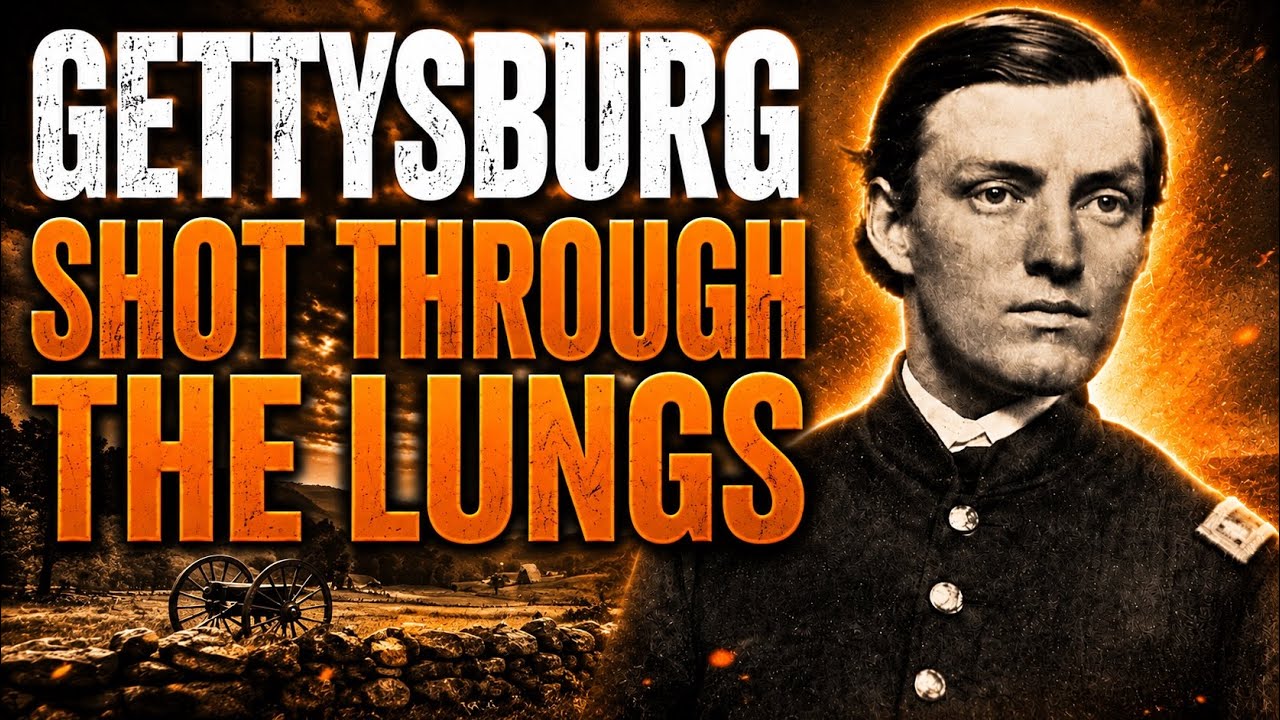
He had enlisted on April 10, 1862, and had already endured the battles of Fredericksburg and Chancellorsville before arriving at Gettysburg. The Wheatfield and Houck’s Ridge area where Sherman fought was among the most brutal ground on the battlefield that day. Union and Confederate forces surged back and forth across the fields, with cannon fire, musketry, and hand-to-hand combat raging through the afternoon. Sherman was hit during some of the heaviest fighting on the northern slope of Little Round Top, as his regiment advanced across Plum Run and toward the rocky, wooded hill in front of the Wheatfield.
Unlike so many men who fell in those fields, Sherman did not die. He was transported to a hospital in Harrisburg, Pennsylvania, where he spent three weeks slowly recovering from his wounds. By October 1863, he had returned to his unit and was declared fit for duty. Determined to continue serving, Sherman applied for a commission and became an officer.
In May 1864, he was appointed a first lieutenant in the 28th United States Colored Troops (USCT), a regiment of Black soldiers. He fought with them at the Battle of the Crater in Petersburg, Virginia, where his unit suffered heavy casualties. During that campaign, he was wounded again, this time in his right leg between the ankle and knee. He recovered a second time and completed his tour with the regiment, mustering out of the US military in Texas on November 8, 1865.
After the war, Sherman applied to remain in the army, and his commission was approved, though there is no recorded service afterward. He eventually settled down as a farmer, married four times, and fathered two children. At the end of his life, he was buried next to his second wife. Sherman survived a wound that should have killed him, returned to combat, and rose from private to captain before the war’s end.
His story is one of the many individual acts of endurance from Gettysburg that often go overlooked amid the larger movements of armies and monuments to famous commanders.