For more than a century, a watch has been kept at a sealed mine entrance in a remote Appalachian hollow, but the men who serve that watch will not explain why. Always exactly 12 of them, working four at a time in three daily shifts, they sit year-round near a wall of poured concrete and field stone where a coal mine used to be. Locals have long since stopped asking questions, and strangers are quietly discouraged from lingering. The story behind that watch begins in the autumn of 1911, in a company town called Cold Haven, owned entirely by the Pen Hollow Coal and Coke Company.
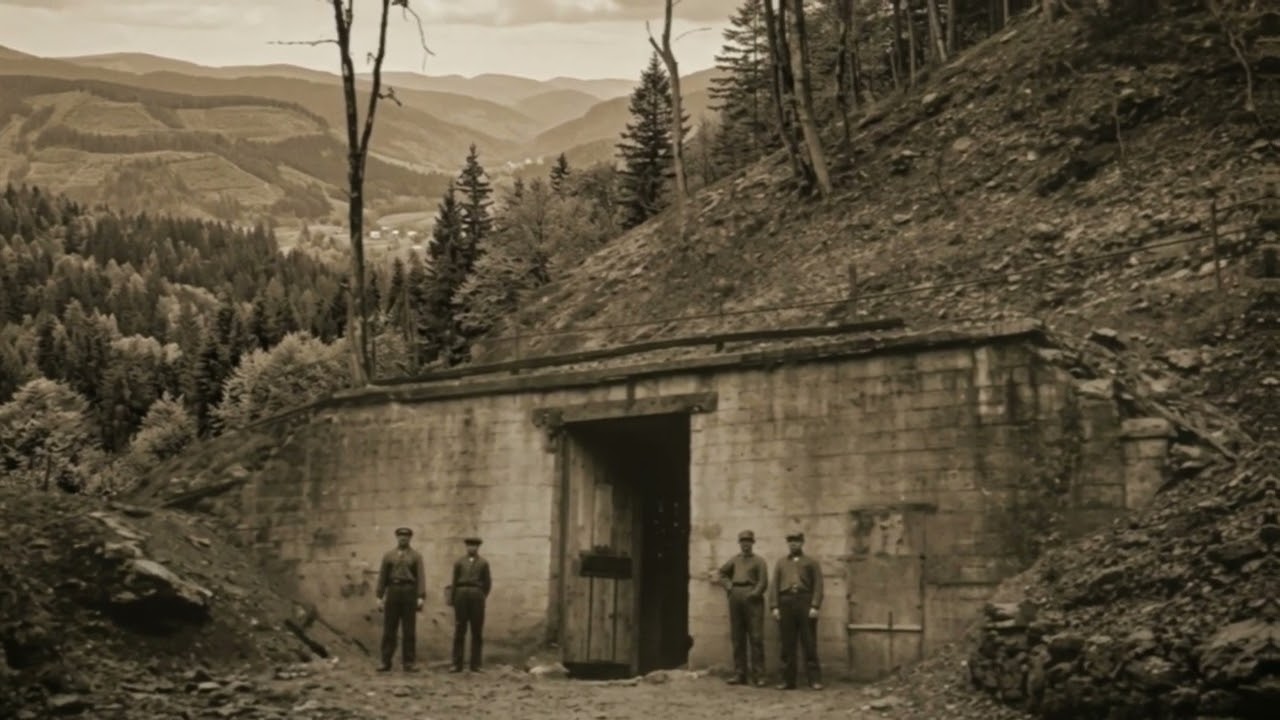
The mine superintendent inside those operations was Cyrus Holloway, a 53-year-old veteran who had spent four decades underground. The men trusted him because he possessed an unusual ability to read the mountain, often detecting a failing roof a full day before it collapsed. Deep in a newly cut section known as Number 11, Holloway’s crew struck a wall of gray rock where none should have existed. When they cut through it, they found a chamber the company had never dug, supported by timbers far older than the mine itself.
The chamber’s floor sloped into a natural shaft, and when Holloway dropped a stone into it, he never heard it land. Cold air moved in and out of that shaft with a slow, regular rhythm, like something breathing. Holloway ordered the section sealed, but Vard Penhallow, the company superintendent and a nephew of the owners, refused to stop production over what he considered superstition. The crew kept cutting, and soon strange things began happening in Number 11.
Lamps went out in groups, and a knocking sound came from the solid rock itself, always in the same patient pattern: one, two, three. When a young miner named Otis knocked back in jest, the rock answered his exact sequence, then added a fourth knock on its own, soft and almost polite. Garrett Ashmore, the company’s 38-year-old engineer, dismissed the reports as gas, settling timbers, and frightened men hearing things. Determined to prove it, he went alone into Number 11 on the night of October 11, 1911, carrying instruments and a notebook.
The night watchman logged him in at half past nine. Ashmore’s notebook survived, and it tells a disturbing story. He recorded temperatures falling far beyond what weather could explain while air pressure stayed perfectly level, meaning the cold draft was not the mountain breathing. He noted his experiments with the knocking and wrote, in a hand still neat, that he had knocked three times and the wall returned three.
He planned to test whether it was an echo by using a pattern the wall could not anticipate. The final line in the notebook was written in a hand that was no longer steady. It reads: “It knew the pattern before I did. ”
At 3:20 in the morning, Ashmore walked out of the mine on his own feet.
His lamps were both out, and he had come the entire way through the dark without light. He passed the night watchman without speaking and went to the porch of his company house. He was found there at first light, unharmed, calm, his hands folded in his lap. The doctor found nothing wrong with his body.
But Garrett Ashmore never spoke another word for the rest of his life, which lasted 40 more years. Every year, on the night of October 11, he would rise from his chair, find a wall, and knock three times. Then he would wait, and weep quietly, until someone led him back to bed. After what happened to Ashmore, three more men were lost from Number 11 within a single week and were never brought up.
The new superintendent, sent in after Vard Penhallow left the county in a hurry, ordered every paper concerning the incident burned in the company furnace. Cyrus Holloway then went into Number 11 one last time with a crew of men he chose carefully, men without wives or children. They built a thick wall at the gray seam, keyed into the rock so it could never be pushed out from the inside. While they worked, the knocking continued on the other side, patient and soft, sounding somehow nearer each day.
When the wall was nearly closed, Holloway looked through the last gap with his lamp. He never told anyone what he saw. Near the end of his own long life, though, he told his daughter one thing: it was never trying to get out. All those years, people thought they were keeping it in.
Holloway said they were actually keeping it company, so it would not come looking for someone. The company sealed the entire mine behind concrete and field stone. But three nights after the wall was closed, the knocking came through the sealed entrance, audible to people in the valley below. An elderly widow who lived nearest the mine went up in the dark and answered it, knocking back three times.
What happened afterward has never been fully disclosed, but it was bad enough that the town finally understood Holloway’s warning. Holloway concluded that the danger was loneliness. The thing behind the wall, he believed, would reach out through the rock for the nearest waking mind if left alone. So he set a permanent watch of exactly 12 men, four per shift, so the sealed mine would never be unattended.
Their job was not to guard against escape, but to keep the presence company and prevent its loneliness from reaching down the hollow into the homes where people slept. The rule of the watch, passed down through generations of the men who serve it, is simple and absolute: you may sit near it and speak near it so it knows you are there, but you must never, under any circumstances, knock back. The watch failed only once. During a storm so severe that relief crews could not reach the hollow, all four men on shift fell asleep just before dawn.
When the other three woke, there were three of them where there had been four. The gate stood open, and there were marks in the wet ground leading toward the sealed mouth of the mine, going one way only. The knocking that morning, the men swore, sounded satisfied. After that, the town never allowed the number to drop below 12 again, and at least four men were always awake at any hour.
The rule about never knocking back became the most important law of the watch. Cyrus Holloway lived to be 81. He built a small house near the gate and took the deep night shift every night for the rest of his life. He never slept more than an hour at a stretch, waking to listen with his hand flat against the wall.
When he died, still sitting in his chair, the men found his instructions for the watch, written in his own notebook. The rule about the knocking was underlined three times. At the bottom, in the hand of a very old man, he had written: “Don’t let it be alone. It’s the loneliness that’s hungry.
Be kind to it, and it will let us be. ”
To this day, if you walk far enough up the wrong hollow in the high coal country, you will find the fence and the oiled gate and the wall of concrete and field stone. Four men sit near it every hour of every day, as they have for over a hundred years. They are kind men, one former miner reportedly told an interviewer many years ago; they will share their coffee and talk about the weather.
But when the light goes blue and the cold comes up the hollow, they go quiet and they listen. Sometimes, through a mile of mountain, you can hear the knocking. One, two, three. Soft, patient, even.
The men will sit in the dark and not answer it. And anyone visiting is quietly warned to do the same, to keep the presence company without ever opening the door.