The most famous outlaw death in American history may never have happened. For more than a century, the story of Butch Cassidy’s demise has rested on a single, unverified claim. The official version says he and the Sundance Kid died in a gunfight in Bolivia in 1908. The alternative version, maintained by Cassidy’s own family until their graves, says he came home.
Robert Leroy Parker was born in 1866 in Beaver, Utah. He was the eldest of 13 children in a Mormon pioneer family. The farm was hard and the money was thin. As a teenager, he drifted to Rock Springs, Wyoming, and took a job as a butcher’s apprentice. That is where the name Butch came from.
He started stealing cattle, then horses, then banks. But Cassidy was different from other outlaws of the era. He hated violence. He was charming, funny, and literate enough to write letters home. By every credible account, he went out of his way to avoid killing anyone during his robberies.
His partner was Harry Alonzo Longabaugh, known as the Sundance Kid. Longabaugh had run away from a respectable Pennsylvania family at 15 and headed west. He was a teetotaler who never touched alcohol. He lived with a woman named Etta Place, whose disappearance remains one of the strangest loose threads in the story.
By 1900, the Pinkertons had been chasing the Wild Bunch for nearly a decade. The agency had photographs, informants, and a network across the West. For Cassidy, the math was simple. Stay in America, go to prison.
In 1901, he, Sundance, and Etta Place sailed for Argentina. They bought a ranch in Patagonia and raised cattle. For a while, it looked like the story might end there. But the money ran out, and old habits came back.
By 1905, the ranch was gone. Cassidy and Sundance drifted north into Bolivia. They found work at the Concordia tin mines, about 20 to 30 miles from a small settlement called San Vicente. They used aliases and kept their heads down.
Etta Place was gone by then. She had vanished from the historical record around 1906. The Pinkertons noted her disappearance in their files and wrote something chilling. Her vanishing, they said, encouraged the idea that Cassidy and Sundance might have done the same.
At Concordia, Cassidy made a friend named Percy Seibert, a mine official. The details are thin, but the core of the story is consistent across multiple accounts. At some point, Cassidy saved Seibert’s life and his wife’s life. The specifics are lost, but the debt was real.
Sometime on or just after November 7th, 1908, Seibert stood in front of two dead bodies in San Vicente. The bodies had been pulled from a small adobe hut where a shootout had taken place the day before. Bolivian authorities needed someone to identify the dead men.
According to Cassidy’s sister, Lula Betenson, Seibert looked at the two dead men and told the authorities they were Butch Cassidy and the Sundance Kid. He knew they were not. He identified them falsely, deliberately, because he owed Cassidy his life.
Cassidy himself, according to his sister, later said of Seibert’s decision, “He knew this was the only way we could go straight.”
The Bolivian patrol that surrounded the hut was small, likely four to ten men. They were local conscripts or miners pressed into militia service. They were poorly trained and armed with aging rifles. They had been sent to investigate reports of two foreign bandits in the area.
San Vicente in 1908 was barely a town. A few hundred people lived there, most of them miners. The arrival of two American strangers would not have gone unnoticed.
The patrol approached the hut in the late afternoon. The gunfight is generally described as beginning in the afternoon and lasting until dark. The hut was small, adobe-walled, with one entrance. The two Americans were inside.
Every account agrees that once the shooting began, it did not stop for hours. The exchange was brutal and close, at 50 to 100 yards maximum. The sound of rifle cracks and bullets thudding into mud walls carried to every home in San Vicente.
What is agreed is that the gunfight continued until darkness made it impossible to see. As night fell, the shooting stopped. The patrol pulled back. The townspeople locked their doors.
Sometime around midnight, the silence broke. Townspeople later reported hearing sounds from inside the hut. First, screams. Then, cutting through the screaming, two gunshots. After that, nothing.
The official interpretation is grim. One of the men inside was badly wounded. His partner, rather than let him suffer through the night only to be captured and likely executed at dawn, made a decision. One shot for Sundance, one shot for himself.
That version is built entirely on screams heard through adobe walls by miners hiding in their beds. No one saw what happened inside that hut. No one entered it until the next morning.
The sun rose over San Vicente on November 7th, 1908. The patrol moved in and found two men, both dead, both shot through the head. They were slumped against the interior walls, surrounded by spent cartridges.
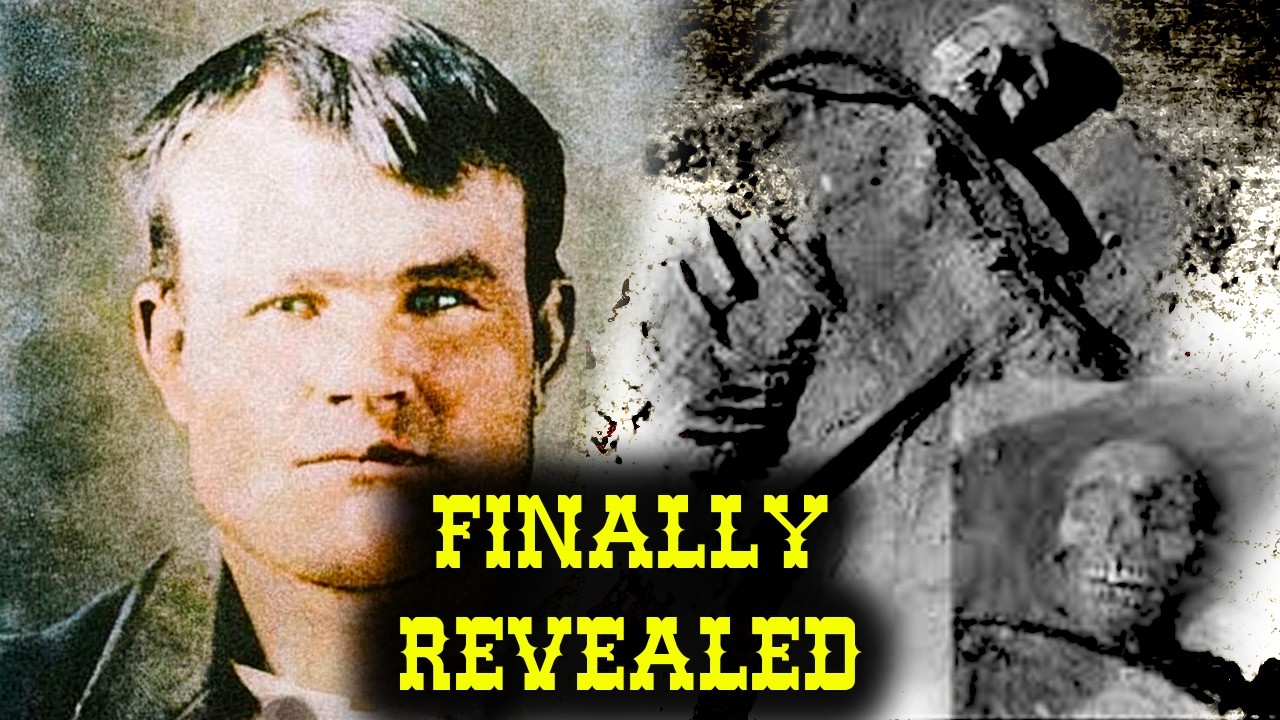
No one identified the bodies formally. There were no photographs taken, no fingerprints collected, no personal effects cataloged. The Bolivian authorities buried them that same day in unmarked graves.
Bolivian authorities sent word that two foreign bandits were killed in a shootout. That was the official report. The names were attached later by Percy Seibert, by mining company officials, and by the Pinkerton Agency monitoring from 8,000 miles away.
The Pinkertons accepted the report without conducting their own investigation. No agent traveled to San Vicente. No independent verification was attempted. The agency that prided itself on relentless pursuit simply took the word of Bolivian officials and closed the file.
Almost immediately, the accounts began to fray. Reports used different names for the same town. The number of shots fired varied wildly. Descriptions of the dead men’s possessions contradicted each other.
In the years following 1908, a man named William T. Phillips appeared in the American West claiming to be Butch Cassidy. He wrote memoirs and told stories that roughly matched known details of Cassidy’s life. Historians have thoroughly debunked Phillips. His timeline does not match, and his details are wrong in ways a real participant would never have gotten wrong.
But his existence proved something important. The idea that Cassidy survived was widespread enough to attract an impostor.
The most persistent survival claim came from Cassidy’s own family. In southern Utah, the Parker family maintained for decades that Butch had come home. They said he returned to the United States sometime after 1908 and lived quietly in the West.
In the 1990s, two researchers named Daniel Buck and Anne Meadows spent a decade combing through Argentine police files, Bolivian government records, mining company archives, and Pinkerton correspondence. Their goal was to prove once and for all whether Cassidy and Sundance died in San Vicente.
What they found was a circumstantial case. Argentine police files placed Cassidy and Sundance in Bolivia in the months before the shootout. Mining records showed Americans matching their descriptions working near San Vicente. The timeline fit. The geography fit.
But Buck admitted to the Los Angeles Times in January 1996, “There’s never a final word. You can only build circumstantial cases here. No one identified them when they were buried, and there are no photographs.”
After ten years of research, the lead investigator for the Bolivia theory was publicly acknowledging that certainty was impossible.
Lula Betenson published a book laying out the survival story in detail. According to her, Cassidy told family members that the two men killed in San Vicente were not him and Sundance. They were other bandits who had taken shelter in the same hut. When they were killed, Seibert saw an opportunity and identified the bodies as Cassidy and Sundance.
There is one way to settle this. Dig up the graves. Extract DNA. Compare it to Parker and Longabaugh family descendants. No exhumation has ever been conducted.
The graves in San Vicente remain undisturbed. A sign was added decades after the burial reading, “Here lie Butch Cassidy and the Sundance Kid.” It is a tourist attraction now.
So did Butch Cassidy die in Bolivia? The honest answer is that we do not know. No one has ever proven the San Vicente bodies were Cassidy and Sundance. No one has ever proven they were not.
The strongest evidence for the Bolivia death is circumstantial. The strongest evidence for survival is testimonial. Neither side has physical proof.
In 1969, 20th Century Fox released Butch Cassidy and the Sundance Kid, starring Paul Newman and Robert Redford. The film won four Academy Awards. The final scene, a freeze-frame of Cassidy and Sundance charging into a hail of Bolivian gunfire, became one of the most iconic images in American cinema.
It is also, in almost every detail, wrong. The film places the death in 1912. It actually happened, if it happened, in 1908. The movie shows a massive Bolivian army. The real force was a handful of poorly trained conscripts. The film depicts a heroic last stand. The evidence points to a quiet, agonized death inside a sealed hut.
The real ending, if the Bolivia theory is correct, was not a blaze of glory. It was two shots in the dark heard through walls by people who were too afraid to look.
In San Vicente, Bolivia, there is a small cemetery. Among the graves of miners and villagers, there is a marker. Here lie Butch Cassidy and the Sundance Kid.
No one verified that claim when the bodies went into the ground. No one has verified it since. The sign is not a fact. It is a bet made by people who were not there about men they never identified.
His family says he came home. The evidence says maybe. The graves say nothing. They have been saying nothing for more than a hundred years.