On September 12, 1942, in the South Atlantic about 600 miles off the coast of West Africa, the German submarine U-156 torpedoed a British troop ship. As the vessel sank, Commander Werner Hartenstein surfaced to capture officers for interrogation. Then he heard voices — hundreds of them.
Hartenstein realized what he had done. The ship was the RMS Laconia, and it was carrying over 1,800 Italian prisoners of war, allies of Germany, along with British crew, Polish guards, and civilian passengers. More than 2,000 people were now in the water.
Hartenstein made an extraordinary decision. He radioed for help to Allied and Axis ships alike, broadcasting in plain English that he would not attack any ship that came to assist the Laconia's survivors. For four days, German U-boats attempted the largest submarine rescue operation in history. This became known as the Laconia incident — the moment when showing mercy became impossible.
The RMS Laconia was a 20,000-ton Cunard White Star ocean liner launched in 1921. At 600 feet long, she could carry 2,200 passengers in peacetime luxury. When war came in 1939, she was converted into a troop ship armed with deck guns, depth charges, and anti-submarine equipment.
By September 1942, the Laconia had been making runs between Britain and the Middle East, carrying troops and supplies. On August 12, 1942, she departed Suez for Cape Town, South Africa. There she loaded an unusual cargo: approximately 1,800 Italian prisoners of war captured in North Africa, along with 160 Polish soldiers serving as guards. She also carried 463 British officers and crew, 286 British Army personnel, and about 80 civilians, including women and children. In total, roughly 2,732 people were aboard.
On September 5, 1942, the Laconia left Cape Town, bound for Freetown, Sierra Leone, and then onward to Britain. She sailed alone, with no convoy and no escort. Her speed and defensive armament were considered sufficient protection.
U-156 was a Type IX sea submarine, one of Germany's largest U-boats and capable of long-range patrols. Her commander was Korvettenkapitän Werner Hartenstein, age 34, an experienced officer who had joined the navy in 1928. By September 1942, Hartenstein had been commanding U-156 for over a year and had sunk 18 ships. He was considered skilled and professional, and he had been trained in the old maritime laws known as the cruiser rules, which required attacking warships to assist survivors when possible.
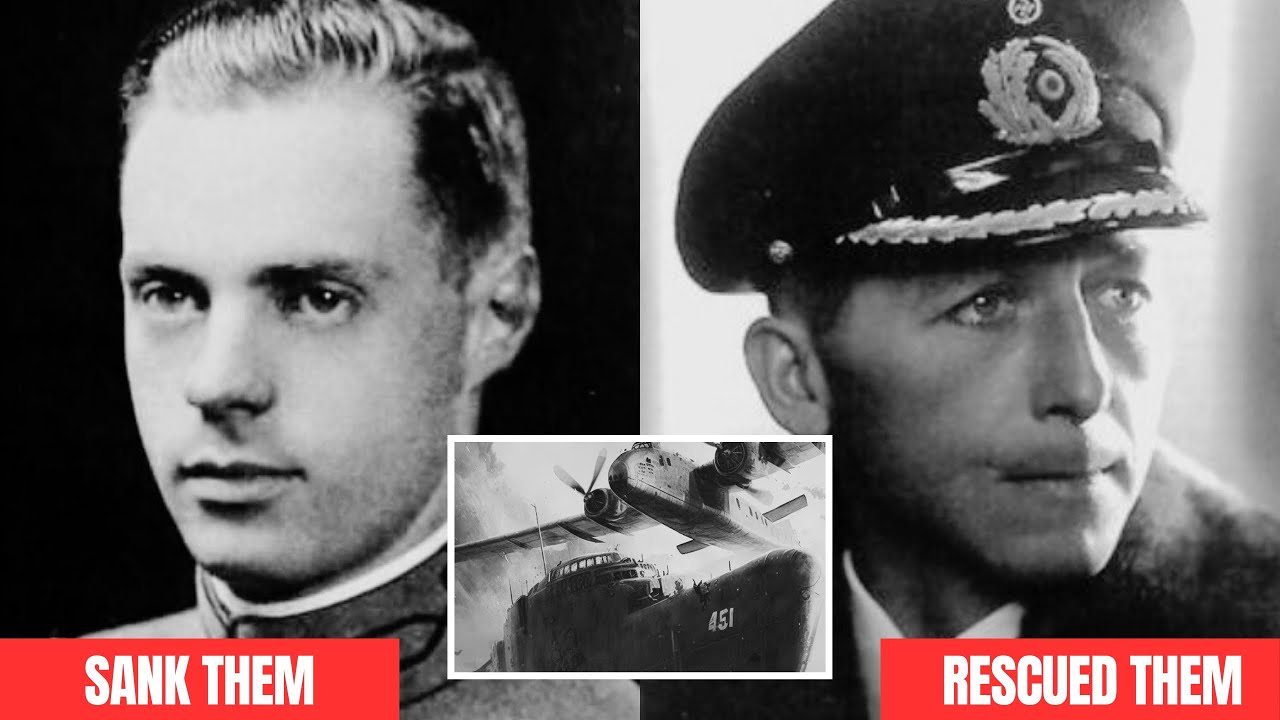
On September 12, 1942, U-156 was patrolling off West Africa, midway between Liberia and Ascension Island, when Hartenstein spotted the Laconia through his periscope. At 8:07 p.m., he ordered his crew to battle stations. The Laconia was armed and sailing in a war zone, making her a legitimate target under international law. No warning was required.
At 10 p.m., U-156 surfaced and maneuvered into attack position. At 10:07 p.m., Hartenstein fired two torpedoes. Both struck the Laconia on the starboard side. The first hit near the hold where Italian prisoners were confined, and the explosion killed hundreds instantly. The second torpedo struck minutes later, sealing the ship's fate.
At 10:22 p.m., the Laconia's radio operator transmitted that the ship was under attack by a submarine. Captain Rudolph Sharp ordered the ship abandoned. Lifeboats were lowered, but the Laconia was listing heavily, and only half the boats could be launched from the port side. Many passengers and prisoners jumped directly into the ocean.
What followed was chaotic and brutal. Some British crew members, panicked or following orders to prevent prisoner escapes, refused to let Italian prisoners into lifeboats. Survivors later reported seeing Italians shot or having their hands struck with axes when they tried to climb aboard. The water filled with struggling men, and then sharks arrived, attracted by blood and thrashing. Survivor accounts describe sharks attacking swimmers and pulling men under, creating panic that made rescue even more difficult.
The Laconia sank bow first at 11:23 p.m., just over an hour after the first torpedo hit. U-156 surfaced shortly afterward, intending to capture senior officers for interrogation. Hartenstein expected to find a few dozen survivors in lifeboats. Instead, he found over 2,000 people in the water, crying for help in multiple languages.
That was when he heard the Italian voices. Hartenstein was stunned. The ship had been carrying Italian prisoners, Germany's allies. At 1:25 a.m., he radioed his superiors: "Sunk by Hartenstein, British Laconia. Unfortunately, with 1,500 Italian POWs, 90 fished out so far. Request orders."
But Hartenstein did not wait for orders. He began rescue operations immediately. U-156's crew pulled survivors from the water, distributed blankets, food, and water, and treated injuries. They packed men onto the submarine's deck far beyond safe capacity. Within hours, the submarine had 193 survivors on board and was towing four lifeboats loaded with more.

Then Hartenstein did something extraordinary. At 6 a.m. on September 13, he broadcast in plain English on international frequencies: "If any ship will assist the shipwrecked Laconia crew, I will not attack providing I am not being attacked by ship or air forces. I picked up 193 men, 4° 53 south, 11° 26 west. German submarine." He repeated the message twice. It was an unprecedented offer — a U-boat commander promising not to attack any rescue ship.
Admiral Karl Dönitz, commander of Germany's U-boat fleet, received Hartenstein's initial request and immediately ordered assistance. Seven U-boats from nearby patrols were diverted to the rescue site, and three arrived: U-506 under Erich Würdemann, U-507 under Harro Schacht, and the Italian submarine Comandante Cappellini. Dönitz also contacted Vichy French authorities in West Africa. France, though under German occupation, still controlled colonies in Africa, and three French ships were dispatched: the cruiser Gloire from Dakar and two sloops, Annamite and Dumont d'Urville.
For three days, the submarines continued rescue operations. They flew Red Cross flags from their periscopes and broadcast their positions openly. They packed their decks with survivors. U-156 alone carried over 200 people on its hull, with another 200 in tow. The submarines moved slowly eastward toward a rendezvous point with the French ships, maintaining radio contact and still broadcasting their rescue mission in the clear.
British authorities received Hartenstein's messages and redirected two merchant ships to assist. The operation was becoming an unprecedented moment of cooperation in the middle of the war. Then, on September 16, four days after the sinking, everything changed.
At 12:32 p.m. on September 16, 1942, a US Army Air Force B-24 Liberator bomber from the 343rd Bombardment Squadron approached U-156. The pilot was Lieutenant James D. Harden, flying from Ascension Island. Ascension was a secret American base whose existence was known only to authorized personnel, and the island served as a refueling stop for aircraft crossing the Atlantic.
Harden saw U-156 on the surface. The submarine's deck was packed with people, lifeboats were under tow, and a large Red Cross flag was draped over the deck. Harden radioed his base for instructions. The senior officer on duty was Captain Robert C. Richardson III, who ordered the attack. Whether Richardson knew about Hartenstein's rescue broadcast remains disputed. Some accounts claim he was unaware; others suggest he knew but considered a surfaced U-boat a legitimate military target regardless of the circumstances.
At 12:32 p.m., Harden's B-24 began its bomb run. Hartenstein saw the aircraft approaching and believed the Red Cross flag and his radio broadcast would protect them. He was wrong. The B-24 dropped bombs and depth charges. Several missed, but explosions in the water killed survivors in tow and destroyed two lifeboats. Shrapnel damaged U-156's hull.

Hartenstein faced an impossible choice: stay on the surface and risk his submarine and crew being sunk, or dive and abandon the survivors he had spent four days rescuing. He chose to save his submarine. He ordered survivors pushed overboard, even those on the deck, and the lifeboats were cast off. U-156 crash-dived as the B-24 made a second attack run. The bomber pilot reported the submarine sunk, was credited with a kill, and was later decorated. In reality, U-156 survived with minor damage but was forced to abandon the rescue. The other U-boats, hearing about the attack, also submerged and withdrew. The rescue mission was over.
The following day, September 17, Vichy French ships arrived at the rescue area and collected survivors from lifeboats scattered across miles of ocean. Of the Laconia's original 2,732 passengers and crew, 1,113 survived. That means 1,619 died — a mortality rate of approximately 60 percent. The vast majority of the dead, about 1,400, were Italian prisoners of war who had been trapped below decks when the torpedoes struck or who died in the water afterward.
The attack on the rescue submarines enraged German command. On September 17, 1942, Admiral Dönitz issued what became known as the Laconia Order. The directive, sent to all U-boat commanders, stated: "No attempt of any kind must be made at rescuing members of ships sunk. Rescue contradicts the most basic demands of warfare for the destruction of enemy ships and their crews."
The order marked the end of traditional maritime conduct in submarine warfare. Before the Laconia, U-boat crews often assisted survivors with food, water, directions to land, or by radioing their position to rescue ships. After the Laconia, such actions were forbidden. The Laconia Order remained in effect for the rest of the war.
It was later used as evidence against Dönitz at the Nuremberg trials. However, the prosecution's case collapsed when American Fleet Admiral Chester Nimitz testified that the US Navy had practiced unrestricted submarine warfare in the Pacific since December 7, 1941, doing exactly what the Laconia Order prescribed. Dönitz was convicted of other charges, but not for the Laconia Order itself.
Werner Hartenstein continued commanding U-156 for six more months. On March 8, 1943, U-156 was sunk in the Caribbean by American aircraft. Hartenstein and his entire crew were killed. He was 35 years old. The B-24 pilot, Lieutenant James D. Harden, was never charged with any wrongdoing. His actions were considered legitimate under the rules of war: attacking an enemy submarine in a combat zone.
The Laconia incident shows what happens when human decency collides with the reality of war. Werner Hartenstein sank the Laconia, then tried to save the people aboard. He broadcast openly, flew the Red Cross, and stayed on the surface for days, fully exposed, because his conscience told him to help. It was compassionate, but militarily reckless. The American bomber pilot followed his orders. He saw an enemy submarine and attacked. Maybe he should have recognized the rescue effort. Maybe he could not. In war, decisions are made fast and often with incomplete information.
The Laconia proved that submarine warfare and old naval traditions could not coexist. Once a surfaced U-boat was attacked during a rescue, mercy became a liability. Afterward, submarines stopped assisting survivors altogether. The incident was not about heroes or villains. It was about people doing what they thought was right under impossible circumstances, where good intentions did not prevent tragedy.