In October 1944, the Allied advance through Europe had stalled in the mud of Lorraine, France. General George S. Patton’s Third Army, which had raced across France weeks earlier, was now grinding forward yard by yard against the fortress city of Metz. The cost was severe: more than 1,200 men killed, over 6,000 wounded, and nearly 1,000 missing in that month alone.
It was in the middle of this brutal struggle that news spread across Europe: Field Marshal Erwin Rommel was dead. One of Germany’s most famous commanders had reportedly succumbed to wounds from an Allied air attack months earlier. But how did Patton react to the news?
To understand the meaning of that moment, it is necessary to look at what actually happened in Germany on October 14, 1944. In the small town of Herrlingen, two generals arrived at Rommel’s home early that morning. They were sent directly from Berlin. There were no reporters, no ceremony, and no honors—only a closed door and a private meeting.
Inside, Rommel was given a choice. He could face the People’s Court, a public trial followed by execution, with punishment extended to his family. Or he could end his life quietly. In return, the world would be told he died from battle wounds. His reputation would remain intact, and his loved ones would be spared.
Rommel understood there was no real escape. He said goodbye to his wife and spoke with his son. Then he put on his Afrika Korps uniform, the symbol of his greatest victories, and walked outside to a waiting car. Minutes later, he was dead.
The truth of that morning was never meant to become public. The next day, German radio broadcasts carried a different story. Rommel, they said, had died from injuries suffered during an Allied air attack in Normandy. Not from poison, not from political pressure, but from wounds received in battle.
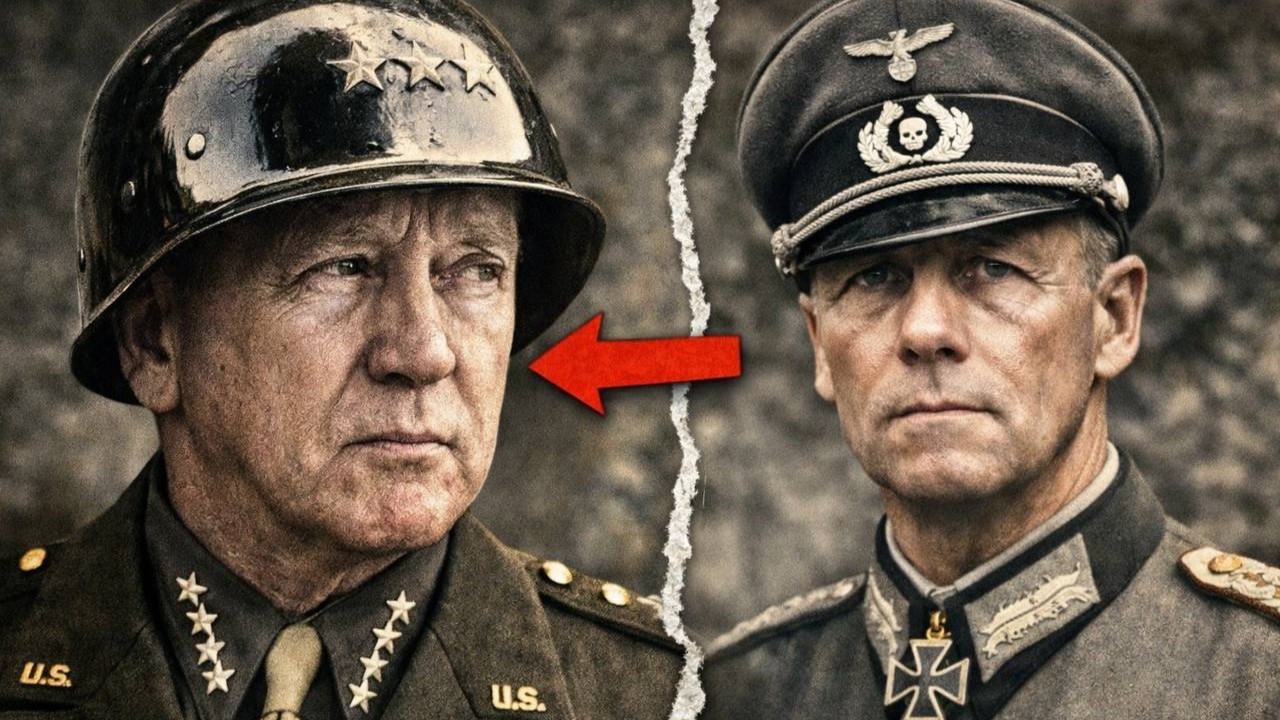
The Nazi leadership moved quickly. Flags were lowered, a state funeral was organized, and military honors were displayed for the cameras. Rommel was presented as a fallen hero of the Reich. For the outside world, there was no reason to doubt the official version. It was reported in newspapers, picked up by Allied intelligence, and reached the front lines in France. The deception worked.
Back in Lorraine, the war did not slow down for ceremonies. Rain still fell, mud still swallowed vehicles, and shells still tore through the countryside. For Patton, there were only casualty reports, supply shortages, and pressure to keep the advance alive.
His daily notes from October 1944 tell a clear story. Fuel was running low. Ammunition was rationed. Infantry units were exhausted. The forts of Metz refused to fall. Every mile forward cost lives. Among all these entries, there is no special mention of Rommel, no reflection, and no recorded reaction. Just war.
To understand that silence, one legend must be set aside. For decades, movies and popular history have portrayed Patton and Rommel as personal rivals, two brilliant commanders chasing each other across the deserts of North Africa like duelists. But the real war was very different.
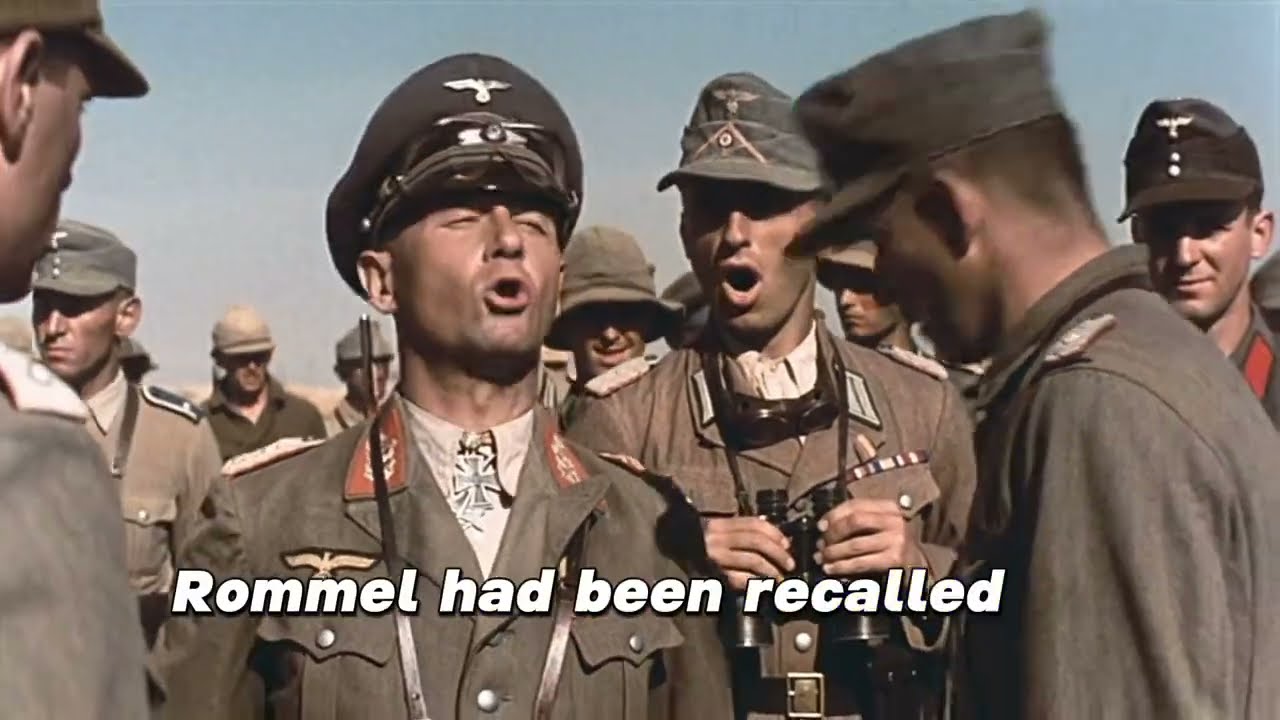
In reality, Patton and Rommel never faced each other directly in battle. When Patton arrived in North Africa in late 1942, Rommel was already preparing to leave the front. By the time Patton launched his major offensives, Rommel had been recalled to Germany. Months later, when Patton was racing across France, Rommel was recovering from severe wounds.
What connected them was not combat but reputation. Each knew the other as a legend of modern warfare, not as a personal enemy.
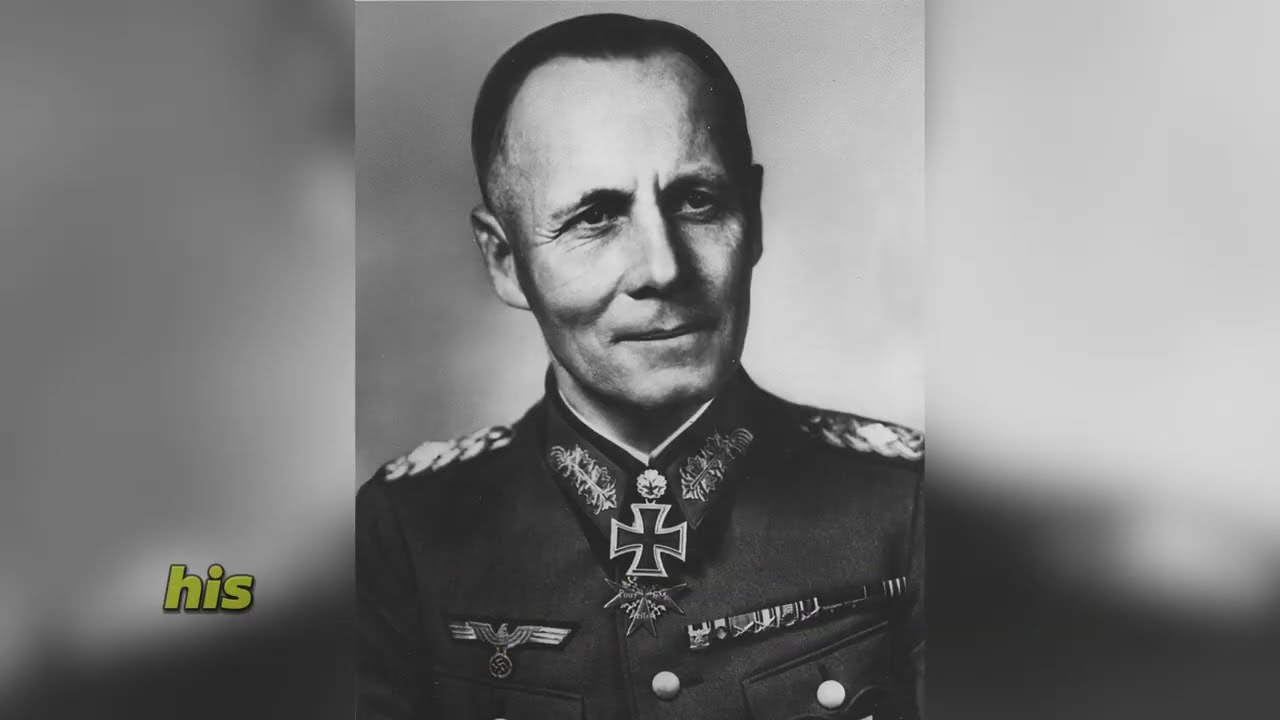
Even so, Patton knew exactly who Rommel was. Long before American troops landed in Africa, Patton studied German tactics and followed the careers of enemy commanders. Rommel stood out, not as a politician or a symbol of Nazi propaganda, but as a battlefield commander who understood speed, movement, and surprise.
Officers from Patton’s staff later recalled that Rommel was one of the few German generals Patton truly respected. One aide remembered Patton saying that Rommel fought war the way it should be fought: fast, aggressive, and always pushing forward. Another recalled that Patton considered Rommel the most dangerous German commander in the west, not because of ideology but because of skill.
Patton wanted to defeat him, not out of hatred but out of professional pride. Victory over Rommel would have proven that American armor could match Germany’s best. But that moment never came. History separated them. Respect remained, but the duel never happened.
With that in mind, Patton’s silence begins to make more sense. October 1944 was not a moment of victory. It was one of the hardest periods of his entire campaign. The rapid advance across France was over. Supply lines were stretched to the breaking point. Entire divisions were exhausted.
Day after day, Patton ordered assaults. Day after day, casualties mounted. Progress was measured in yards, sometimes in meters. His diaries from this period show a man under enormous pressure. He wrote about shortages, failed attacks, and frustration with higher command. But almost nothing else.
In those weeks, Patton was not thinking about legends. He was thinking about breaking the German line, keeping his army moving, and winning the war. In that reality, the reported death of Rommel, a general no longer on the battlefield, became just another piece of distant news. Important in history, but irrelevant to the fight in front of him.
When you are losing men every day, history feels very far away.
The war ended. Germany collapsed. The Reich disappeared. Slowly, the archives began to open. Documents were discovered, testimonies were recorded, and officers who had remained silent during the war began to speak. The truth about Rommel’s death could no longer be hidden.
He had not died from wounds in Normandy. He had been forced to take his own life, given a choice designed to protect the regime, not the man. Historians later described it as a political execution carried out behind closed doors. The state funeral had been theater. The public mourning had been carefully managed propaganda. The image of a fallen battlefield hero was a constructed illusion.
With time, Rommel’s story became more complicated. He was a brilliant commander, a loyal officer, and a man who served a regime that ultimately destroyed him.
As for Patton, there is still no recorded reaction, no dramatic statement, and no personal reflection in his diaries. Only silence. And perhaps that silence says more than any speech could have.
Two generals, both remembered, both studied, both shaped by war. But in October 1944, only one of them was still fighting. Rommel became a myth. Patton remained a commander in the field. Both are remembered, but only one was still paying the daily price of war. That difference explains everything.