Anne Woodward’s life ended in a New York bedroom in October 1975, the result of a deliberate overdose of the same sleeping pills that had killed Truman Capote’s mother decades earlier. The man who had once been her tormentor, Capote himself, was widely blamed for her death. By then, their feud had become the stuff of legend, a collision of two ambitious outsiders who clawed their way into high society and destroyed each other in the process.
The seeds of that destruction were planted long before they ever met. Anne was born in 1915 in Pittsburgh, Kansas, into a life of poverty. She spent her early years in a shack without indoor plumbing or heating, moving between eight different homes as her family fell apart.
Her brother died in childhood, her parents divorced, and her mother remarried a controlling, abusive man who she eventually left while pregnant with a child who was stillborn. Anne’s mother worked tirelessly but every venture failed.
At eleven, Anne told her mother she would be in movies. She studied Joan Crawford on screen and molded herself after the star’s fierce independence. She was beautiful, intelligent, and tested at 130 on an IQ test, but college was impossible without money.
She lightened her hair, renamed herself Anne Eden, and headed to New York with $400 her mother had saved in five-dollar bills.
In New York, she found work as a print model, though her curvaceous figure limited her to catalog work. She took voice and dance lessons, dated agents and producers when it suited her career, and landed only small roles. When she returned home three years later, she found her mother gaunt and sick with a rare form of tuberculosis.
Anne moved her to New York to care for her, depleting her savings on hospital bills. Forced into a one-room apartment, she took a job as a bunny girl at the Fifi nightclub, where men gave her gifts and money. Rumors followed her, but she always denied doing more than dancing.
Her mother died in 1941. Shortly afterward, Anne met William Woodward Sr. , a 55-year-old married man and the president of Hanover Bank and Belair Farm, where he bred racehorses.
He was a regular at the club, and they began an affair. He gave her money, jewelry, trips, and clothes, but when he tried to end the relationship, he couldn’t let her go entirely. Instead, he hatched a plan.
He believed his son Billy, a shy young man, was a virgin and possibly homosexual. He asked Anne to seduce him.
She did. Billy and a friend came to the club, and Anne turned on her charms. Years later, Billy described it as a classic seduction scene plotted by a harlot.
They began an affair, and within months he asked her to marry him. His mother, Elsie Woodward, was horrified and viewed Anne as a gold digger. Even William Sr.
, who had orchestrated the match, opposed the marriage. But Billy would not be swayed.
The marriage began with some happiness, but it soured quickly. While Billy served in the Navy, Anne gave birth to their first child and lived with her mother-in-law, who barely spoke to her. When Billy returned, he found a wife he no longer recognized.
He became a playboy, spending little time at home. They bought a brownstone in Manhattan, and Anne suddenly had maids, butlers, and crystal glasses. She took classes in posture, etiquette, elocution, and French, determined to become a lady of society.
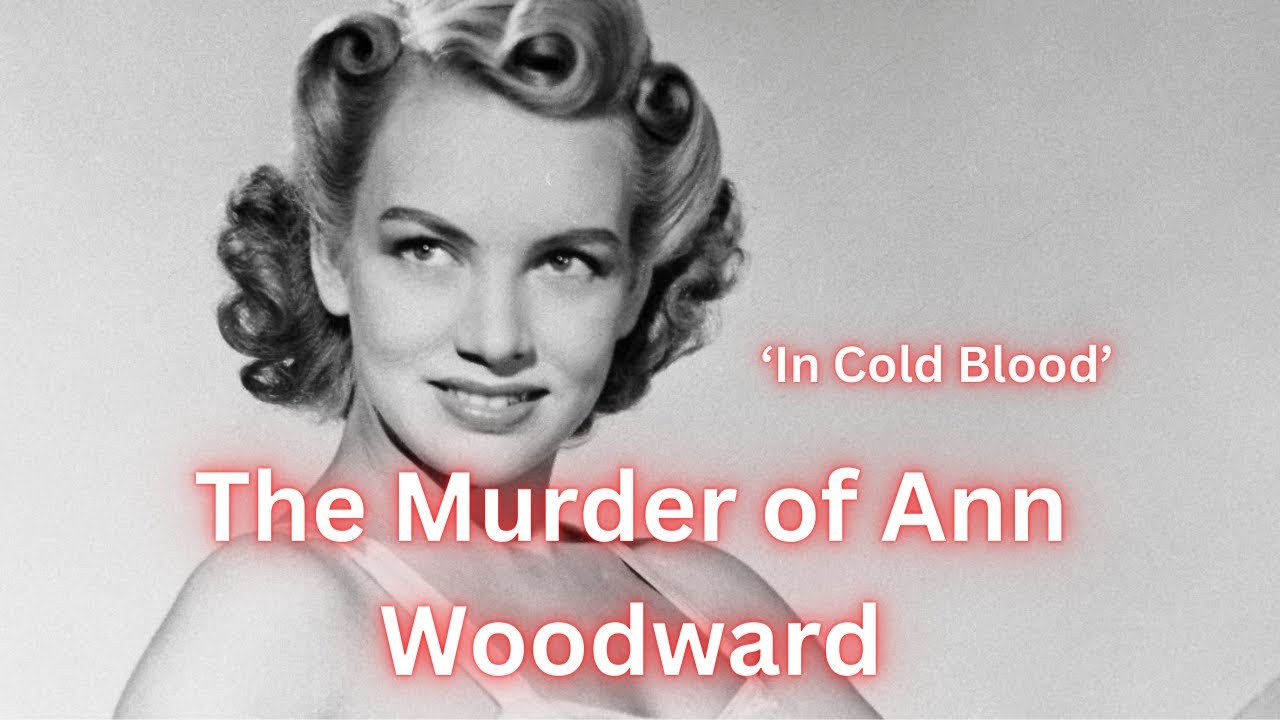
Billy resented the transformation. He had fallen in love with the girl from Fifi, and now she was becoming like every other society woman. He insulted her publicly, called her a whore and a hooker, and beat her even while she was pregnant.
She began taking pills for migraines and depression. They separated in 1948, and Billy changed his will to leave her as little as possible. They reconciled, but the cycle of violence, public fights, and expensive gifts continued.
One night in bed, Anne made a fatal mistake. She told Billy how she had met his father at the Fifi before she had met him. Billy was humiliated.
She claimed they had only been friends, but he didn’t believe her. The marriage deteriorated further. They drank heavily, flirted with others in front of each other, and fought constantly.
Anne grew jealous of both women and men, convinced of rumors that Billy was bisexual.
On the evening of October 29, 1955, the couple attended a party honoring the Duke and Duchess of Windsor. On the way, they argued about Billy’s plan to buy an airplane, which was manufactured in Pittsburgh, Kansas, two miles from the farm where Anne had grown up. Billy joked that his wife was manufactured there too.
Earlier that day, their property manager had reported a prowler in the area. A man had slept in the garage, broken a window, and left open tins of food. Billy called the police and carried a pistol with him all day.
Anne asked everyone at the party about the prowler and said she would sleep with a shotgun beside her bed.
They returned home drunk. They checked the house for intruders, Billy holding his pistol. From the gun cabinet, he took out two shotguns, giving one to Anne.
They whispered goodnight and retired to separate bedrooms. Anne placed the shotgun next to her bed, removed her makeup, applied cold cream, and swallowed a handful of sleeping pills.
As she told it, she heard a crash and growling. In her hazy state, she thought of the prowler. She grabbed the shotgun, opened her bedroom door, and peered into the dark hallway.
She saw a shadow, heard footsteps, and unloaded the shotgun. When she ran across the corridor, she found her husband dead at her feet.
Her first act was to run downstairs to the gun cabinet and throw several shotgun shells back inside, saying she feared she might shoot herself if she kept them. She then tried to call the police but couldn’t dial. At 2:07 a.
m. , a hysterical operator received a call from Anne but couldn’t understand her. A few minutes later, a man called to report hearing a woman screaming from the Woodward house.
When police arrived, they found Anne lying on top of Billy, screaming, with blood smeared across her face and nightclothes. She told them, “I shot Billy. We both had guns.

I thought it was the prowler.”
The police had doubts. A witness claimed there was a twenty-minute lapse between the gunshot and Anne’s screams. A light in the hallway was on when the witness saw it but off when police arrived.
The children had heard nothing. Most of society believed Anne was guilty. Billy’s mother, Elsie, was certain of it, but she feared a trial would expose the family’s secrets.
She made Anne an offer: the family would make the charges go away if Anne gave up her rights to her children.
Anne agreed. In front of the grand jury, she gave a compelling performance, breaking down repeatedly. After nine hours of testimony, the jurors voted unanimously not to indict her.
But many never believed her. They pointed to her willingness to give up her children as proof of guilt. She was banished from New York society.
Truman Capote had been watching closely. He had long been collecting stories about the women of high society, intending to write a book that would expose their lives. The Woodward murder fascinated him above all.
He planned to make Anne his main character in a novel he called Answered Prayers, which he believed would rival Marcel Proust. He told his publisher it was his magnum opus.
But in 1959, he put the project aside. He read about the murder of the Clutter family in Holcomb, Kansas, and traveled there with his friend Harper Lee, whose novel To Kill a Mockingbird had not yet been published. Lee helped him gain the trust of the townspeople and the lead investigator.
The killers, Richard Hickock and Perry Smith, were caught after a former cellmate revealed the crime. Hickock had heard a jailhouse rumor that Herb Clutter kept large sums of money in his house. It wasn’t true.
The men made away with $40 and a pair of binoculars.
Truman developed a strong bond with Perry Smith, who had a childhood similar to his own, marked by abandonment and rejection. Smith and Hickock spent five years on death row before their execution, allowing Truman to finish In Cold Blood. The book was an enormous success and made him wealthy.
But it gave him nightmares. He drank more, partied more, and surrounded himself with his society friends, whom he called his swans.
His black and white ball in November 1966 was called the party of the century and marked the apex of his fame. Then his descent began. He returned to Answered Prayers, realizing the Woodward murder had everything he wanted: sex, violence, betrayal, murder, and high society.
Writing it would also allow him to get revenge on Anne, who had insulted him in a Swiss cafe years earlier.

That encounter had happened in 1956, shortly after the shooting. Anne was in Switzerland, drinking at a cafe with Claus von Bülow, a notorious womanizer with a dark past of his own. Truman, seated nearby, decided to approach them.
He wanted to cause mischief. The conversation turned heated, with Anne calling him a “little faggot.” He returned the slur, waving his finger at her and calling her “Mrs.
Bang Bang.” The feud was born.
In May 1974, Truman published the first chapter of Answered Prayers, titled “Unspoiled Monsters.” It caused a stir. He promised more, saying his book would be like a gun firing with speed and power never seen before.
In 1975, with Anne back in the United States, he released “La Côte Basque,” the chapter that would destroy her.
The story’s protagonist, Anne Hopkins, was clearly based on Anne Woodward. She was portrayed as a vicious, trigger-happy gold digger who murdered her husband because he asked for a divorce. The chapter included rumors that Anne’s first marriage had never been annulled and that she had engaged in a bigamous relationship.
None of it was true of the real Anne Woodward, but the rumors had circulated for years.
In early September 1975, friends called Anne to warn her that Esquire would publish the story in November. Someone sent her an advanced copy, whether to warn or hurt her, she didn’t know. Anne felt her world closing in.
She had tried to build a new life and failed. She told everyone she must be far away when it was published, calling it a bomb that would explode.
But as the date approached, she didn’t leave. In late October, she put on her favorite dress, applied heavy makeup, mascara, and bright lipstick. She swallowed a handful of Second pills and got into bed.
It was the same drug that had killed Truman’s mother.
When Elsie Woodward heard the news, she said, “That’s that. She shot my son, and Truman Capote just murdered her.”
The Woodward children were destroyed as well. James, the youngest, became a heavy drug user and spent time in mental institutions. He survived a balcony jump in 1972 but killed himself a year after his mother’s death.
William, the older boy, initially followed in his grandfather’s footsteps and found success, but later sank into depression. In 1999, he stepped through the window of his apartment kitchen and jumped fourteen stories to his death.
Truman’s chapter also destroyed his relationships with his swans. He exposed their secrets, affairs, and betrayals. Babe Paley and Slim Keith, his closest friends, turned their backs on him.
He was ostracized from the society he had once ruled. His drug and alcohol abuse worsened, and his creative output dwindled. The man who had hosted the party of the century died in the arms of Joanne Carson, his last words reportedly “Mama,” largely forgotten by the society he had so meticulously documented.
In the end, both Anne Woodward and Truman Capote were tragic figures, undone by their own flaws. Anne, desperate to escape her past and secure a place in high society, found herself trapped by the very scandals she sought to avoid. Capote, driven by a relentless pursuit of fame and a desire to shock, alienated everyone around him and destroyed his own legacy.
Their stories remain a somber reminder of the destructive power of ambition, scandal, and the quest for societal approval.