When Germany surrendered in May 1945, its most famous tank commanders scattered in every direction. One went home and spent the next 55 years running a pharmacy. One went back to drilling teeth. One became a small town fire chief.
The two biggest names of all were already dead. And for decades, nobody could find either grave.
But the strangest thing that happened to the Panzer Aces after the war isn't where the men went. The Panzer Ace itself was largely built after 1945.
That includes the label, which the German army never officially recognized, along with the kill counts and the rankings. It was built by the survivors, by a lobby of former Waffen SS men, and by a writer who had spent the war in a propaganda company.
For more than half a century, people in a small village in western Germany filled their prescriptions at a pharmacy named after a German tank. The man behind the counter was Otto Carius.
During the war, he commanded a Tiger in the Wehrmacht, the regular German army, and he was credited with more than 150 kills. He fought most of that war on the Eastern Front, where Nazi Germany waged a campaign of conquest and annihilation.
His war ended in the spring of 1945 in the Ruhr pocket, where Carius destroyed his unit's Jagdtiger tank destroyers and surrendered to the US Army. He was released on May 21, 1945, less than two weeks after Germany's surrender.
But his hometown now lay in the French occupation zone. In a 2014 interview, Carius said the first thing he had to do after the war was run, because the French were looking for him.
So he retrained as a pharmacist, and in 1956 he took over an existing pharmacy in the village of Herschweiler-Pettersheim. It was called the Hirsch Apotheke, the Stag Pharmacy. Carius renamed it the Tiger Apotheke, the Tiger Pharmacy.
He ran it until 2011, kept working there part-time into his 90s, and died in January 2015 at the age of 92.
Think about that sign for a moment. Plenty of veterans came home and tried to fold the war away, but Carius hung his over the front door. It's a small detail, but it captures something that runs through this whole story. These men didn't bury their war, and some of them put it on a sign.
Carius lived long enough to tell his own story, but the most famous name of all never got that chance. And for 39 years, nobody even knew where he was buried.
If you've ever watched a documentary about German tanks, you've heard of Michael Wittmann. And the version you heard was being shaped while he was still alive.
Unlike Carius, Wittmann was an SS-Hauptsturmführer, roughly a captain in the Leibstandarte, the Waffen SS formation that began as Hitler's personal bodyguard. On August 8, 1944, near the Normandy village of Saint-Aignan-de-Cramesnil, Wittmann's Tiger was hit. The ammunition inside detonated and the blast tore the turret off the hull.
Wittmann died with his four crewmen. A British Sherman Firefly gunner named Joe Ekins is generally credited with the shot, but Canadian units were closer that day, and the question is still argued.
The five men went into an unmarked field grave, and then the grave was simply lost. It wasn't found until March 1983, when the remains were moved to the German war cemetery at La Cambe.
But the fame is more revealing than the grave. In June 1944, a week after D-Day, a British column was ambushed at the town of Villers-Bocage, and it became the defining episode of Wittmann's legend.
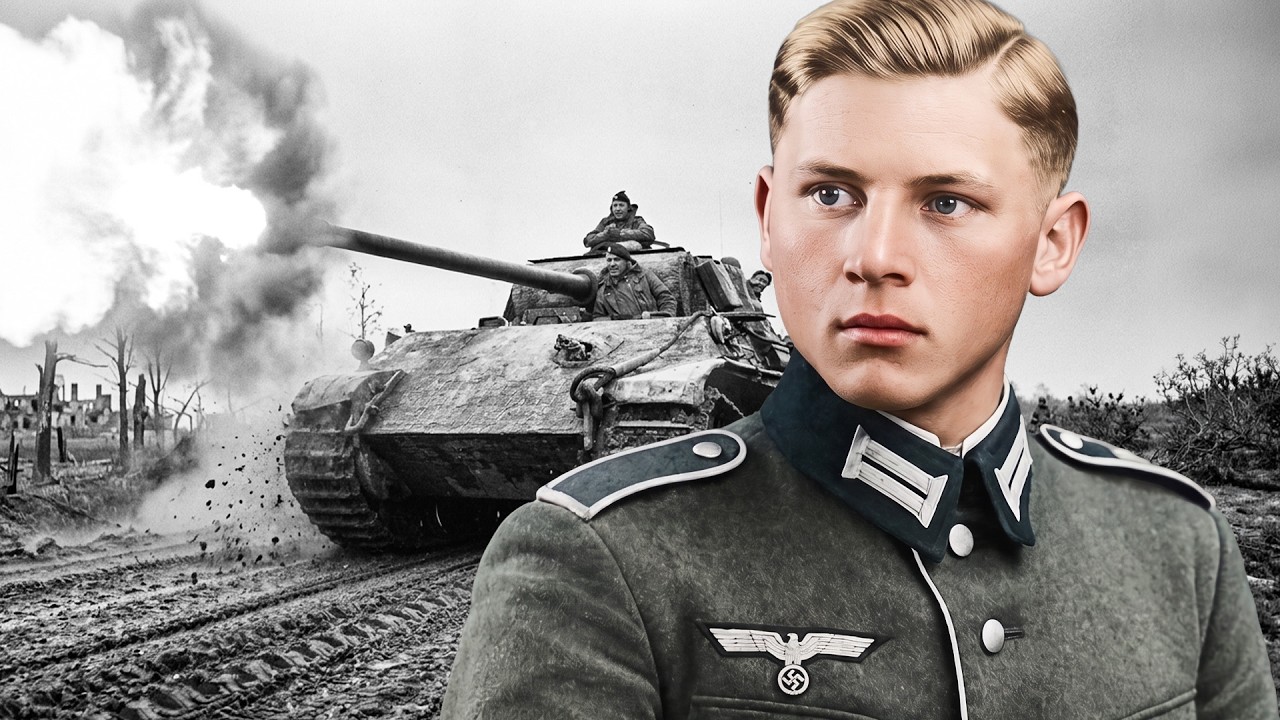
Historian John Buckley points out that the German success there was the work of a whole unit, but propaganda assigned it to one man. That fit a wider pattern. During the war, the tank ace was mainly a Waffen SS propaganda product, while most army units gave awards for completing missions, not for running up a tally.
Yet by the legend's own rankings, Wittmann isn't even number one. The man at the top died 10 days before the surrender. His body vanished for 68 years.
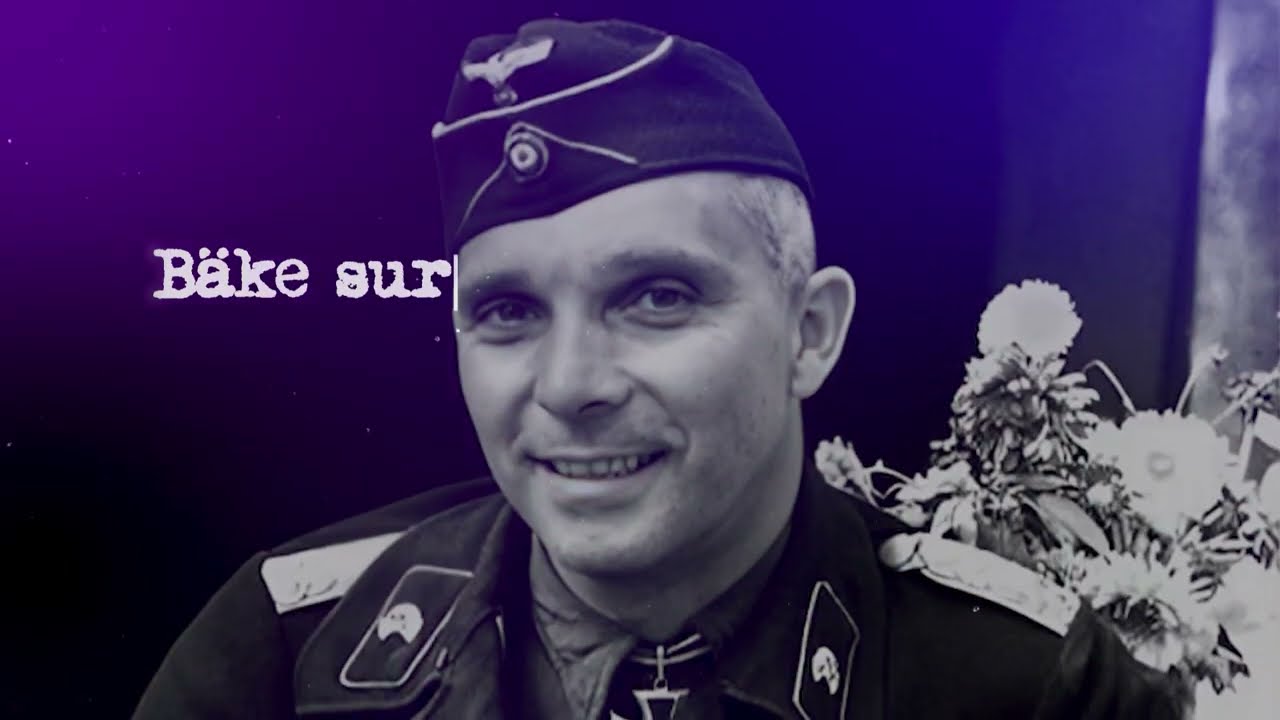
One of the most senior tank commanders in this story ended the war as a general and went straight back to fixing teeth. Franz Bäke had volunteered for the First World War, earned a doctorate in dentistry in 1923, and then rose through the Panzer arm in the Second World War to become a general commanding armored forces in the East.
On May 8, 1945, Bäke surrendered to the Americans and spent about two years in internment. Then he reopened his dental practice in Hagen. He died in December 1978 after a car accident, and according to some accounts, the new West German army sent an honor guard to his funeral.
Ernst Barkmann's path looked different from the start. He joined the Nazi party in 1938 and the SS in 1939, and he became a Panther commander in the SS division Das Reich, where he won the Knights Cross.
At the end he fought his way home to the village of Kisdorf in northern Germany, where the British took him prisoner. Once released, he led the local volunteer fire brigade, went into local politics, and from 1976 to 1994 served as mayor of Kisdorf. He died there in 2009.
So there's the pattern. Ordinary trades, small town respect, and not one of these three ever stood before a war crimes court.
But Barkmann's division carried a name that still means something terrible in France. On June 10, 1944, men of Das Reich murdered 643 people in the village of Oradour-sur-Glane. Men, women, and children.
The killings were carried out by a battalion of the division's Der Führer regiment, not by Barkmann's tank regiment, and nothing in the record ties him to them personally. But it was his division.
And not every Panzer commander came home to a fire station. On December 17, 1944, a group of captured American soldiers stood in a field at a Belgian crossroads, waiting to learn what would happen to them. And then the machine guns opened fire.
The men who did it belonged to the battle group of Joachim Peiper, once Heinrich Himmler's personal adjutant and now a Panzer commander in the Leibstandarte, Wittmann's own division. It was the opening days of the Battle of the Bulge, and the prisoners were soldiers of the US 285th Field Artillery Observation Battalion, captured at the Baugnez crossroads near Malmedy. Eighty-four of them were killed in that field.
In the days that followed, more prisoners and Belgian civilians were killed along the battle group's path. In July 1946, a US military court at Dachau sentenced Peiper to death.
Then the case began to unravel. Not the massacre itself, which is not in doubt, but the trial. American interrogators had used coercive methods to get confessions, and campaigners seized on that. Peiper's sentence was commuted to life, then cut to 35 years.
In December 1956, after about 11 and a half years, he walked out of Landsberg prison a free man. He went on to work for Porsche and Volkswagen, stayed active in the Waffen SS veterans network, and later moved to Traves in eastern France. In July 1976, after his identity was made public, his house was set on fire during the night and Peiper died inside.
At Nuremberg, the International Tribunal declared the SS a criminal organization, and that verdict included the Waffen SS, with an exemption for men who had been conscripted. That's the organization Wittmann and Barkmann served in.
But the record does not tie either man to Malmedy or to Oradour, and this account won't pretend otherwise. The point isn't guilt by association. It's what kind of organization these men belonged to.
Set beside a pharmacy and a dental chair, Peiper's case was the one road that led to a courtroom. And even that road ended with a prison gate swinging open. And he didn't get out on his own. The flaws in his trial had become a cause, and an organized lobby was working to make sure verdicts like his didn't stick.
The lobby had an awkward name, a small membership, and a surprisingly good record of getting what it wanted. It was called HIAG, the Mutual Aid Association of former Waffen SS soldiers, and it formed in the early 1950s.
It called itself a support network for veterans and their families, but in practice it lobbied hard. Its leaders claimed to speak for hundreds of thousands of former soldiers and hinted they could swing as many as 2 million votes.
The reality was much smaller. Its membership never climbed above about 20,000 men, roughly 8 percent of the 250,000 Waffen SS veterans living in West Germany. It won anyway, and in 1961, career Waffen SS men had their pension rights partially restored. A real victory for men whose organization had been branded criminal at Nuremberg.
Its most effective spokesman was Kurt Meyer, a former Waffen SS Panzer division commander whom a Canadian military court had convicted over the murder of Canadian prisoners of war at the Ardenne Abbey. He was released in 1954.
HIAG's leaders published memoirs and unit histories that historians today classify as apologist literature, and nearly all of it rested on one simple line. The Waffen SS, they insisted, had been soldiers like any other, no different from the Americans or the British across the battlefield.
Over time the mask slipped. In the early 1960s, HIAG drifted toward extreme right politics. And by the early 1980s, mainstream West German parties were barring its members.
The Nuremberg verdict threatened pensions, careers, and reputations. So the veterans built a counter story. And every rehabilitation campaign needs heroes. Tank commanders were ideal for the job, men whose war could be told as a scoreboard with no villages in it.
The legend didn't need a publicist, because the men at its center were perfectly willing to write it themselves. In 1960, Otto Carius published his memoir, "Tigers in the Mud," in a series of German war memoirs. In the foreword to a later edition, he argued that combat troops shouldn't be burdened with collective guilt. The final edition he published himself, and he sold it through the Tiger Pharmacy. The man who renamed his shop after a tank was selling his own story across the same counter.
Barkmann got a legend of his own. A single engagement in Normandy became known as Barkmann's Corner, the story of one Panther holding off an American column and claiming a string of tanks. Historian Steven Zaloga went looking for those losses in the American records and he couldn't match them. He traced the story back to Waffen SS propaganda.
But the man who did the most to give the Panzer ace its standard shape was Franz Kurowski. During the war, Kurowski served in a propaganda company on the Eastern Front. Afterward, he simply kept writing, for the pulp war magazine Der Landser and in a long stream of books. The most influential was "Panzer Aces," published in the United States from 1992 onward.
Kurowski's books are packed with reconstructed dialogue, scenes nobody could have recorded, and moments of very convenient decency. In one of them, Wittmann asks for help for a wounded Russian soldier instead of accepting a reward. The historians Smelser and Davies single out that scene as a typical example of invented humanity, the kind of detail designed to make you like the man in the turret.
These books didn't stay on the fringe. They became the raw material for decades of documentaries, war games, and even museum captions. So the stories got written mostly by people with a stake in how they read.
But a kill count feels like cold hard data. So what happens when you actually check it?
German units claimed about 16,250 Soviet tanks and assault guns, and their own high command didn't believe them. The problem started on the battlefield, where nobody could reliably count kills in the smoke and chaos of a tank fight. Two crews fired at the same target and both claimed it. A tank knocked out in the morning might be dragged away, repaired, and back in action weeks later, only to be claimed all over again.
So the high command cut that summer's figure in half. Historians Zetterling and Frankson later judged even that cut slightly too drastic, but the point stands. The regime's own correction was far closer to the truth than the claims coming from the front.
And it wasn't a one-off. Fremde Heere Ost, the army's intelligence office for the Eastern Front, routinely discounted reported Soviet tank kills by 30 to 50 percent.
Steven Zaloga's verdict on the aces is blunt. Most of them, he argues, were simply lucky. Lucky to be sitting in a tank the enemy could barely scratch, behind a gun that could knock out almost anything.
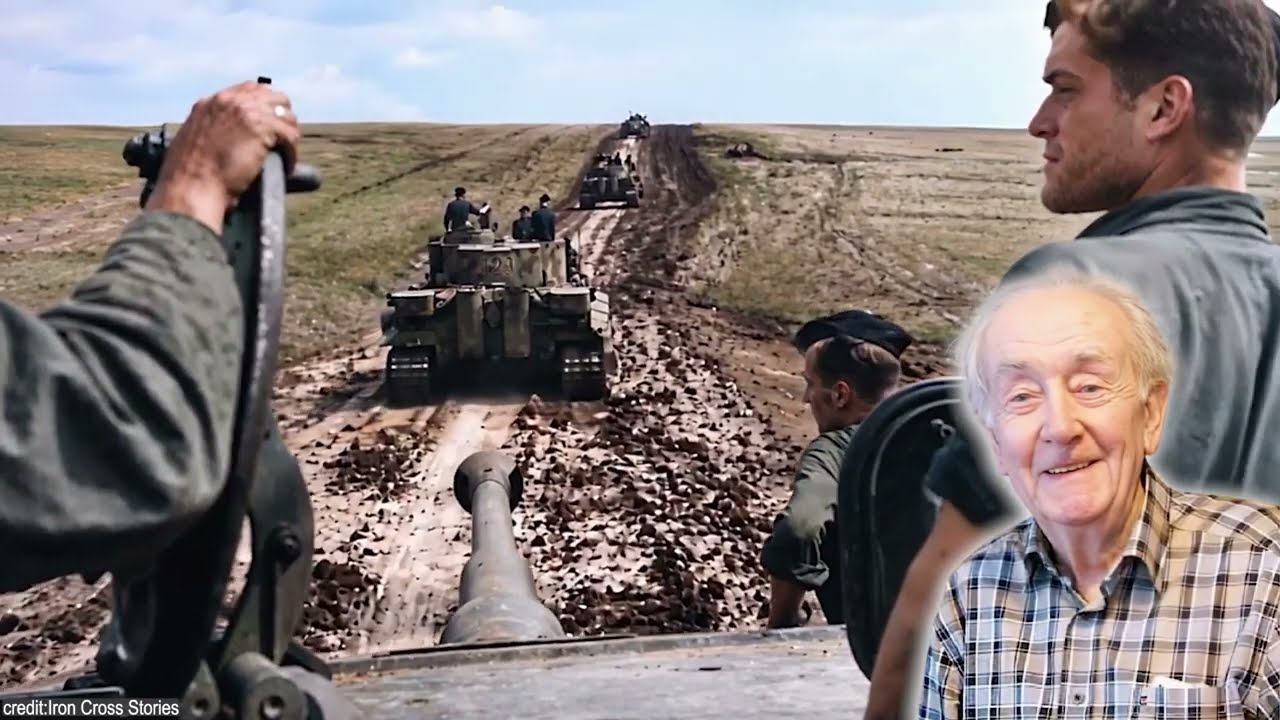
Of the roughly 135 tanks credited to Wittmann, about 120 came in 1943 on the Eastern Front in a Tiger. And Carius himself in a later interview put his own tally at around 100 or fewer, well below the legend's 150-plus.
There's one more thing a scoreboard is good at hiding. Every entry on it was a vehicle with a crew inside. The numbers were supposed to be the hard evidence under the legend, but they were shaped by the same needs as the stories.
That brings us back to the question the rankings exist to answer. Who was number one?
Behind a church wall in a Czech village, 16 German soldiers lay in an unmarked grave for 68 years. And one of them sits at the top of nearly every Panzer ace ranking ever published. His name was Kurt Knispel.
He wasn't an officer and he wasn't in the SS. He was a sergeant in the army's 503rd heavy panzer battalion, and popular rankings credit him with 168 kills, more than Wittmann. He received the German Cross in Gold, but never the Knight's Cross.
On April 28, 1945, Knispel was hit by shrapnel and he died about two hours later at a field hospital, 10 days before the surrender. He was buried behind that church wall in Vrbovec in Moravia, and there he stayed without a name.
In April 2013, his identity disc finally confirmed who he was. In November 2014, he was reinterred at the central cemetery in Brno. The headlines practically wrote themselves. The war's top panzer ace found at last.
But there's a problem with that headline, and it comes from the man best placed to know. Alfred Rubbel was Knispel's superior officer and he kept the battalion's war diary. In 2011, he told the historian Roman Töppel that the battalion didn't customarily count kills or credit them to individual crews at all. That means the famous 168 can't be verified.
Rubbel also said that the well-known story of Knispel being nominated for the Knight's Cross four times and turned down every time was Franz Kurowski's invention. Kurowski's book about Knispel came out in 2007, 62 years after its subject died, and Rubbel dismissed it as a shameless impertinence.
Yet when the grave was found six years later, the headlines repeated its numbers anyway. Popular accounts also cast Knispel as a rebel with a conscience, a soldier who stood up for prisoners and clashed with his superiors. That version appeals because it gives the legend a good guy. But those stories flow down the same postwar pipeline as the four nominations and the 168 kills. And they deserve exactly the same suspicion.
If the Panzer ace were really about merit, Knispel's record would settle the argument. Instead, the war's so-called top score turns out to be a number his own unit never kept, attached to a man who never got to tell his own story, so somebody else wrote one for him.
So what actually happened to Germany's top Panzer aces after the war? There are two answers, and only one of them is about the men.
The men went home to a pharmacy, a dental chair, a fire station, and a town hall, or into field graves that the legend decorated later. One stood trial for a massacre and still walked free.
The Panzer Ace went somewhere else entirely. Into memoirs and veterans lobbying, into paperbacks by a former propagandist, into kill counts nobody could verify, and from there into documentaries and games.
So here's what the Panzer Ace really is. It isn't a lost sporting hero with a record waiting to be celebrated. It's a postwar product, a way of reading service in a genocidal war as a scoreboard with no victims on it, when some of that service took place inside an organization declared criminal at Nuremberg.
Hold two pictures side by side. The first is a pharmacy in a small German village renamed after a tank, where an old man sold his own story across the counter. The second is a church wall in Moravia, where the man at the top of the rankings lay without a name while someone who never met him wrote his legend.
In the end, the real question was never what happened to the aces. It's what was done with them, and who did it.