Robert Carl Hohenberger, a convicted kidnapper and rapist born in Indiana in 1943, became the prime suspect in a series of teen disappearances and murders in Morgan City, Louisiana, in the spring of 1978. He took his own life before he could be apprehended. Hohenberger’s family moved to Riverside County, California, when he was young. In the mid-1960s, he volunteered as an unpaid auxiliary police officer, a role that included monitoring public order and safeguarding citizens’ rights.
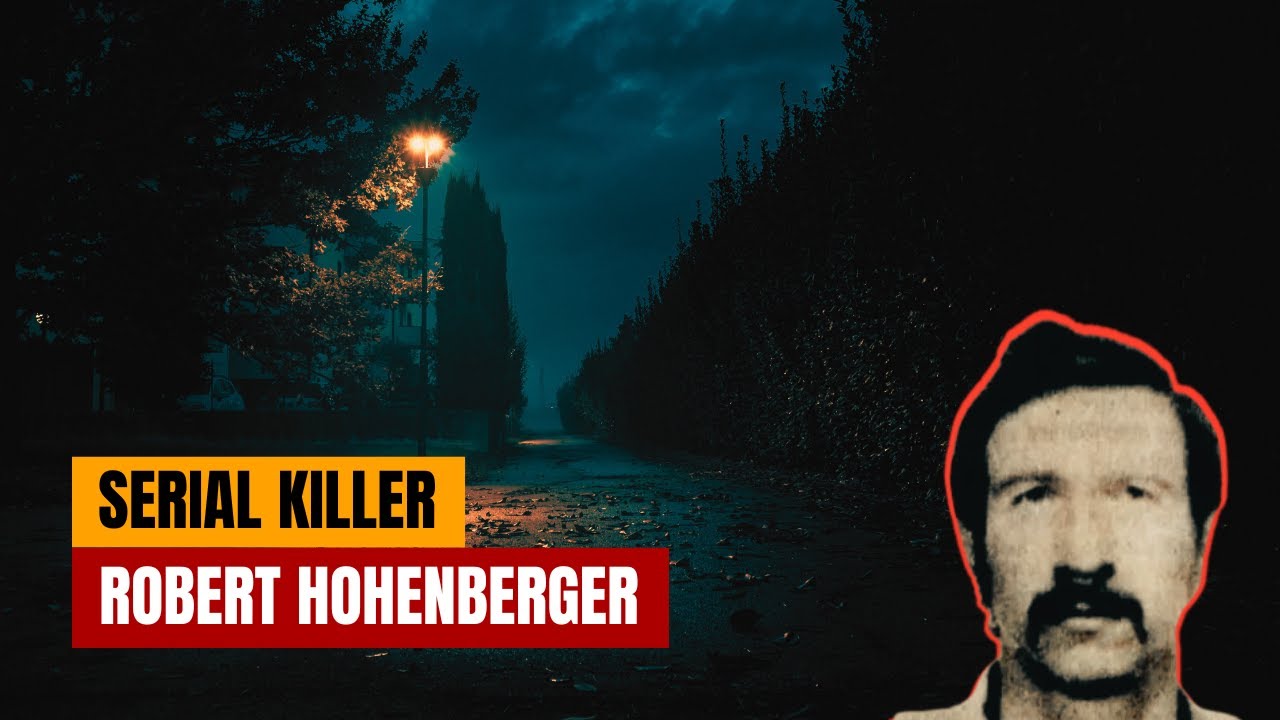
While acting in that official capacity, he began attacking young women. In 1966, he was arrested on suspicion of attacking a woman he had raped at gunpoint. Although Hohenberger was found guilty, several charges were later dismissed as part of a plea agreement, with the justification that the two parties had reconciled. Two years after his release, he moved from Riverside County to Orange County.
In 1971, he was arrested in Laguna Beach for kidnapping two women at gunpoint. He was convicted and sentenced to life in prison with the possibility of parole. Hohenberger was assigned to San Quentin State Prison. By 1974, after establishing himself as a model inmate, he was moved to a lower-security cell.
He escaped on April 12, 1974, then kidnapped Richard DuBois and his wife Victoria, forcing them to drive him to Modesto to find a friend. The couple managed to escape while filling up the car at a gas station near Interstate 5, and Hohenberger was captured a few hours later. He was convicted of escaping and was paroled again in August 1977. Back in Riverside County, he resumed committing crimes because of financial problems.
In October 1977, he kidnapped a woman from Palm Desert and sexually assaulted her. The victim survived and reported the assault to police. After she identified Hohenberger from a series of mugshots of sex offenders, he was placed on a national wanted list. Hohenberger left California in January 1978 and avoided capture.
That same month, he arrived in Louisiana and settled in the small community of Bayou Vista. Using the alias Frank Henry Green, he found employment and housing with R. M. Service Inc.
, a welding equipment company. He spent much of his free time in nearby Morgan City, where five young people mysteriously disappeared during the same period. Morgan City police chief Randy Ratcliffe acknowledged rumors that a teenager named Mary Leah Roderman had been kidnapped in March, but he said his department had checked all reports and found them erroneous. He insisted that the rumors were just rumors.
Mary Leah Roderman, 16, was the first to vanish. She disappeared on March 2 after going shopping. A few hours later, her abductor phoned her parents and demanded $5,000 in ransom. Mary was allowed to call her parents to verify the kidnapping, which the man used to strengthen his demands.
After the Rodermans contacted police, neither Mary nor her kidnapper could be found. On April 27, following a robbery at a business in Morgan City, Gordon Mark Connella, 17, and Bridget Cantrell’s son, 19, went missing. Police found the missing girl’s handbag and an unlit cigarette in the parking lot, along with a car and a carton of cigarettes. On May 11, Judy Adams, 15, and Bertha Gould, 14, vanished after attending a fair near Central Catholic High School in Morgan City.
Initially, both girls were thought to be runaways, but further investigation revealed they had boarded a car driven by an unknown white male before disappearing. Police identified the driver as Frank Green after checking the car’s license plate. His true identity was later confirmed through fingerprint analysis. A 38-year-old neighbor of Hohenberger, Sydney Harris, was questioned by police.
Harris later contacted Hohenberger and told him an arrest was imminent, giving him a chance to flee. Harris was subsequently charged with harboring a fugitive. On May 26, the bodies of two bound girls with evidence of abuse and strangulation were found in the sewage system of Bayou Vista, not far from Hohenberger’s workplace. They were later identified as Judy Adams and Bridget Cantrell’s son.
The following day, Gordon Mark Connella’s body was discovered in a field outside the city, his neck strangled by a knotted rope. Police launched a large search operation with the help of law enforcement agencies and volunteers, looking through abandoned buildings, fields, forests, and sewers for the bodies of other missing teens. Divers searched adjacent rivers and marshes, but the effort was unsuccessful. Bertha Gould’s body was never found.
On May 31, 1978, police in Tacoma, Washington, found Hohenberger after he tried to sell a stolen vehicle. He fought aggressively against four plainclothes officers, pulled out a . 22 caliber revolver, and shot himself in the head. He was taken to Saint Joseph Medical Center, where he underwent brain surgery, but died that same day.
His death was ruled a suicide. Hohenberger had been in Tacoma since May 23, using the alias Frank Harris while searching for work. A search of his rented flat uncovered a 12-gauge shotgun and several knives. Because of the similar methods, he was also considered a possible suspect in the abduction and murder of three other children in early 1978, including two teenagers found shot with a .
22 pistol in Boca Raton, Florida, and a third child kidnapped from Cartersville, Georgia. Forensic ballistics analysis did not connect Hohenberger to the Boca Raton murders. The bodies of Bertha Gould and Mary Leah Roderman were never recovered, leaving many questions unanswered about what happened to them and why.