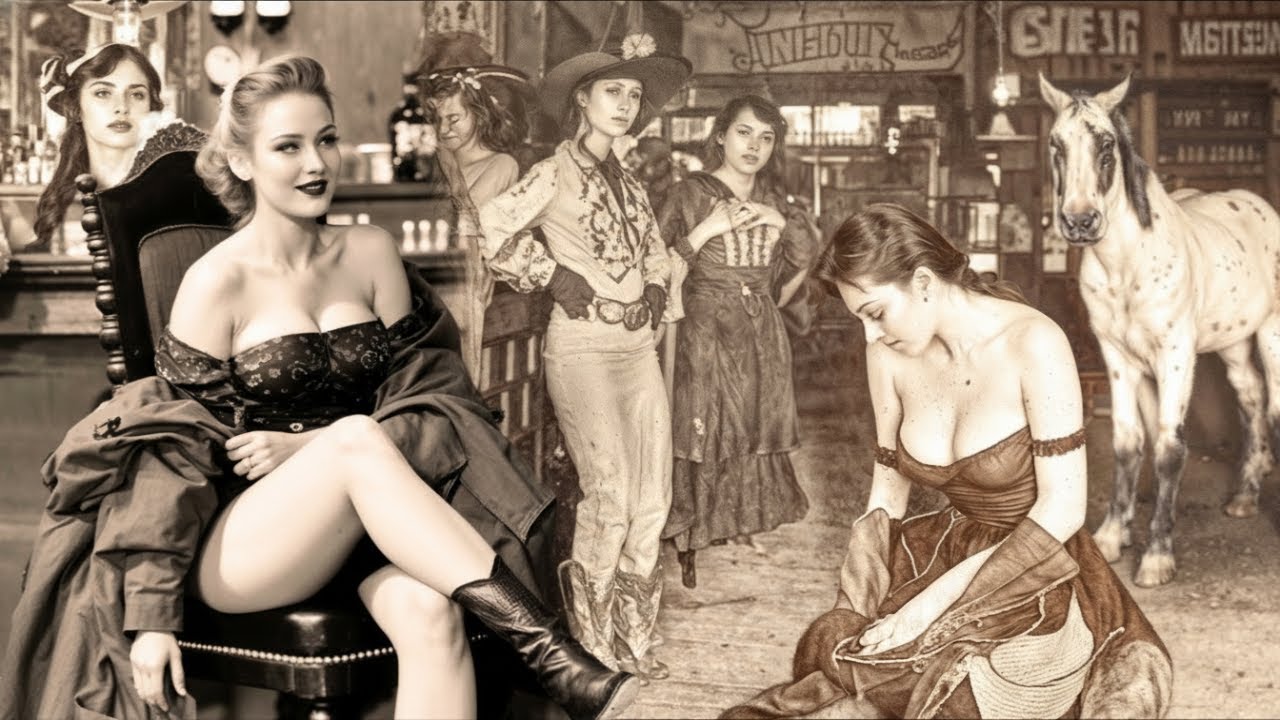
The saloons of the American frontier were not the friendly gathering places Hollywood later made them out to be. They were often dangerous, filthy establishments where men could lose their money, their health, and sometimes their lives in a single evening. Sheriff’s journals and historical records from the era reveal a much darker reality behind the swinging doors.
One of the most common dangers was the whiskey itself. Greedy owners frequently watered down their liquor to stretch their profits. To make the diluted drink feel stronger, they added dangerous substances. Some used strychnine, a common rat poison, in small doses to create a false sense of energy. Sulfuric acid was added to provide the burning sensation drinkers associated with strong alcohol, while tobacco oil rounded out the mixture.
The results were devastating. The acid could eat away at the lining of the stomach, leading to ulcers and internal bleeding. The strychnine attacked the nervous system, causing seizures, muscle spasms, and a condition known as "whiskey madness." Men who drank this concoction for years often developed permanent tremors, lost their sight, or died suddenly. The owners knew exactly what they were serving, but profit always came before human life.
In the 1880s, Dodge City’s saloons also hid a public health crisis. Women who worked in the upstairs rooms charged twenty-five cents for a dance, but the real money came from other services. Syphilis spread rapidly, and the treatments of the time were brutal. Patients were often forced to inhale mercury vapor in sealed chambers. The saying of the day was grim: "One night with Venus, a lifetime with mercury."
The mercury attacked the bacteria but also destroyed the body. Teeth fell out, hands shook, and memory loss and hallucinations followed. In severe cases, bones literally dissolved. Many people chose to hide the disease and die slowly rather than face years of mercury poisoning. Doctors knew the risks, but they had no better options until penicillin arrived sixty years later.
Gambling in these saloons was rarely about luck. It was pure engineering. Inventors patented devices that worked like precision machines, including the "hold out," a mechanical arm hidden up a cheater’s sleeve. With calibrated springs and thin cables, it could deliver cards into the palm of a hand in a split second, activated by a simple bend of the elbow.
The tables themselves were often traps. Carpenters built false bottoms with compartments that opened with pressure from the knee, allowing the dealer to swap out the entire deck unnoticed. Even the dice were dishonest. Some contained liquid mercury in microscopic chambers that shifted the weight, while others were loaded with lead on specific faces. In Tombstone, professional dealers used these tricks on miners who arrived with gold in their pockets and whiskey in their blood.
Fights were constant and often started over nothing. In Abilene in the 1870s, saloons opened at seven in the morning, and the brawls began shortly after. Cowboys arriving after months on cattle drives had money and zero patience. A single wrong look could send a chair flying across the room.
The punch rarely killed on the spot, but the aftermath was deadly. Cuts from broken bottles, bites, and split lips became infected. With an infection rate estimated at over sixty percent, sepsis often set in within days. A man who survived a Saturday beating might die of fever the following Wednesday. Sheriffs in Abilene recorded more deaths from wound fever than from gunshots. The fight was just the beginning; the real killer was invisible.
Behind many saloons in 1860s San Francisco, windowless rooms hid a profitable opium trade. These dens were designed with thick walls and no ventilation, forcing the smoke to build up and speed up addiction. The pipes used a ceramic bowl that heated the opium to the exact temperature needed to release the alkaloids. Cowboys could blow a month’s pay in a week, and when the money ran out, opium became currency, traded for guns, horses, and even land deeds.

In Denver during the 1880s, women who worked in saloons developed survival tactics. Martha Canary, known as Calamity Jane, kept a sawed-off shotgun under the bar and a heavy club near the bottles. She always positioned herself facing the door, never trapped in a corner. When a customer pushed too far, she lowered her voice, knowing that drunk men respond better to calm commands. If words failed, the sound of a hammer being cocked usually settled the matter.
Saloon owners also understood basic human biology long before science explained it. They noticed that men eating free salted peanuts ordered more beer. The salt raised sodium levels in the bloodstream, triggering intense thirst. The cost of the snacks was pennies compared to the profit on drinks. It was biological manipulation before the term existed, and every American bar still uses the same tactic today with pretzels, peanuts, and potato chips.
Segregation forced Black men and Native Americans to create their own spaces, leading to the birth of juke joints. These wooden shacks on rural roads served whiskey and became the birthplace of the blues. But the alcohol was often homemade or bootleg, frequently cut with kerosene, chewed tobacco, or even rat poison to increase its potency. Blindness, paralysis, and death were real risks for a night out.
Music also played a role in controlling customers. In 1890s Kansas City, saloon owners discovered that fast music makes people drink faster. Ragtime, with its syncopated rhythm between 120 and 150 beats per minute, worked like an invisible metronome. The pianists, called "professors," were paid twice: once for their talent and again for keeping quiet. When a fight broke out, they cranked up the volume and tempo to cover the noise and keep the drinks flowing.
Scams were everywhere. In 1850s California, exhausted miners walked into saloons with nuggets that could be pure gold or painted trash. Bartenders became the West’s first chemical detectives. They tested the weight, bit the metal to check for softness, and used nitric acid, which dissolves lead and copper in seconds but leaves real gold untouched. Many scammers were exposed right at the bar, and some paid with their lives.

Before banks were common, prospectors stored their gold with saloon owners. The safes were made of cast iron plates half an inch thick, but they were far from unbreakable. Dynamite could go through them like hot butter. In Deadwood in the 1870s, robberies were so common that some saloons charged up to fifteen percent just to hold a miner’s gold dust.
Absinthe arrived in the Wild West with a reputation for causing visions and madness. The so-called "green fairy" was blamed for driving men insane. Modern science, however, shows that the compound thujone was present in amounts too low to cause hallucinations. The real culprit was the brutal seventy percent alcohol content, nearly double that of whiskey. Absinthe madness was simply severe alcoholism wrapped in European mystery.
Saloons also served as the town’s post office and social network. Letters arrived on the stagecoach and were piled up on the bar. With no fixed addresses, the saloon became the community’s mailbox. Bartenders knew who owed money, who was having an affair, and which outsiders were dangerous. They controlled the flow of information like a human algorithm, deciding what to spread and what to keep secret.
In Colorado in the 1880s, brothels operated as spy hubs. Women working in these establishments listened to drunk miners talk about where they found gold. That information was valuable, and mining corporations paid well for it. The women memorized technical details and kept hidden notebooks. By the time a miner woke up, his secret claim had already been sold. It was industrial espionage decades before the term existed.
Unpaid debts were a common cause of violence. In El Paso in the 1880s, bartenders kept tabs in little record books. Not paying meant public humiliation, and in the Wild West, men died for less. Police records show dozens of shootouts that started over a whiskey tab. It was never about the pennies; it was about reputation.
In Montana in the 1870s, saloons sometimes served as courthouses. With no public buildings available, judges set up court wherever they could. Everyone drank during the proceedings, including the judge and jury. In Virginia City, a jury deliberated for three hours while the bar owner kept pouring rounds. The line between law and chaos was as thin as beer foam.
Some cowboys swore by rattlesnake whiskey, believing it cured hangovers and gave them strength. Science explains why they survived. Snake venom is protein, and the high alcohol content breaks down its structure, a process called denaturation. The venom was scrambled before it could attack the nervous system. The real danger came if the drinker had an ulcer, which could allow leftover toxin to enter the bloodstream.
Finally, the architecture of many saloons was designed with a double purpose. In Kansas in the 1870s, buildings featured a normal bar up front but a narrow hallway leading to tiny cubicles in the back. Officially, these were rooms for travelers. In practice, everyone knew what went on there. A separate exit opened onto the alley, protecting reputations and keeping the secret hidden behind the bar.