The Florida Boys were the picture of polished, harmonious gospel success on television, yet the men inside those matching suits spent decades struggling to make ends meet. The group, which became a household name through its syndicated TV program “The Gospel Singing Jubilee,” built an empire of sound and image while its members lived on the road, often sleeping in their cars and counting diesel money to reach the next show. The story begins in 1947, not in Florida, but in the rural American South. JJ Whitfield formed a quartet originally known as the Gospel Melody Quartet.
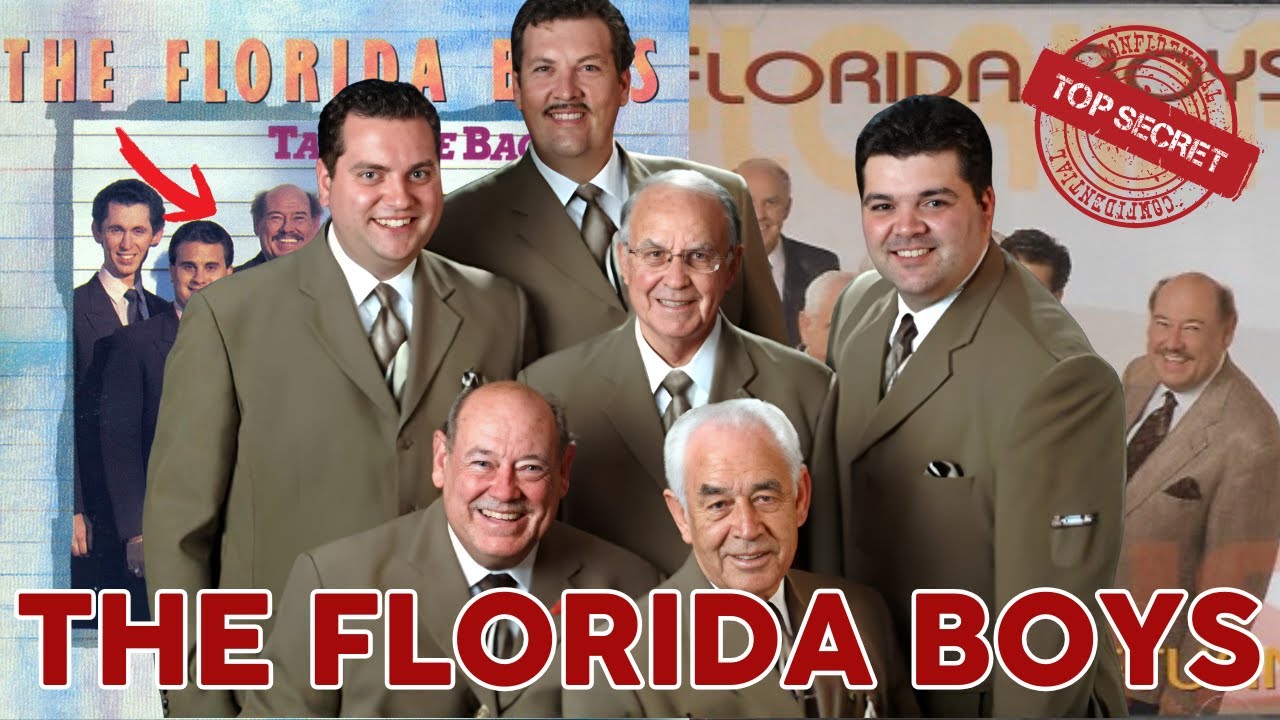
He had a sharp instinct for branding and noticed that audiences responded warmly when the group traveled south to Florida, a place associated in the public mind with sunshine and escape. In a move that would define their future, he renamed the group the Florida Boys. In the early 1950s, the quartet was competent but not yet legendary. They were working men singing working songs, with a traditional sound built around heavy bass and a driving, revival-style piano.
The world around them was changing, however. The boom of the postwar years was settling into the quieter rhythm of the Eisenhower era, and audiences began to crave a smoother, more polished kind of gospel music. That shift found its leader in Les Beasley, who joined the group in 1953. Beasley was handsome and charismatic, but behind his stage presence was the mind of an executive.
He saw that rival groups like the Statesmen and the Blackwood Brothers dominated with loud, energetic styles. He decided the Florida Boys would be different: they would be the friendly, safe, welcoming option. Under his influence, the sound softened. The screaming was reduced.
The group focused on a rich, warm blend, building what became known as the “Mount of Sand” sound, a velvety wall of harmony designed not to shock sinners but to comfort saints. This new sound required the right musicians. Beasley recruited Glen Allred, a baritone with a mahogany voice who became the group’s steady foundation, and Darrell Stewart, a pianist who brought joy and technical brilliance to the music. By the late 1950s, the core trio of Beasley, Allred, and Stewart was established.
They toured constantly, but the reality of the era was brutal. There were no luxury buses. The men traveled in sedans, with instruments and suits in the trunk and a bass stand tied to the roof. They drove through a segregated South in summer heat and winter cold, sleeping in the car more often than in hotels.
The job demanded they project an image of eternal, supernatural happiness while their real lives were defined by chronic exhaustion, financial instability, and profound loneliness. They were selling a product called peace, a peace they seldom enjoyed themselves. Financially, the quartet economy was unregulated and harsh. They sang for donations or a percentage of ticket sales.
If rain kept the crowd away, they did not eat. If a promoter was dishonest, they were not paid. Beasley took over the business side, demanding guarantees and organizing sensible routes, treating the Florida Boys not merely as a religious group but as a brand. By the end of the 1950s, the group had achieved success within its own subculture but remained invisible to the wider world.
Beasley, however, was watching television antennas sprout from rooftops across America. Most gospel musicians viewed television with suspicion, seeing it as worldly and risky. Beasley saw it as an ultimate platform. He reasoned that if the group could enter people’s homes, they would become part of their families.
In 1964, as the Beatles were transforming American music and the country reeled from the Kennedy assassination and the civil rights struggle, Beasley made a bold bet. He launched “The Gospel Singing Jubilee,” a television program that would not only define the Florida Boys’ career but also change how Americans consumed religion. Before the show, Sunday morning television was dry and academic, full of lectures and local preachers speaking into fuzzy microphones. The Jubilee was different.
It featured the best quartets in the world—the Happy Goodman Family, the Dixie Echoes, the Cathedrals—dressed in royal attire and performing in a studio designed to feel like a cross between a church and an elegant living room. The show was a carefully constructed world. The 1960s and 1970s became the era of the suit. The Florida Boys wore colorful, elaborate outfits—electric blue, canary yellow, crushed velvet—with hair styled into solid helmets that defied gravity.
In a time of cultural upheaval, they were a visual anchor for millions of Americans, especially the silent majority who felt alienated by the chaos of the decade. For them, the Jubilee was a tight bubble, a place where the sixties simply did not exist. There was no mention of war, civil rights, or counterculture. It was a deliberate presentation of innocence, and the public bought it with desperate enthusiasm.
The perfection shown on screen was a grueling performance. To save money, the show was not filmed weekly. Instead, the crew would go to a studio, often in Nashville or Huntsville, and film 13 episodes in three days. The men would arrive at dawn, film one episode in blue suits, then rush to change into red suits and film another.
Beasley would greet the camera as if it were another Sunday, pretending a week had passed. In 12 hours, they would age three months in television time. They had to remember which season they were in, celebrating Christmas in July and singing about spring in December. The studio audience was often as artificial as the schedule, brought in as decoration and coached to applaud.
The show’s success created a strange financial paradox. Viewers assumed the Florida Boys were millionaires. They wore expensive clothes and drove a huge silver bus nicknamed the Silver Eagle, which cost more than most homes. But behind the scenes, they were struggling.
The Jubilee was a syndication deal that did not pay like a network comedy. It functioned as advertising for concerts, convincing people to buy tickets to their live performances in high school gyms and county fairs. On Sunday mornings they were gospel stars; on Monday mornings they were driving the bus all night, fixing flat tires, and eating bologna sandwiches. This dissonance weighed heavily on the group, especially on the hired singers who came and went.
The tenor, often the star of the group, was the most replaceable. Over the years, a series of talented tenors passed through, including Coye Cook, who embodied the fragility of that fame. Cook had a powerful, piercing voice, but the pressure of singing 250 nights a year while sleeping on a moving bus was overwhelming. In the opera world, a tenor sings once or twice a week.
In southern gospel, he sings almost every night. When the voice weakened or fatigue took over, he was replaced. A new tenor would be hired, dressed in the same suit, standing in the same place, and the audience would accept him after only a brief period of mourning. The man was replaceable; the harmony was eternal.
Beasley, as manager and host, carried the burden of the system. He was the calm front, but he constantly worked backstage to put out fires: negotiating with promoters, managing personalities on the bus, and ensuring the show continued despite fluctuating ad revenue. He developed a persona of quiet confidence, never appearing stressed or tired, but those who knew him well recognized the toll of constant vigilance. He was like a ship captain who never docked.
As the 1970s progressed, the group reached the peak of its influence. They won Dove Awards and sold records in large numbers at concerts. The Jubilee became a national institution, broadcast every Sunday morning. But success bred complacency.
The formula worked so well—the sharp suits, the energetic songs, the national blend, the moving closing numbers—that they became prisoners of it. They could not change. If they tried new things, fans complained. By the mid-1970s, their music was technically perfect but increasingly repetitive.
Jubilee episodes from 1972 looked identical to episodes from 1976. The only change was that suit collars got wider. Meanwhile, a new storm was forming outside the bubble. A new generation of Christians was rising.
The Jesus People on the West Coast played guitars, not pianos. They wore jeans, not suits. They sang about Jesus as a revolutionary, not a comforting friend. They cared about passion, not four-part harmony.
The Florida Boys looked down from their television tower with a mix of confusion and rejection. They believed with a fatal vanity that the Jubilee would last forever because it was right and proper. But television is a fickle god, demanding youth and renewal. By the late 1970s, the men in formal suits were aging, their hair receding, their waistlines expanding.
The camera that was once their greatest ally became a harsh inspector. By 1978, cracks were invisible to the casual observer but widening in secret. The Jubilee still broadcast, and the bus still rolled, but audiences were aging. Children no longer attended the shows.
The empire of the suit was collapsing, not through invasion, but through obsolescence. The Florida Boys spent fifteen years building a perfect world on television, a fortress of delight. But they had forgotten that fortresses are also prisons. The golden age was ending, and an age of rust was beginning.
As the 1970s turned into the 1980s, the Florida Boys found themselves standing on the walls of a kingdom slowly fading into oblivion. The change came not as a declaration of war but as a shift in cultural frequency. The new phenomenon was Contemporary Christian Music, which began in California with converted hippies playing electric guitars and drums. By 1979, the spotlight had moved from quartets to solo artists, and names like Amy Grant, Petra, and Russ Taff dominated the charts.
To young Americans, even young Christians, the Florida Boys suddenly seemed like artifacts. They sounded like their parents’ music. They represented the establishment. The Florida Boys were trapped by the very aesthetic they had created.
If they changed, they risked alienating their older fan base that funded them. If they stayed the same, they made themselves invisible to the new generation. Then came the decisive blow. By the early 1980s, the cameras shut down for good, and the Jubilee era ended.
The reasons were bureaucratic: changing advertising demographics, rising production costs, and the fragmentation of the television market with the rise of cable. But the effect was existential. For nearly two decades, the Jubilee had been their megaphone, their engine, their weekly free advertisement to millions of homes. When the cameras shut off for the last time, the silence was deafening.
Without the TV show, the group’s economic situation collapsed into brutal simplicity. They had to work harder just to maintain their standard of living, keep the big bus, pay the crew, and support their families. The 1980s became the decade of striving. They increased their touring schedule to 250, then 260, then 280 shows a year.
They were running just to stay in place. Venues changed. Large civic centers became harder to book. Promoters became cautious, blaming the group’s numbers.
It was a slow, humiliating decline. The kings of television found themselves setting up their own equipment in rural churches with broken air conditioning, using a Sunday school classroom as a dressing room. Yet, a testament to their character, they never stopped performing. Beasley would step onto the stage of a nearly empty church in rural Alabama with the same stride, smile, and professionalism he had shown at the Grand Ole Opry.
He treated an audience of 200 with the same respect as an audience of 2,000. For two hours, it worked. When Allred sang and Stewart played, the audience could close their eyes and pretend it was 1972. The Florida Boys were selling a time machine.
The physical toll of the 1980s was visible on their bodies. These were men in their fifties and sixties living a lifestyle designed for twentysomethings. The bus was a cruel mistress, constantly shaking, destroying lower backs, ruining sleep cycles. The diet was a disaster of truck stop food.
Allred, with his steady, resonant voice, looked exhausted. Stewart, the eternal optimist, kept smiling, but the smile had become a fixed defense against fatigue. Beasley watched the industry he had helped build turn its back on him. Dove Awards, once dominated by quartets, were now the playground of pop stars.
Radio stations were dropping the southern gospel hour. There is a particularly cruel paradox in the music industry. You are often venerated as a legend precisely at the moment you become commercially non-viable. People would tell Beasley they had grown up watching the group, but those same people were not buying new albums.
They wanted the old songs. This forced the group into creative stagnation. When they tried to modernize, their core audience of older, conservative fans rebelled. They were stuck in their own history.
Changes in group membership during this era took on a desperate character. Young singers would join with stars in their eyes, expecting to become part of the famous Florida Boys. They would board the bus and discover the reality: the grueling schedule, the shrinking pay, the endless gray miles. Some stayed a year; others stayed six months.
They realized the shine was just a thin layer of paint on a rusty structure. Amid this decline, however, there were moments of deeply poignant beauty. In the mid-1980s, they recorded “When He Was on the Cross, I Was on His Mind,” which became a major hit in church circles. For a brief moment, they returned to the top of the charts.
The song was slow, majestic, and deeply theological. It was not a happy celebration song but a song about suffering and redemption. When they performed it live, something changed. The shiny, television-ready shell cracked, and the real faith of these men shone through.
They were not just performers. They were exhausted believers, and in that exhaustion, they found new resonance with their audience, who were also aging and tired. By 1990, the scene had become unrecognizable. The Silver Eagle was aging and needing constant repairs.
The suits looked like historical costumes. The Florida Boys were still the Florida Boys, but the name had become disconnected from the spirit of the times. They were entering isolation. The phone stopped ringing with offers for big television specials.
They were drifting in a fog of oblivion, yet they did not give up. This is the central mystery of their existence. They had survived and could have retired comfortably, but they did not know how to be anything else. They were addicted to the road, to the sound, to that fleeting moment of connection.
In the early 1990s, the cultural landscape had become a foreign country to the Florida Boys. The praise and worship movement was sweeping congregations, replacing hymns with projection screens and quartets with rock bands. In this new world, four aging men in matching polyester suits were not just relics of the past; they were invisible. The group entered years of wandering.
Their appearances were now limited to senior citizen luncheons and small rural churches that stubbornly refused to modernize. They had become living artifacts in a museum with shrinking attendance. Financially, the 1990s were a tightrope walk over a chasm of bankruptcy. There were no profit margins.
The bus, once a shining symbol of their status, was now an old monster devouring money in repairs. Beasley, the architect of their fame, was running a decline operation, booking dates just to keep things going. But history has a way of giving a second chance to those who simply refuse to leave the room. Just as the light was fading, a rescuer appeared.
Bill Gaither, the songwriter and arguably the most powerful figure in Christian music history, had an idea. He wanted to gather the old guard in a studio, turn on the cameras, and sing the old songs one last time. He invited the survivors, the Happy Goodmans, Hovie Lister, and the Florida Boys. The resulting video series, known as the “Gaither Homecomings,” became the most unexpected cultural phenomenon of the decade.
It sold millions of copies, topped Billboard charts, and bypassed traditional gatekeepers of radio and MTV. For the Florida Boys, Homecomings was a resurrection. Suddenly, they were back, surrounded by their peers in warm, high-definition lighting. The audience, millions of baby boomers and the Greatest Generation, wept openly.
This revival, however, was fundamentally different from the Jubilee era. In the 1960s, the camera was used to project an image of perfection and youth. In the 1990s, the camera was used to sanctify their age. The Homecoming videos were a celebration of survival.
The audience was not cheering for their vocal prowess, which had faded, but for their perseverance. The Florida Boys became elder statesmen. Beasley, with his thick white hair and refined manners, became a central figure. When he sang “Lead Me to the Altar,” it had a new weight, the voice of a man seeing the finish line.
Yet Gaither’s leap created a complex, bittersweet reality. To the outside world watching the videos, it seemed the Florida Boys had returned wealthy. They appeared on best-selling DVDs and performed in arenas on the Homecoming tour. But the reality was simpler.
The tours were profitable but intermittent. Royalty checks from the videos were good but divided among dozens of artists. For most of the year, the Florida Boys were still struggling in their own bus, trying to leverage their Homecoming guest appearances to sell tickets to a high school gym in Paducah, Kentucky. They remained trapped in a working-class fame paradox.
Fans treated them like royalty, assuming they lived in mansions, before they boarded the bus and ate a bowl of cereal for dinner because the rider did not include a hot meal. The physical burden of this extended victory lap was enormous. Allred, with his steady baritone, had stood in that lineup since the early 1950s. His body was a map of the profession’s hazards.
By the 2000s, watching him walk to the microphone was a lesson in courage. He moved stiffly, visibly in pain, but when the music started, he planted his knees, straightened his back, and delivered the same powerful harmony he had delivered in the Eisenhower era. Stewart fought his own battles; his hands, which once danced effortlessly across the keys, were now battling the stiffness of age. His trademark wide smile remained fixed, but it often hid health concerns and travel fatigue.
Personnel changes during this era became darker. It seemed almost cruel to recruit a young singer into a bus full of men in their seventies. The generation gap was a chasm. Young singers wanted to perform with high energy while the older men wanted to nap.
The old mentorship dynamic was replaced by a strange caretaking dynamic, with the young employees often helping the legends carry their bags. As the new millennium progressed, the Homecoming fervor began to fade. The audience that bought the videos was gradually diminishing. The Florida Boys were playing to dwindling crowds.
The phone, once constantly ringing with booking agents, became silent for days at a time. They were drifting further apart. Beasley, ever practical, saw the truth. He had fought the current for fifty years, reinventing the group again and again.
But there were no more reinventions left. They embarked on a farewell tour. In the rock and roll world, a farewell tour is a chance to make big money and fill stadiums. For the Florida Boys, it was a modest return to their roots, back to the small towns and churches that had supported them for decades.
The atmosphere at those final shows was heavy with a particular kind of southern sorrow. Fans realized this was the end. They were not just saying goodbye to a singing group; they were saying goodbye to their past, to the Sunday mornings of their childhood, to the fathers who loved this music, to a version of America that no longer existed. At the final concert, the emotions were overwhelming.
Beasley, Allred, and Stewart stood together, three men who had spent more time with each other than with their wives. They had shared thousands of meals, millions of miles, and one dream. When the last note faded and the lights went out, they realized the truth. They were no longer the Florida Boys.
They were just Les, Glen, and Darrell. The Silver Eagle was sold, a deeply symbolic and painful act. The bus had been their home. That final act of selling it was a spiritual eviction.
Retirement for a public figure is fraught with risk. The silence of home is louder than the silence of the bus. They had spent their entire lives defined by applause. Who are you when the applause stops?
The quiet cruelty of their 1990s struggle could not compare to the cruelty of the anonymity they now faced. By 2008, the men settled into a quiet, disorienting life. They watched television instead of appearing on it. A fan in the industry honored them, placing them in halls of fame and giving them lifetime achievement awards.
But statues do not pay electric bills, and plaques do not heal loneliness. They had survived the rigors of the road and the pressures of the industry. Now they had to survive stillness. In 2007, the Florida Boys stopped the bus for the last time, put away their suits, and walked away from the life that had defined them for sixty years.
Retirement for a man who had lived on the road since the Truman era was not a vacation; it was like decompression sickness. For Beasley, Allred, and Stewart, the transition was a shocking return to a world they barely recognized, a world where they were no longer the kings of the Jubilee, but just three old men confronting the mundane insults of aging in a culture that worships youth. The period from 2008 onward revealed the final, cruel truth of the gospel music economy. These men, who had been the face of a multi-million-dollar industry, who had sold millions of records and filled auditoriums, did not retire in luxury.
There were no sprawling Malibu mansions or private islands. They retired to modest homes in the Florida Panhandle and Tennessee, living on savings painfully accumulated from decades of donations and ticket sales. The contrast between their public image and their private reality was heartbreaking. To fans watching old videos, they were glittering kings.
To neighbors, they were quiet old men driving practical sedans and worrying about insurance costs. The kings of gospel music lived on a fixed income. Beasley spent his final decade watching the building he had created crumble from afar. A man of immense intelligence and great pride, it must have been a strange torment to watch the industry he had helped professionalize deteriorate into a landscape of digital downloads and worship bands with no sense of history.
He was the dean, but the university had closed. The tragedy of the ending was not a dramatic explosion but a slow, gradual dimming of light. The first domino to fall was joy itself. Darrell Stewart, the pianist whose smile had lit up auditoriums, passed away in 2017.
He was the beating heart of the group, the man who made the strict discipline of the quartet feel like a party. With his passing, the soul of the group was buried. Then came the fall of the architect. Les Beasley died in November 2018 at the age of ninety.
His passing received respectful obituaries in trade publications and local media. They called him a pioneer, a giant. But the mainstream world, the world of CNN and the New York Times, took little notice. The man who had been in American homes on Sunday mornings more often than the President of the United States left quietly, with the dignity of a librarian.
There is a profound irony in his death. He had spent his life creating and projecting a perfect image of the Jubilee, a bright, gleaming world where everything was resolved in three minutes. But he died in a chaotic, distracted, loud world. Television, his platform, was now dominated by angry pundits and reality stars.
The gentle, civilized Christianity he championed had been replaced by a culture war he did not understand. Finally, the foundation collapsed. Glen Allred, the baritone who had stood beside Beasley for more than half a century, followed him in 2019. Allred had been the longest-serving member and the iron man of the group.
With his death, the classic lineup vanished entirely. Within three years, the voices that had harmonized for six decades fell silent. The Mount of Sand sound was extinct. But the tragedy extends beyond the famous trio.
The soldiers must also be remembered: the tenors and basses who rotated through the group and then slipped into obscurity. Men like Coye Cook, who died years before, often struggled to find their footing after the bus stopped. They were the working poor of celebrity. They touched the hem of fame’s garment, but never wore its robe.
Today, YouTube preserves their strange digital afterlife. Poor-quality copies of the Jubilee, full of bright suits and fixed smiles, remain. The comment sections are graveyards of nostalgia, but they are ghosts watching a broadcast from a dead star. Beneath that nostalgia lies a bitter truth.
The Florida Boys were the ultimate sacrifice of America’s need for a pure gospel image. We wanted angels, so they hid their pain. We wanted them available every Sunday, so they left their families to live in a bus. They gave us celebration, but they paid for it with their lives.
Just miles from a quiet cemetery in Pensacola, in a box at a thrift store, lies a vinyl record priced at one dollar. The cover shows four men in bright blue suits. A young man searching for hip-hop samples flips through the records, unaware of the millions of miles and exhaustion behind those smiles. He flips it back.
Les Beasley’s face disappears into the darkness of the box. Outside, the world rushes on, noisy and fast. But inside the groove of that record, in the microscopic plastic cavities, the vibration waits. It waits for a needle to reveal the truth.
The camera could never capture it. The truth that the song is eternal, even if the singer has become dust.