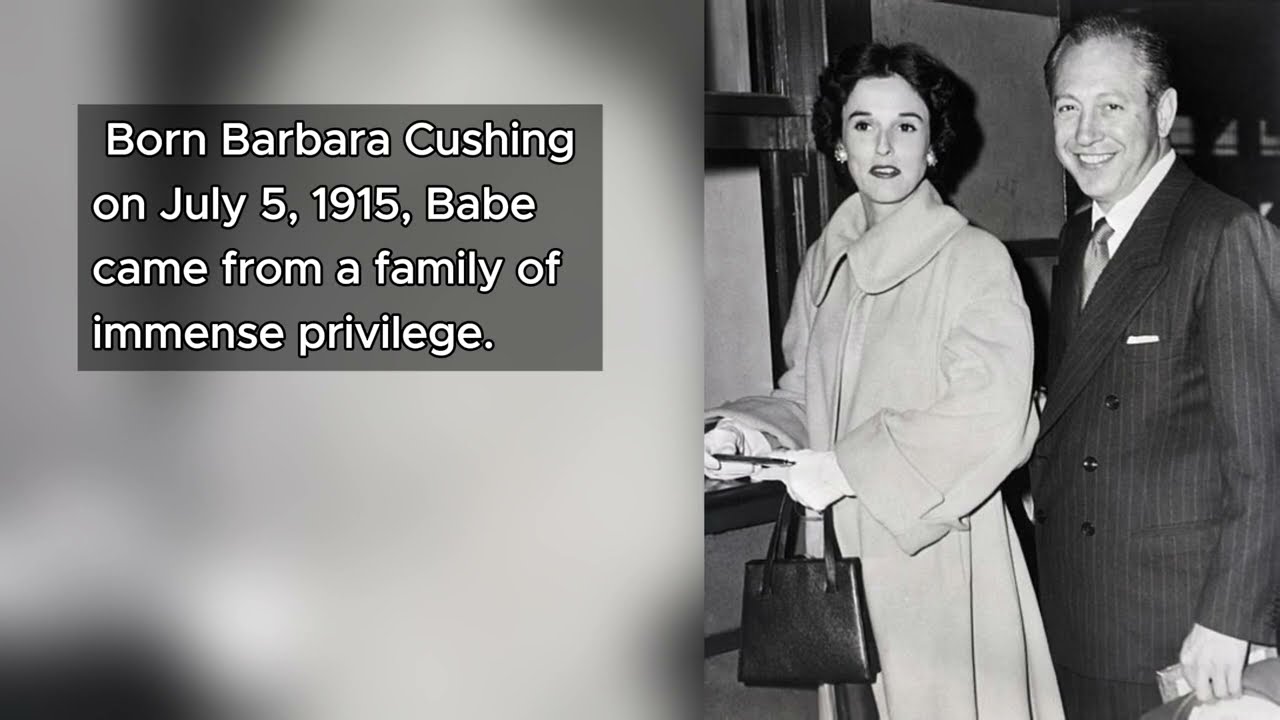
Born Barbara Cushing on July 5, 1915, Babe Paley came from a family of immense privilege. Her father, Harvey Cushing, was a renowned brain surgeon, and her mother, Catherine, was a prominent socialite. As the youngest of five children, she quickly became the darling of the family, earning the affectionate nickname that would follow her for life.
Babe and her sisters, Minnie and Betsy, rose quickly through the ranks of High Society. Minnie and Betsy secured their status by marrying into the Astor and Roosevelt families, while Babe blossomed into a striking beauty. Together, the trio became known as the Fabulous Cushing Sisters, embodying the sophistication and high-class elegance of their era.
In 1934, at age 18, Babe made her official debut with a lavish coming-out ball. The event solidified her reputation as one of the most stylish and captivating women of her time. One admirer remarked on her allure, saying, "So great is her beauty that no matter how often I see her, each time is the first time."
That same year, Babe's glamorous rise nearly came to a halt. Driving home from a society party on Long Island, she was involved in a devastating car accident. The impact knocked out her front teeth and caused significant damage to her jaw, requiring extensive dental and reconstructive surgeries.
During her recovery, the bruising on the lower half of her face was so severe that she covered it with a chiffon handkerchief when receiving visitors. When she finally healed, her new false teeth enhanced her smile, turning what could have been a source of insecurity into another facet of her legendary beauty.
In 1935, Babe moved to New York City to join her sisters in the heart of high society. She began working in high fashion and eventually landed a prestigious position as an editor at Vogue in 1939. Though surrounded by admirers, her heart was set on one man: Stanley Grafton Mortimer Jr., a member of high WASP aristocracy.
The couple married on September 21, 1940, in East Hampton. To outsiders, their life appeared idyllic, complete with two children, a son named Tony and a daughter named Amanda. But behind closed doors, the reality was far from perfect.
By 1943, Stanley had left to serve in the Navy during World War II. The man who returned was sullen, angry, and increasingly dependent on alcohol. Meanwhile, Babe had become consumed by her ambitions to ascend the social ladder, reportedly neglecting her children in favor of her image and societal obligations.
Babe divorced Stanley on May 29, 1946, after six turbulent years. The settlement granted her $40,000 to support their two children. The split became the talk of Cafe Society, cementing her status as a headline-making socialite.
While the divorce was still in progress, Babe began a relationship with William S. Paley, the media mogul behind CBS. At 45, Paley was over a decade older than Babe and came from a background that raised eyebrows in her circles. The son of Ukrainian Jewish immigrants, Paley had built his empire through sheer ambition, transforming CBS into a broadcasting powerhouse.
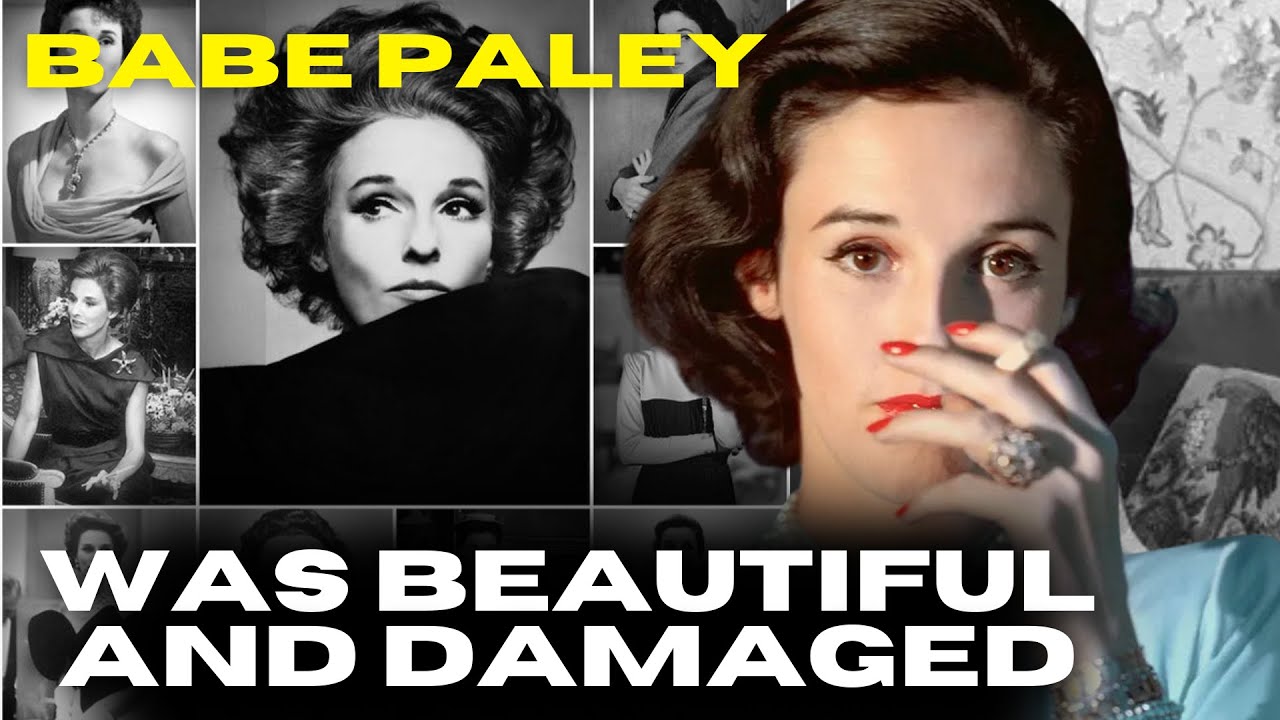
Paley had recently ended his tumultuous marriage to Dorothy Hart Hurst, who described him as "cold as ice." Socialite Fleur Cowles once remarked, "Bill was like one of the cats of the jungle. He prowled around in search of money."
Babe married William Paley in July 1947, just four days after his divorce was finalized. The timing sparked gossip, but the couple adopted a clever strategy to maintain their exclusivity. They kept themselves deliberately aloof, creating an air of mystique around their private lives. The only way to contact them was to send a formal letter.
It was during this period that Babe crossed paths with Truman Capote. The initial meeting was reportedly awkward, stemming from a mix-up. The Paleys had agreed to host a guest named Truman, assuming it was President Harry Truman. Instead, the eccentric author Truman Capote arrived.
Once the initial awkwardness passed, Babe and Capote struck up a close friendship. Capote declared her one of his "beautiful swans," an exclusive group of glamorous socialites that included Slim Keith and Gloria Guinness. Capote once admitted, "I was madly in love with her."
Babe's opulent lifestyle was legendary. She owned so many priceless jewels that she stored them in a secure bank vault. She reportedly bought entire couture collections from designers like Valentino and Dior. She was considered the undisputed queen of New York Society.
But being one of Capote's swans came with drama and competition. Babe often found herself jealous of Gloria Guinness, a socialite who rivaled her in style and influence. Babe enjoyed reminding others that Gloria had humble beginnings as a Mexican nightclub worker.
Gloria, however, was not one to be outdone. She invited Babe aboard her private yacht, assuring her it would be a casual affair and that she shouldn't bring her finest outfits. On the first night, Gloria emerged from her cabin adorned in diamonds and insisted they dine formally ashore. From that night forward, Babe always packed her finest outfits.
Babe became known as one of the most meticulous hostesses in High Society. She kept a little gold notebook at every dinner party, jotting down perceived flaws or areas for improvement. Every bedroom in her home was stocked with fresh flowers, snacks, and the latest newspapers.
The pressure for perfection was driven largely by her husband. Bill openly expected Babe to embody the ideal trophy wife, someone who would enhance his image wherever they went. But he had little understanding of the effort it took for her to meet those standards.
Early in their marriage, Babe confessed she had stopped setting her hair before bed because Bill disliked it. Over time, his exacting demands turned her life into a constant state of anxiety. In one telling incident, a damaged lamp in their home remained broken after a trip to Europe. Knowing Bill's temper, Babe panicked and frantically called her sister, pleading, "I don't care what you do with it, just get it out of his sight."
Babe once confided to Capote that she and Bill had been estranged in the most personal sense for years, eventually stretching into a full decade. It wasn't Babe who distanced herself; Bill simply lost interest.
While Bill grew increasingly distant from Babe, his interest in other women intensified. He frequented bars and clubs seeking out models and aspiring starlets. His type stood in stark contrast to Babe's refined elegance, as he gravitated toward curvaceous blondes reminiscent of Marilyn Monroe.
Bill's infidelity left Babe deeply insecure about her desirability. She began to internalize the rejection, convincing herself she was no longer attractive. She seemingly accepted a life of celibacy within her emotionally barren marriage.
Desperate to escape, Babe considered divorce. But Capote harshly discouraged her, reportedly telling her, "Look, you don't have any money and you've got four children. Think of them. Bill bought you." His words dismissed her emotional suffering and reminded her of the constraints trapping her in the marriage.
After that crushing realization, Babe reportedly took a nap, and when she woke up, she had made a decision. She would never bring up divorce again. Instead, she surrounded herself with a group of witty, urbane men she called her "laughing men."
Rumors suggest that in the 1960s, Babe sought solace through brief affairs, including one with an American ambassador and later a banker. But each affair ended, and she found herself right back where she started.
Despite the neglect and betrayal she endured, Babe rarely spoke ill of her husband, even in private. Her daughter Amanda later reflected, "She never criticized Bill." Her refusal to speak against him underscored her commitment to maintaining dignity and grace.
When Babe's hair began to turn gray, her initial reaction was panic over how Bill might perceive it. But instead of masking it, she embraced it, allowing her dark brunette locks to transition into a stunning silver. Her bold choice set a new trend among New York's elite socialites.
Her effortless elegance often turned simple moments into iconic trends. One day, finding a scarf too warm, she removed it and fastened it to her purse. Women everywhere began mimicking the look.
Not all of Babe's experiences with aging were marked by grace. As her daughter Amanda blossomed into a stunning beauty, Babe reportedly saw her as a rival, consumed by jealousy. This tension cast a shadow over their relationship.
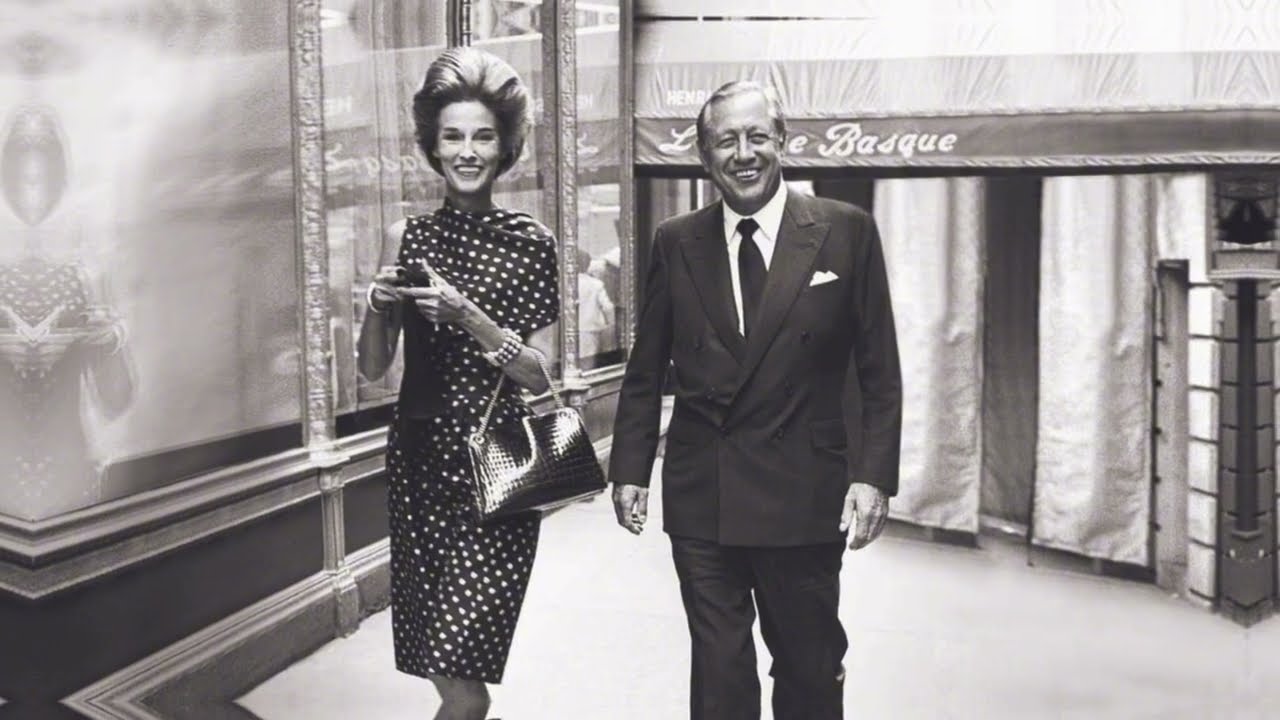
With Bill, Babe had two more children, a daughter named Kate and a son named Billy. But both distanced themselves from the family in adulthood. By middle age, her closest bond was with her eldest son, Tony.
Babe had long endured debilitating migraines that confined her to dark rooms for days. She began relying on tranquilizers to cope. She also chain-smoked two packs of cigarettes a day to manage her stress.
In 1974, just shy of her 60th birthday, Babe received a devastating diagnosis: lung cancer. True to her composed nature, she faced the news with the pragmatism of a doctor's daughter. As chemotherapy caused her hair to fall out, she tied a chic turban around her head.
What truly devastated Babe wasn't her declining health but a betrayal by someone she considered a close friend. In 1975, Truman Capote published an excerpt from his novel "Answered Prayers" in Esquire. The piece was a thinly veiled expose of the private lives of his high society friends, including Babe.
The excerpt included a caricature of Capote himself conversing with another socialite who reveals the sordid details of a society husband's bedroom indiscretions. Those in New York's elite circles recognized it as a direct expose of Babe's troubled marriage to Bill.
Some speculated Capote intended the piece as a defense of Babe, aimed at exposing Bill's flaws. But for Babe, it was a betrayal that cut deep. The image-conscious socialite was mortified by the intimate details exposed. She expelled Capote from her inner circle, and they never spoke again.
As her health deteriorated, Babe's composure began to crack. At one low point, she called CBS and casually asked, "What's the old so doing today?" It was a stark reflection of how deeply her marriage had deteriorated.
In a rare moment of raw honesty, Babe finally dropped her mask of grace. With Bill and a room full of people present, she unleashed a torrent of long-suppressed resentment, hurling insults at him and expressing her frustration over the compromises she had made throughout their marriage.
On July 6, just one day after her 63rd birthday, Babe Paley's life came to an end. Even in her final moments, she reportedly found the strength to apply a full face of makeup, facing death with the same grace she had maintained throughout her life.
In the days surrounding her passing, it was revealed that Bill had been involved with another woman. He had taken up with a 30-year-old named Joan, whom he met at his granddaughter's school play.
At Babe's funeral, a photographer overheard women eyeing Bill and saying, "I'm going to marry him." Despite the attention, Bill never remarried. In the end, Babe may have had the last word, having maintained control over her image and legacy even after her passing.